Details
Artist
Styles
Wooden sculpture with neon lights - comes with electrical installation - Signed at the back. // Geneviève Claisse's Cercle rouge is a compelling mixed media wooden sculpture from the period between 1968 and 2014, notable for its geometric minimalism and the play of light. This piece, crafted from wood with the addition of neon lights, presents a red circular form positioned against a white and pink layered background, creating an illusion of depth within the simplicity of its shapes. The layered circles, enhanced by the neon glow, produce a subtle interplay of color and shadow, emphasizing Claisse's signature focus on geometric abstraction. Signed on the back, this limited edition work (4 pieces) is emblematic of Claisse's exploration of form, color, and spatial relationships, embodying her dedication to pure abstraction and modernist aesthetics.
Cercle rouge, 1968-2014
form
Medium
Size
40 x 40 X 4 cm
- Inches
- Centimeters
Edition
Price
Details
Artist
Styles
Wooden sculpture with neon lights - comes with electrical installation - Signed at the back. // Geneviève Claisse's Cercle rouge is a compelling mixed media wooden sculpture from the period between 1968 and 2014, notable for its geometric minimalism and the play of light. This piece, crafted from wood with the addition of neon lights, presents a red circular form positioned against a white and pink layered background, creating an illusion of depth within the simplicity of its shapes. The layered circles, enhanced by the neon glow, produce a subtle interplay of color and shadow, emphasizing Claisse's signature focus on geometric abstraction. Signed on the back, this limited edition work (4 pieces) is emblematic of Claisse's exploration of form, color, and spatial relationships, embodying her dedication to pure abstraction and modernist aesthetics.
- Recently Added
- Price (low-high )
- Price (high-low )
- Year (low-high )
- Year (high-low )

Geneviève Claisse
Lignes, 2000
Painting
Acrylic On Canvas
EUR 3,500

Geneviève Claisse
Cercle Noir Et Vert, 2016
Sculpture / Object
Mixed Media
EUR 2,500

Geneviève Claisse
Cercle Rouge Et Noir, 1968-1972
Sculpture / Object
Mixed Media
EUR 2,500

Geneviève Claisse
Cercle Blanc Et Bleu, 1968-1972
Sculpture / Object
Mixed Media
EUR 2,500

Geneviève Claisse
Cercles Blancs, 1968/2014
Sculpture / Object
Mixed Media
EUR 2,000

Geneviève Claisse
Linear Sculpture, 1982
Sculpture / Object
Mixed Media
EUR 3,000

Geneviève Claisse
Cercles Jaune, 1968-2014
Sculpture / Object
Mixed Media
EUR 2,500

Geneviève Claisse
Cercles Vert, 1968-2014
Sculpture / Object
Mixed Media
EUR 2,500

Geneviève Claisse
Ryph, 1966
Sculpture / Object
Mixed Media
EUR 2,500

Geneviève Claisse
Jazz, 1966
Sculpture / Object
Mixed Media
EUR 2,500

Geneviève Claisse
Cercle Rouge, 1968-2014
Sculpture / Object
Mixed Media
Currently Not Available

Geneviève Claisse
ADN Jaune, 1972-2016
Sculpture / Object
Wood
Currently Not Available
Related Artists


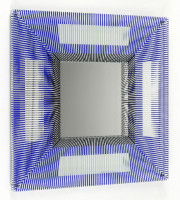

Related Articles

News, Art Movements - July 28, 2023
The Conundrum of Technology's Experiment with Contemporary Art: A Mercurial Maiden Voyage
Discover how technology transforms contemporary art, blending innovation with creativity. Explore challenges of authenticity, access, and digital expression. Read More

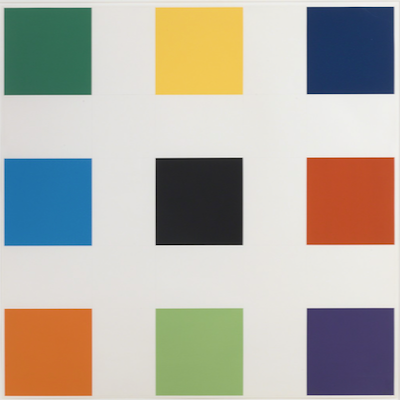
What is Hard Edge Art?
Hard Edge art is a style of abstract painting that became popular in the 1960s. It features areas of color separated by crisp, sharp edges that are painted with geometric precision. The term hard-edge painting was coined by art critic Jules Langsner to describe this approach, which contrasts with the softer, more fluid forms of other abstract styles.