Details
Artist
Styles
Screenrpint on plexiglass and screenprint on mirror - Signature and number on the back. // Mirroire by Jesús Rafael Soto, created in 2005, is a captivating glass sculpture that showcases the artist's mastery of kinetic and optical art. This piece features a central mirror surrounded by a plexiglass frame adorned with a screen-printed pattern of blue and black lines radiating outward. The lines create a sense of movement and depth, as they seem to converge and diverge depending on the viewer’s position, enhancing the kinetic effect Soto is known for. The reflective surface in the center intensifies this interaction, as it incorporates the viewer's image into the optical play, making the artwork dynamic and interactive. Measuring 50 x 50 x 5 cm, each piece is signed and numbered on the back, reinforcing Soto’s unique ability to blur the lines between viewer and artwork through perceptual engagement.
Mirroire, 2005
form
Medium
Size
50 x 50 X 5 cm
- Inches
- Centimeters
Edition
Price
- USD
- EUR
- GBP
Details
Artist
Styles
Screenrpint on plexiglass and screenprint on mirror - Signature and number on the back. // Mirroire by Jesús Rafael Soto, created in 2005, is a captivating glass sculpture that showcases the artist's mastery of kinetic and optical art. This piece features a central mirror surrounded by a plexiglass frame adorned with a screen-printed pattern of blue and black lines radiating outward. The lines create a sense of movement and depth, as they seem to converge and diverge depending on the viewer’s position, enhancing the kinetic effect Soto is known for. The reflective surface in the center intensifies this interaction, as it incorporates the viewer's image into the optical play, making the artwork dynamic and interactive. Measuring 50 x 50 x 5 cm, each piece is signed and numbered on the back, reinforcing Soto’s unique ability to blur the lines between viewer and artwork through perceptual engagement.
- Recently Added
- Price (low-high )
- Price (high-low )
- Year (low-high )
- Year (high-low )

Rafael Jesus Soto
Óvalo En El Rojo, 1979
Sculpture / Object
Mixed Media
USD 8,950

Rafael Jesus Soto
Sans Titre, 2001
Sculpture / Object
Acrylic Sculpture
EUR 2,800

Rafael Jesus Soto
Permutation, 1955-1978
Sculpture / Object
Object
EUR 5,500

Rafael Jesus Soto
Permutacion, 1979
Sculpture / Object
Mixed Media
USD 8,950

Rafael Jesus Soto
La Escalera Azul , 1979
Sculpture / Object
Mixed Media
USD 8,950

Rafael Jesus Soto
Cuadrado Y Curvas Virtuales, 1979
Sculpture / Object
Mixed Media
USD 8,950

Rafael Jesus Soto
Mirroire, 2005
Sculpture / Object
Glass
EUR 10,000
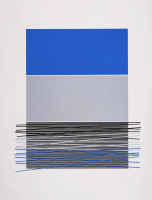
Rafael Jesus Soto
Untitled (Blue Horizon Lines), 1976
Limited Edition Print
Screen-print
USD 1,850

Rafael Jesus Soto
Untitled (circles And Lines), 1970
Limited Edition Print
Screen-print
EUR 3,700

Rafael Jesus Soto
Composición, 1971
Limited Edition Print
Silkscreen
EUR 3,100

Rafael Jesus Soto
Escritura, 1979
Sculpture / Object
Mixed Media
USD 8,950

Rafael Jesus Soto
Sotomagie II, 1967
Sculpture / Object
Mixed Media
USD 8,950

Rafael Jesus Soto
Caroni, 1971
Limited Edition Print
Silkscreen
EUR 1,270

Rafael Jesus Soto
Untitled (Silver Lines)
Limited Edition Print
Screen-print
GBP 2,800

Rafael Jesus Soto
Homage To Federico Garcia Lorca, 1999
Limited Edition Print
Silkscreen
EUR 800

Rafael Jesus Soto
Vibrations, 1967
Sculpture / Object
Acrylic Sculpture
Inquire For Price

Rafael Jesus Soto
Espiral Doble, 1979
Sculpture / Object
Mixed Media
USD 8,950

Rafael Jesus Soto
Dos Cuadraditos, 1972
Sculpture / Object
Object
Currently Not Available

Rafael Jesus Soto
Spiral, 1955-83
Limited Edition Print
Silkscreen
Currently Not Available

Rafael Jesus Soto
Cube With Ambiguous Space , 1981
Sculpture / Object
Object
Currently Not Available
Related Artists


Related Articles

Collecting - March 25, 2025
Understanding Editioned Sculptures: What Collectors Need to Know
Explore the value of editioned sculptures, from bronze to electric art. Learn how edition size, material, and artist impact collectability. Read More
What is kinetic art?
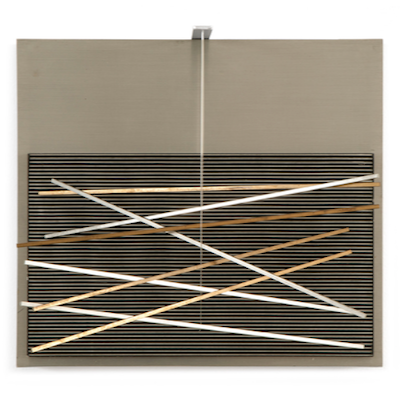
Kinetic art is an international movement that emerged in the 1920s and gained prominence in the 1960s, referring to art that involves both apparent and real motion. It encompasses any medium that includes movement, either relying on actual motion for its effect or being perceived as moving by the viewer. Early examples include canvas paintings designed to create optical illusions of movement. Today, kinetic art often refers to three-dimensional figures and sculptures, such as those operated by machines or those that move naturally. The movement covers a variety of styles and techniques that frequently overlap.