
Details
Artist
Styles
Color aquatint on wove paper - Hand-signed, dated and numbered in pencil - With publisher’s blind stamp // Wayne Thiebaud’s City Edge (1988) is an expressive aquatint print that captures the vibrant yet abstract essence of urban landscapes. The piece employs a palette of cool blues and warm yellows, creating a sense of contrast and depth. Thiebaud’s loose brushwork and use of thick lines provide a textured, painterly quality that enhances the architectural forms and perspectives of the city. The composition suggests a dynamic cityscape viewed from a unique angle, perhaps from an elevated perspective, showcasing Thiebaud’s fascination with geometry and urban structure. This limited edition print is signed, dated, and numbered by the artist, with a publisher’s blind stamp.
Details
Artist
Styles
Color aquatint on wove paper - Hand-signed, dated and numbered in pencil - With publisher’s blind stamp // Wayne Thiebaud’s City Edge (1988) is an expressive aquatint print that captures the vibrant yet abstract essence of urban landscapes. The piece employs a palette of cool blues and warm yellows, creating a sense of contrast and depth. Thiebaud’s loose brushwork and use of thick lines provide a textured, painterly quality that enhances the architectural forms and perspectives of the city. The composition suggests a dynamic cityscape viewed from a unique angle, perhaps from an elevated perspective, showcasing Thiebaud’s fascination with geometry and urban structure. This limited edition print is signed, dated, and numbered by the artist, with a publisher’s blind stamp.
- Recently Added
- Price (low-high )
- Price (high-low )
- Year (low-high )
- Year (high-low )

Thiebaud Wayne
Neapolitan Pie, 1990
Limited Edition Print
Lithograph
GBP 25,000 - 30,000

Thiebaud Wayne
Cut Cakes, 2015
Limited Edition Print
Mixed Media
USD 14,250

Thiebaud Wayne
Tulip Sundae, 2015
Limited Edition Print
Aquatint
USD 11,900

Thiebaud Wayne
Crown Tart, 2015
Limited Edition Print
Mixed Media
USD 11,900

Thiebaud Wayne
Trout Fishing In America, 1994
Limited Edition Print
Lithograph
USD 5,500

Thiebaud Wayne
Cigars, 1979
Limited Edition Print
Etching
Currently Not Available
Related Artists


Related Articles

Artists - November 04, 2024
Nara: 'Cosmic Girl' Print Series (1999-2020): A Technical and Market Analysis
Delve into Yoshitomo Nara’s iconic Cosmic Girl series (1999–2020). Explore its artistic innovation, market dynamics, and technical evolution in printmaking. Read More
Popular, Collecting - September 26, 2023
How Will Art Develop in the Future?
Explore the future of art with insights on technology, eco-conscious practices, global influences, and evolving creative trends. Discover what’s next by 2030. Read More
Collecting - March 29, 2023
Valuation in the Art Market: How to Accurately Estimate the Price of Artworks
The value of a work of art is often determined by factors which are not always easily discernible at first . Are there any specific methods or rules of thumb, available to buyers and sellers, to ascertain the monetary value of artworks? Can we understand the factors that have an effect on the prodigious prices of great artistic masterpieces? Read More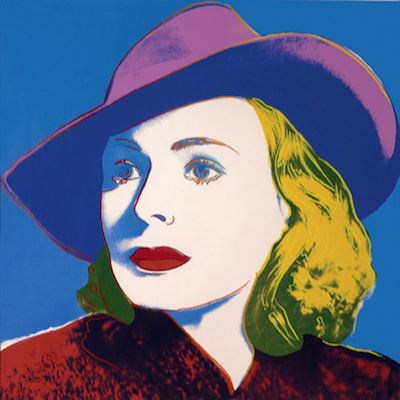
What is pop-art?
Pop Art is an art movement that began in Britain in 1955 and in the late 1950s in the U.S. It challenged traditional fine arts by incorporating imagery from popular culture, such as news, advertising, and comic books. Pop Art often isolates and recontextualizes materials, combining them with unrelated elements. The movement is more about the attitudes and ideas that inspired it than the specific art itself. Pop Art is seen as a reaction against the dominant ideas of Abstract Expressionism, bringing everyday consumer culture into the realm of fine art.