
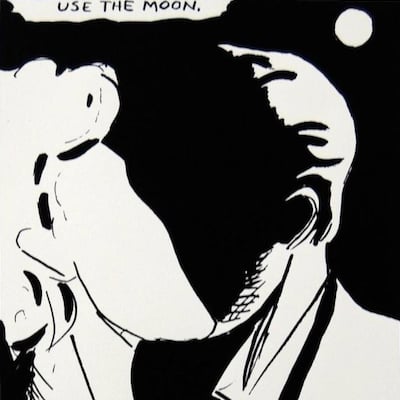
Qu'est-ce que l'art de la bande dessinée?
- Voir tout
- Établie
- Découvertes
- Voir tout
Oeuvres d’art liées à Art de la bande dessinée

Takashi Murakami
Tonari Smiley, 2020
Édition Limitée
Sérigraphie (Screen-print)
USD 7,200
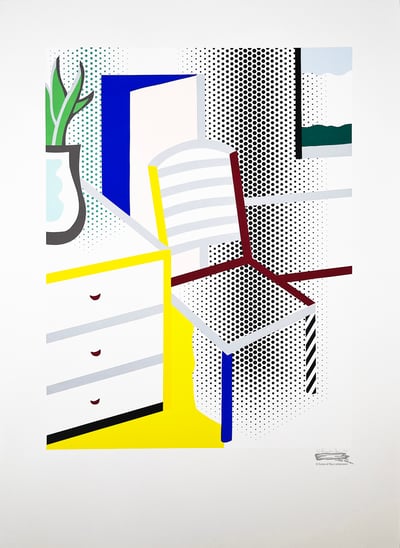
Roy Lichtenstein
Interior with Chair from the Leo Castelli 90th Birthday portfolio, 1997
Édition Limitée
Sérigraphie (Screen-print)
USD 30,000 - 40,000
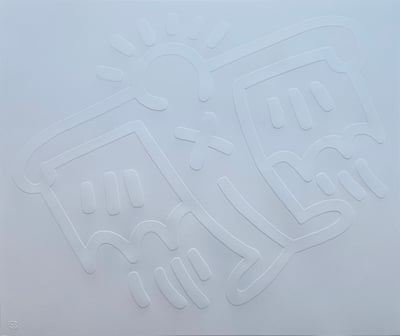
Keith Haring
White Icons (D) - X-Man, 1990
Édition Limitée
Gaufrage
USD 15,500

Keith Haring
Story of Red and Blue #6, 1989
Édition Limitée
Lithographie
USD 5,700
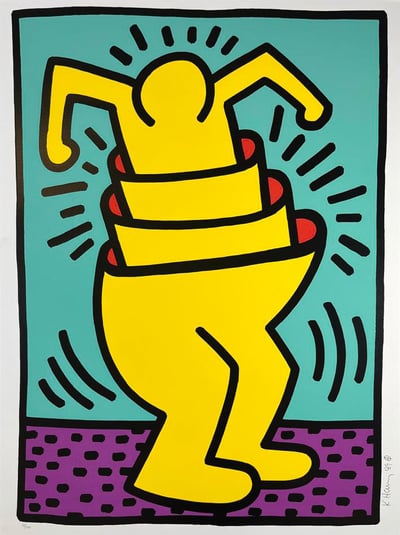
Keith Haring
Untitled (Cup Man), 1989
Édition Limitée
Sérigraphie (Screen-print)
USD 90,000 - 120,000

Keith Haring
Story of Red and Blue #20, 1989
Édition Limitée
Lithographie
USD 4,850

Keith Haring
Story of Red and Blue #16, 1989
Édition Limitée
Lithographie
USD 7,400
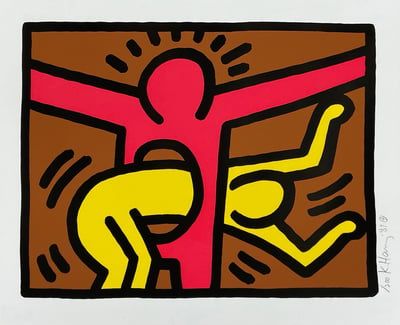
Keith Haring
Pop Shop IV (C), 1989
Édition Limitée
Sérigraphie/Silkscreen
USD 40,000 - 50,000
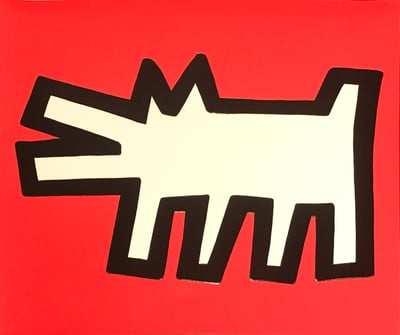
Keith Haring
Icons (B) - Barking Dog, 1990
Édition Limitée
Sérigraphie/Silkscreen
USD 55,000 - 65,000

Keith Haring
Story of Red and Blue #15, 1989
Édition Limitée
Lithographie
USD 7,200

Keith Haring
Story of Red and Blue #18, 1989
Édition Limitée
Lithographie
USD 6,200
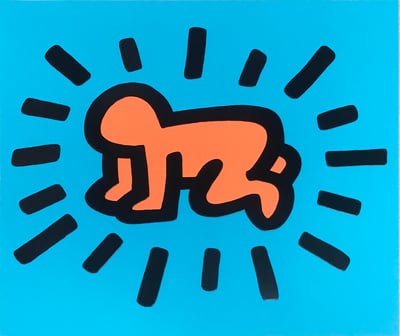
Keith Haring
Icons (A) - Radiant Baby, 1990
Édition Limitée
Sérigraphie/Silkscreen
USD 55,000 - 70,000

Keith Haring
Story of Red and Blue #4, 1989
Édition Limitée
Lithographie
USD 4,850
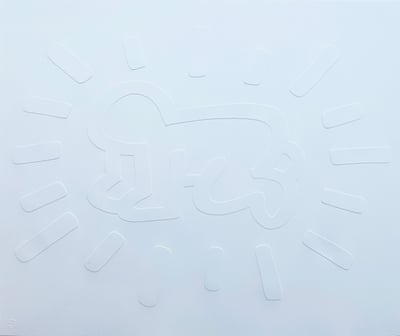
Keith Haring
White Icons (A) - Radiant Baby, 1990
Édition Limitée
Gaufrage
USD 20,000 - 25,000
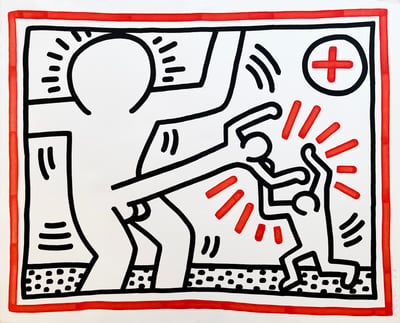
Keith Haring
Three Lithographs: One Plate, 1985
Édition Limitée
Lithographie
USD 30,000 - 40,000

Keith Haring
Story of Red and Blue #8, 1989
Édition Limitée
Lithographie
USD 5,400
Articles Liés


L'art contemporain chinois se caractérise par une profusion de styles et des approches expérimentales. Dans les années 1980, les expositions d'avant-garde étaient souvent fermées par les autorités gouvernementales. Les années 1990 ont vu émerger le pop politique et le réalisme cynique, tandis que la politique de l'enfant unique en Chine a poussé les artistes à explorer l'individu comme sujet.

EAT (Experiments in Art and Technology) était un mouvement formé pour développer des collaborations entre ingénieurs et artistes. Il facilitait des connexions directes et personnelles entre ces deux groupes. Le mouvement a été lancé en 1967 par les artistes Robert Whitman et Robert Rauschenberg, ainsi que par les ingénieurs Fred Waldhauer et Billy Klüver. EAT a réalisé divers projets et activités qui ont élargi le rôle des artistes dans la société contemporaine, en encourageant l'intégration de l'art et de la technologie.
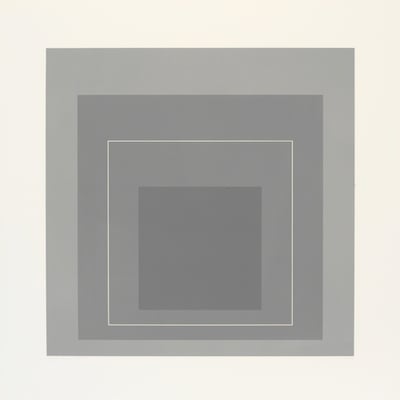
L'Art Concret est un mouvement artistique fondé par l'artiste néerlandais Theo van Doesburg dans les années 1930. Ce mouvement met l'accent sur l'abstraction pure, en se concentrant sur des formes géométriques et des couleurs sans aucune référence au monde naturel ou à une signification symbolique. Contrairement à d'autres formes d'art abstrait, l'Art Concret est entièrement non-figuratif et repose sur des principes mathématiques et une exécution précise. Il vise à créer des œuvres universelles et intemporelles en utilisant des formes simples et claires qui soulignent l'objectivité et la clarté.
Vous ne trouvez pas votre réponse ?
Merci ! Votre question a été envoyée — nous vous répondrons rapidement.
