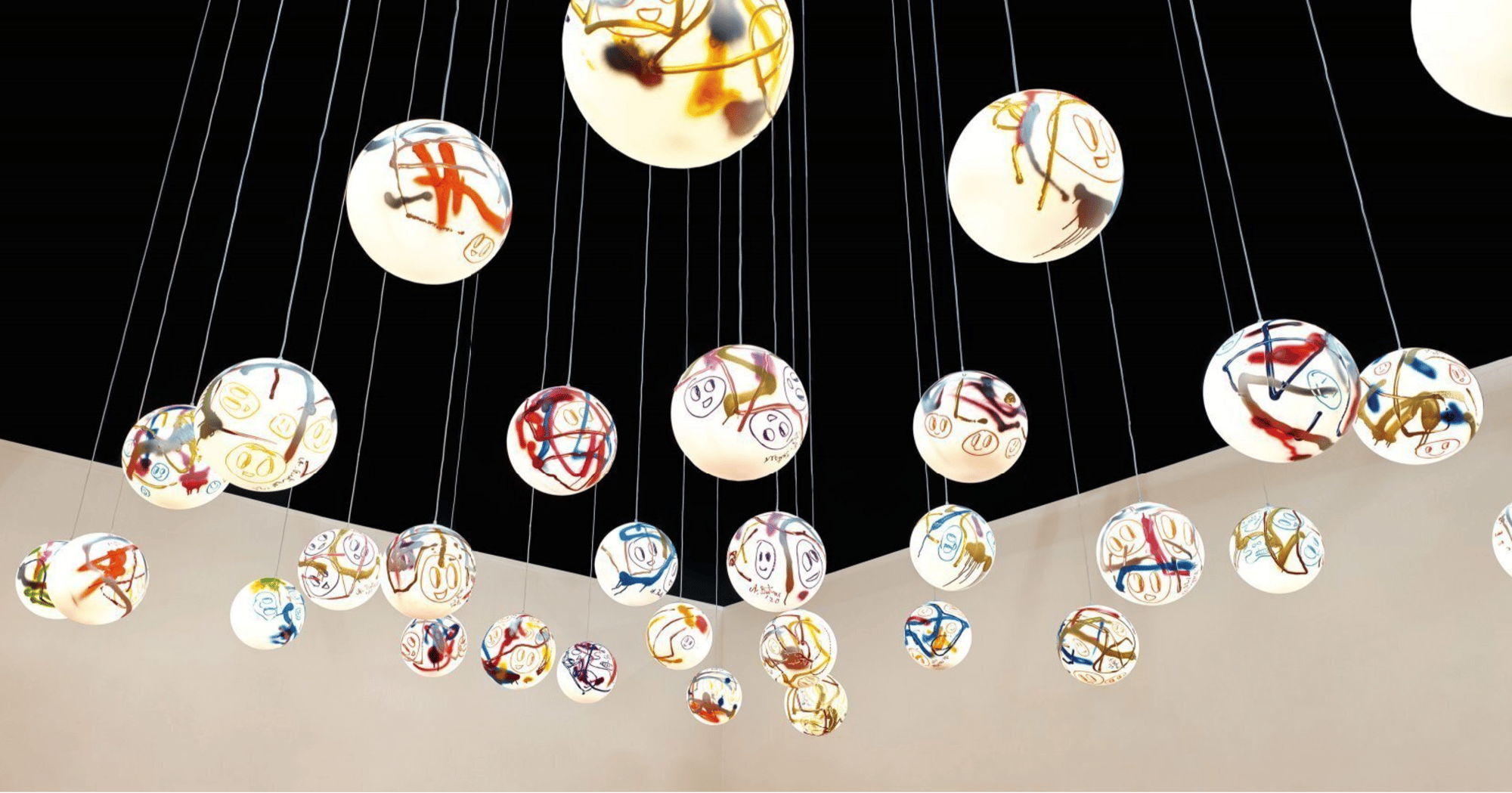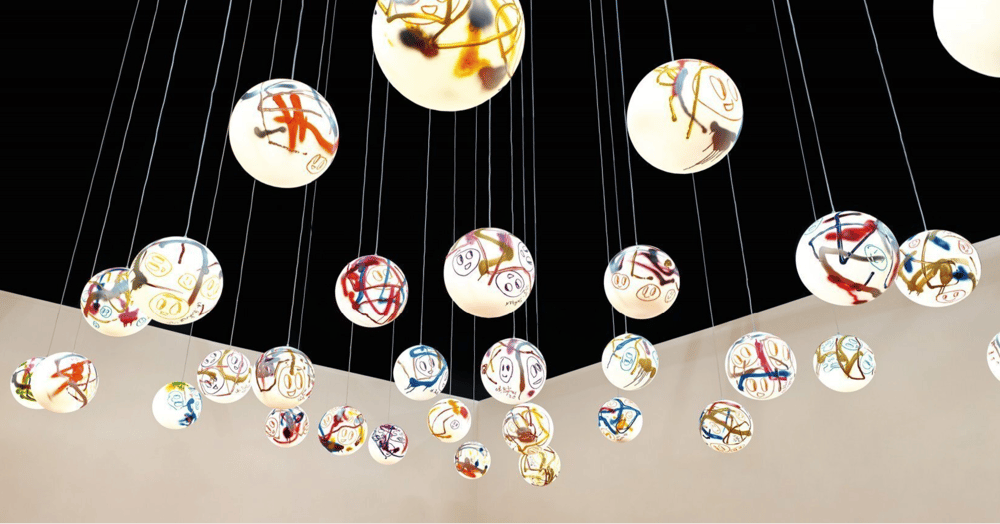
Pendant light individually painted and signed by André Butzer from a series of 100 unique variants, diameter 34 cm (13.4 in.).
Includes hardcover volume in clamshell box, 11 x 13.3 in., 3,12 kg (6.87 lb), 420 pages.
Pendant Light by André Butzer (2021) is a luminous sculptural object, each individually hand-painted and signed by the artist. The spherical pendant lights, part of a series of 100 unique variants, fuse functional design with Butzer’s distinct visual language—featuring gestural lines, vivid colors, and recurring cartoonish faces. Suspended on fine cables, each globe becomes both a light source and a canvas, celebrating spontaneity and individuality. Accompanied by a comprehensive 420-page hardcover monograph housed in a clamshell box, this edition underscores Butzer’s intersection of art and utility. Each piece measures 34 cm in diameter.
Artwork Copyright © André ButzerAndré Butzer (German, 1973) blends Expressionism with Pop Art, creating vivid, often chaotic compositions. His work features recurring characters and symbolic color use, particularly his striking “NASAheim” series. Butzer’s distinctive style bridges cartoonish figuration with deep emotional intensity, making his paintings and prints both visually bold and conceptually rich.
Artwork Copyright © André ButzerPendant Light, 2021
Form
Medium
Size
- Inches
- Centimeters
Edition
Price
- Authenticity Guaranteed
- Insured Shipping
- Online Since 2005
●Inventory 15911
●Signed
●Comes with gallery invoice and certificate
●Sell Us a Similar Artwork. Learn more.
Pendant light individually painted and signed by André Butzer from a series of 100 unique variants, diameter 34 cm (13.4 in.).
Includes hardcover volume in clamshell box, 11 x 13.3 in., 3,12 kg (6.87 lb), 420 pages.
Pendant Light by André Butzer (2021) is a luminous sculptural object, each individually hand-painted and signed by the artist. The spherical pendant lights, part of a series of 100 unique variants, fuse functional design with Butzer’s distinct visual language—featuring gestural lines, vivid colors, and recurring cartoonish faces. Suspended on fine cables, each globe becomes both a light source and a canvas, celebrating spontaneity and individuality. Accompanied by a comprehensive 420-page hardcover monograph housed in a clamshell box, this edition underscores Butzer’s intersection of art and utility. Each piece measures 34 cm in diameter.
Artwork Copyright © André ButzerAndré Butzer (German, 1973) blends Expressionism with Pop Art, creating vivid, often chaotic compositions. His work features recurring characters and symbolic color use, particularly his striking “NASAheim” series. Butzer’s distinctive style bridges cartoonish figuration with deep emotional intensity, making his paintings and prints both visually bold and conceptually rich.
Artwork Copyright © André Butzer- Recently Added
- Price (Low-High)
- Price (High-Low)
- Year (Low-High)
- Year (High-Low)

André Butzer
Untitled 1–3 (Suite of 3), 2021
Limited Edition Print
Screen-print
USD 10,800

André Butzer
Pendant Light, 2021
Sculpture / Object
Mixed Media
USD 10,000 - 12,000
Related Artists

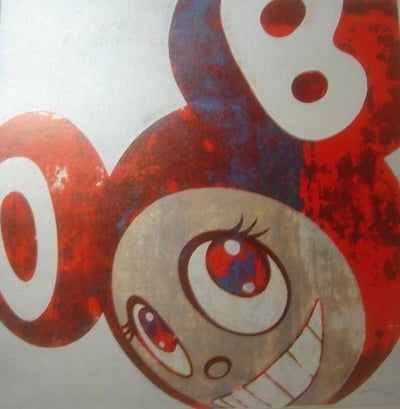
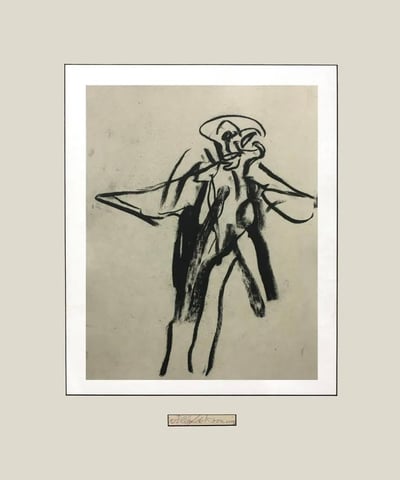

Artwork by Andy Warhol
What is pop-art?
Pop Art is an art movement that began in Britain in 1955 and in the late 1950s in the U.S. It challenged traditional fine arts by incorporating imagery from popular culture, such as news, advertising, and comic books. Pop Art often isolates and recontextualizes materials, combining them with unrelated elements. The movement is more about the attitudes and ideas that inspired it than the specific art itself. Pop Art is seen as a reaction against the dominant ideas of Abstract Expressionism, bringing everyday consumer culture into the realm of fine art.