

// Lluvia by Antonio Ballester Moreno is a 2017 lithograph and part of a limited edition of 15. This artwork features an arrangement of simple white rectangular strokes set against a vibrant orange background, evoking the rhythmic fall of rain. The uniform placement and orientation of these shapes suggest motion and repetition, transforming a natural phenomenon into an abstract composition. The contrast between the warm background and cool white lines captures the artist’s exploration of nature through minimalist forms. Measuring 140 by 100 cm, the piece invites viewers to reflect on the essence of rain, reinterpreted in a structured, modernist manner.
Artwork Copyright © Antonio Ballester MorenoAntonio Ballester Moreno (Spain, 1977) is a contemporary artist known for his abstract, geometric works that celebrate nature, simplicity, and the connection between art and life. Drawing inspiration from folk art, Bauhaus, and children’s creativity, he uses organic forms and earthy colors to evoke harmony and mindfulness. Ballester Moreno’s art invites reflection on humanity’s bond with the natural world.
Artwork Copyright © Antonio Ballester MorenoLluvia, 2017
Form
Medium
Size
- Inches
- Centimeters
Edition
Price
- USD
- EUR
- GBP
- CHF
- Authenticity Guaranteed
- Insured Shipping
- Online Since 2005
●Inventory 7727
●Signed
●Comes with gallery invoice and certificate
●Any questions?
// Lluvia by Antonio Ballester Moreno is a 2017 lithograph and part of a limited edition of 15. This artwork features an arrangement of simple white rectangular strokes set against a vibrant orange background, evoking the rhythmic fall of rain. The uniform placement and orientation of these shapes suggest motion and repetition, transforming a natural phenomenon into an abstract composition. The contrast between the warm background and cool white lines captures the artist’s exploration of nature through minimalist forms. Measuring 140 by 100 cm, the piece invites viewers to reflect on the essence of rain, reinterpreted in a structured, modernist manner.
Artwork Copyright © Antonio Ballester MorenoAntonio Ballester Moreno (Spain, 1977) is a contemporary artist known for his abstract, geometric works that celebrate nature, simplicity, and the connection between art and life. Drawing inspiration from folk art, Bauhaus, and children’s creativity, he uses organic forms and earthy colors to evoke harmony and mindfulness. Ballester Moreno’s art invites reflection on humanity’s bond with the natural world.
Artwork Copyright © Antonio Ballester MorenoAvailability
Size
Medium
SORT BY

Antonio Ballester Moreno
Lluvia, 2017
Limited Edition Print
Lithograph
EUR 2,000

Antonio Ballester Moreno
Árbol verde, 2017
Limited Edition Print
Lithograph
EUR 2,000

Antonio Ballester Moreno
Trama, 2013
Limited Edition Print
Linocut
EUR 500
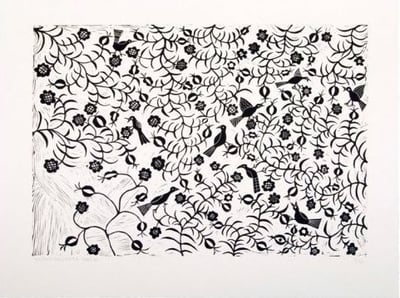
Antonio Ballester Moreno
Pájaros, 2013
Limited Edition Print
Linocut
EUR 1,000

Antonio Ballester Moreno
Triángulos
Limited Edition Print
Linocut
Currently Not Available

Antonio Ballester Moreno
Sol, 2017
Limited Edition Print
Lithograph
Currently Not Available
Related Artists


Artwork by Laure Prouvost
What is Lettrism?
Lettrism is an art form that uses letters, words, and symbols to create artwork. The movement was established in Paris in the 1940s and later gained popularity in the 1950s in America. Lettrisme is the French spelling of the movement's name, derived from the French word for letter.

Antonio Ballester Moreno
Lluvia, 2017
140 x 100 cm


