

// Tourists by Duane Hanson, created in 1970, is an offset print that humorously captures the stereotypical image of tourists through hyper-realistic portrayal. The artwork presents two figures—an older man and woman dressed in bright, casual vacation attire. The man, holding a camera around his neck and a map in his hand, looks off into the distance, while the woman stands beside him with sunglasses, a hat, and shopping bags. Hanson's attention to detail and his use of everyday people as subjects add a satirical commentary on consumer culture and the leisurely lifestyle of tourists. The piece invites viewers to reflect on the common, often caricatured, behaviors associated with tourism.
Artwork Copyright © Duane HansonDuane Hanson (United States, 1925–1996) was an American sculptor renowned for his hyperrealistic life-sized sculptures depicting everyday people. Utilizing materials like polyester resin and fiberglass, he captured ordinary individuals in mundane settings, challenging perceptions of art and reality. Hanson's work offers a poignant commentary on American society and culture.
Artwork Copyright © Duane HansonTourists, 1970
Form
Medium
Size
- Inches
- Centimeters
Edition
Price
Available works →
- Authenticity Guaranteed
- Insured Shipping
- Online Since 2005
●
●Inventory 8140
●Signed
●Comes with gallery invoice and certificate
●Sell Us a Similar Artwork. Learn more.
// Tourists by Duane Hanson, created in 1970, is an offset print that humorously captures the stereotypical image of tourists through hyper-realistic portrayal. The artwork presents two figures—an older man and woman dressed in bright, casual vacation attire. The man, holding a camera around his neck and a map in his hand, looks off into the distance, while the woman stands beside him with sunglasses, a hat, and shopping bags. Hanson's attention to detail and his use of everyday people as subjects add a satirical commentary on consumer culture and the leisurely lifestyle of tourists. The piece invites viewers to reflect on the common, often caricatured, behaviors associated with tourism.
Artwork Copyright © Duane HansonDuane Hanson (United States, 1925–1996) was an American sculptor renowned for his hyperrealistic life-sized sculptures depicting everyday people. Utilizing materials like polyester resin and fiberglass, he captured ordinary individuals in mundane settings, challenging perceptions of art and reality. Hanson's work offers a poignant commentary on American society and culture.
Artwork Copyright © Duane Hanson- Recently Added
- Price (Low-High)
- Price (High-Low)
- Year (Low-High)
- Year (High-Low)
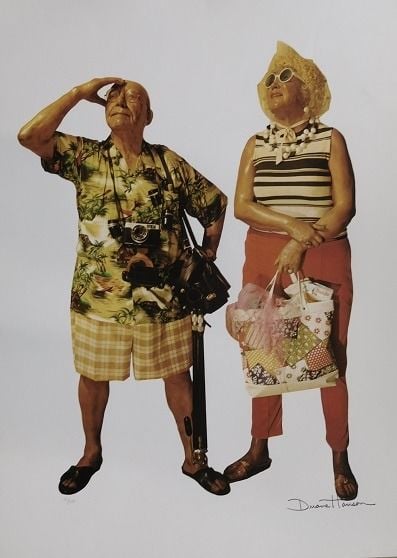
Duane Hanson
Tourists, 1970
Limited Edition Print
Offset Print
Currently Not Available
Related Artists


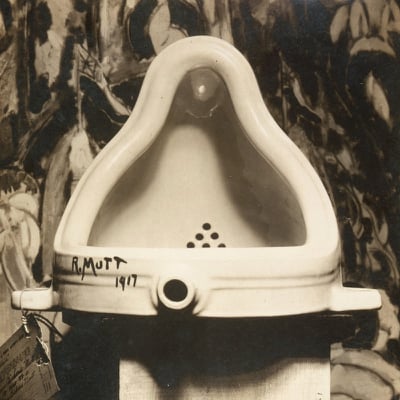
Artwork by Marcel Duchamp
What is Found Object?
A found object is a term used to describe a man-made or natural object, or a fragment of one, that an artist discovers or purchases and keeps for inspiration or as a work of art. The artist may also modify the object or incorporate it into a collage or assemblage, transforming it into a new piece of art.


Duane Hanson
Tourists, 1970
78 x 58 cm


