

Gelatin silver print -Work: 14 x 11 in (35.56 x 27.94 cm) - Sheet size; image size: 8.25 x 8.25 inches
Self Portrait with Flower by Francesca Woodman is a haunting black-and-white gelatin silver print from 1977-1978. This intimate photograph, part of an edition of 40, captures Woodman seated on the floor in a bare, worn room, her figure partially obscured as she gazes downward, lost in introspection. A single white calla lily stands nearby, its slender stem contrasting against the rough wall and floor, symbolizing fragility amidst desolation. The interplay of light and shadow in this image enhances its melancholic and contemplative atmosphere, typical of Woodman's work, which often explores themes of vulnerability, identity, and transience. Measuring 35.56 x 27.94 cm, this piece is a poignant example of Woodman’s ability to convey deep emotion through minimalist composition.
Artwork Copyright © Francesca WoodmanFrancesca Woodman (USA, 1958–1981) was a pioneering photographer known for her haunting black-and-white self-portraits and experimental use of movement, blur, and surreal compositions. Often exploring themes of identity, femininity, and the ephemeral, Woodman created evocative images that have profoundly influenced contemporary photography despite her short life and career.
Artwork Copyright © Francesca WoodmanSelf portrait with flower, 1977-1978
Form
Medium
Size
- Inches
- Centimeters
Edition
Price
Available works →
- Authenticity Guaranteed
- Insured Shipping
- Online Since 2005
●
●Inventory 2603
●Signed
●Comes with gallery invoice and certificate
●Sell Us a Similar Artwork. Learn more.
Gelatin silver print -Work: 14 x 11 in (35.56 x 27.94 cm) - Sheet size; image size: 8.25 x 8.25 inches
Self Portrait with Flower by Francesca Woodman is a haunting black-and-white gelatin silver print from 1977-1978. This intimate photograph, part of an edition of 40, captures Woodman seated on the floor in a bare, worn room, her figure partially obscured as she gazes downward, lost in introspection. A single white calla lily stands nearby, its slender stem contrasting against the rough wall and floor, symbolizing fragility amidst desolation. The interplay of light and shadow in this image enhances its melancholic and contemplative atmosphere, typical of Woodman's work, which often explores themes of vulnerability, identity, and transience. Measuring 35.56 x 27.94 cm, this piece is a poignant example of Woodman’s ability to convey deep emotion through minimalist composition.
Artwork Copyright © Francesca WoodmanFrancesca Woodman (USA, 1958–1981) was a pioneering photographer known for her haunting black-and-white self-portraits and experimental use of movement, blur, and surreal compositions. Often exploring themes of identity, femininity, and the ephemeral, Woodman created evocative images that have profoundly influenced contemporary photography despite her short life and career.
Artwork Copyright © Francesca Woodman- Recently Added
- Price (Low-High)
- Price (High-Low)
- Year (Low-High)
- Year (High-Low)

Francesca Woodman
Self portrait with flower, 1977-1978
Photography
Photograph
Currently Not Available
Related Artists


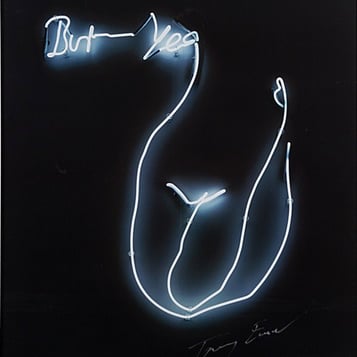
Artwork by Tracey Emin
What is feminist art?
Feminist art refers to the art that emerged from the feminist art movement during the 1960s and 1970s. It developed with the intention of critiquing 20th-century gender ideals and challenging the traditional canon of art history. Feminist art seeks to create a dialogue between the artwork and the viewer through a feminist lens, often addressing issues of gender, identity, and social justic


Francesca Woodman
Self portrait with flower, 1977-1978
36 x 28 cm


