Original lithograph printed in black ink on Arches wove paper.
Edition of 50, numbered in pencil lower right (plus 10 artist's proofs, 9 trial proofs, and 1 state proof; overall edition of 70).
Sheet size: 50.5 x 66.0 cm (19 7/8 x 26 in)
Image size: 25.7 x 47.3 cm (10 1/8 x 18 5/8 in)
Frame size: 59.7 x 77.5 x 4.4 cm (23 1/2 x 30 1/2 x 1 3/4 in)
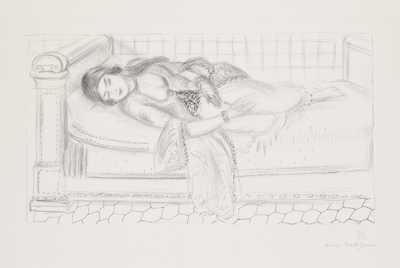
Orientale sur lit de repos is a sumptuous lithograph from Matisse's celebrated Nice period, depicting a reclining odalisque on a daybed in the flowing, assured line that defines his graphic genius. The figure lies in languid repose, her form described by sinuous contours that move from the curve of her shoulder through the drape of fabric with effortless grace. Rendered in rich black ink on Arches wove paper, the composition achieves an extraordinary balance between decorative plenitude and structural clarity. From an edition of just fifty, with ten artist's proofs and nine trial proofs, this is a rare and important example of Matisse's printmaking at the moment when his drawing reached its fullest maturity.
Henri Matisse (France, 1869–1954) was a pioneer of Fauvism, celebrated for his vibrant use of color and bold, expressive forms. His work spanned painting, sculpture, and paper cut-outs, with masterpieces like The Red Room and his Blue Nudes. Matisse's innovative approach continues to influence modern art and design.
Lithograph Lithography is a printing method based on the principle that water and oil do not mix. It can be used to print artwork or text onto paper or other suitable materials. Traditionally, an image was drawn with wax, fat, or oil onto a lithographic limestone surface or plate. Today, metal plates and other surfaces are also used in lithographic printing.
Original lithograph printed in black ink on Arches wove paper.
Edition of 50, numbered in pencil lower right (plus 10 artist's proofs, 9 trial proofs, and 1 state proof; overall edition of 70).
Sheet size: 50.5 x 66.0 cm (19 7/8 x 26 in)
Image size: 25.7 x 47.3 cm (10 1/8 x 18 5/8 in)
Frame size: 59.7 x 77.5 x 4.4 cm (23 1/2 x 30 1/2 x 1 3/4 in)
Orientale sur lit de repos is a sumptuous lithograph from Matisse's celebrated Nice period, depicting a reclining odalisque on a daybed in the flowing, assured line that defines his graphic genius. The figure lies in languid repose, her form described by sinuous contours that move from the curve of her shoulder through the drape of fabric with effortless grace. Rendered in rich black ink on Arches wove paper, the composition achieves an extraordinary balance between decorative plenitude and structural clarity. From an edition of just fifty, with ten artist's proofs and nine trial proofs, this is a rare and important example of Matisse's printmaking at the moment when his drawing reached its fullest maturity.
Henri Matisse (France, 1869–1954) was a pioneer of Fauvism, celebrated for his vibrant use of color and bold, expressive forms. His work spanned painting, sculpture, and paper cut-outs, with masterpieces like The Red Room and his Blue Nudes. Matisse's innovative approach continues to influence modern art and design.
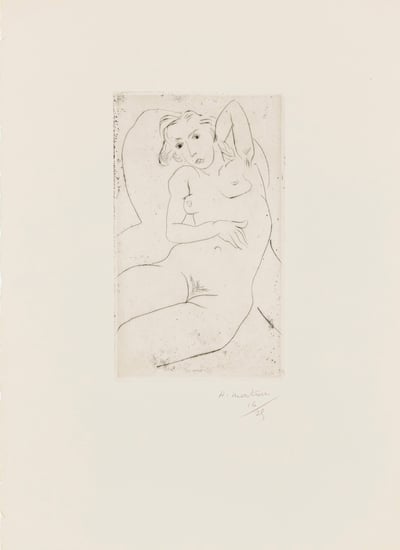
One plate, from Cinquante Dessins (Duthuit Books 2), 1920
Limited Edition Print
Etching
Inquire For Price
Henri Matisse
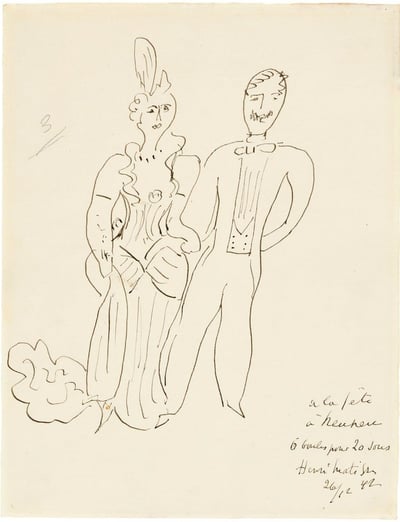
Le lanceur de couteaux, from Jazz, 1947
Limited Edition Print
Mixed Media
EUR 22,900
Henri Matisse
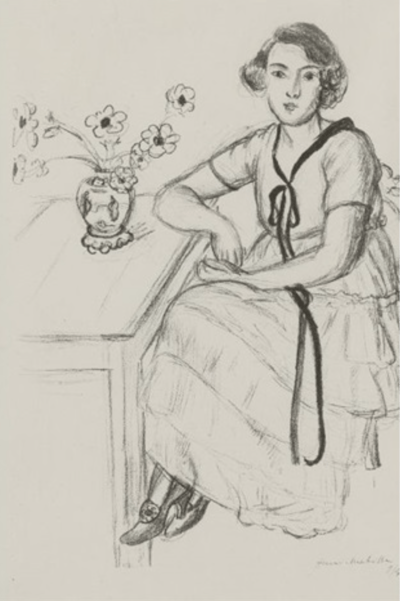
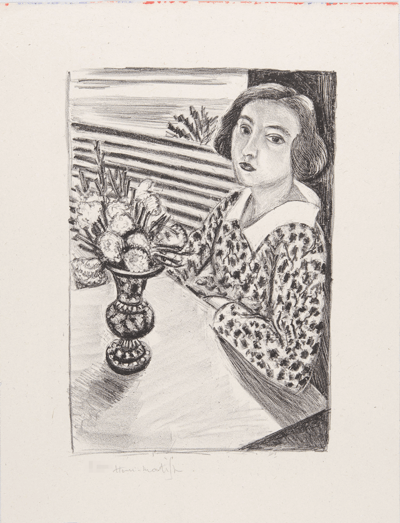
La Robe Jaune Au Ruban Noir, 1922
Limited Edition Print
Lithograph
Inquire For Price
Henri Matisse
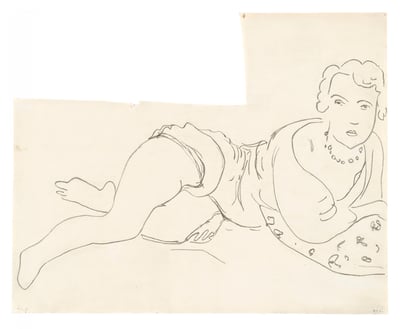
Espanol, c. 1925
Drawing / Watercolor
Mixed Media
Inquire For Price
Henri Matisse
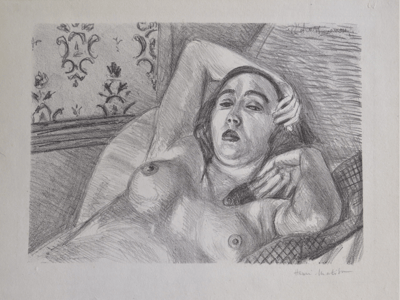
D416 Le Repos Du Modele, 1922
Limited Edition Print
Lithograph
USD 8,600
Henri Matisse
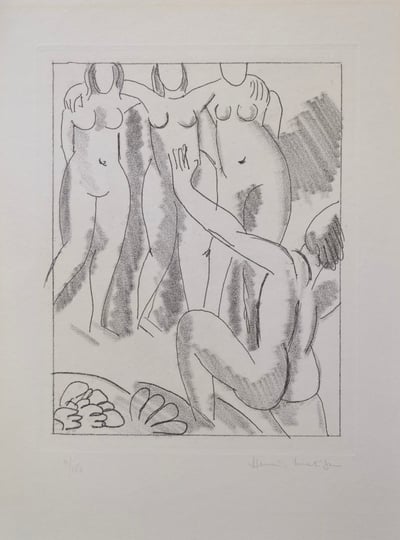
D236 Nausicaa Ulyssess Pl202, 1935
Limited Edition Print
Lithograph
USD 10,500
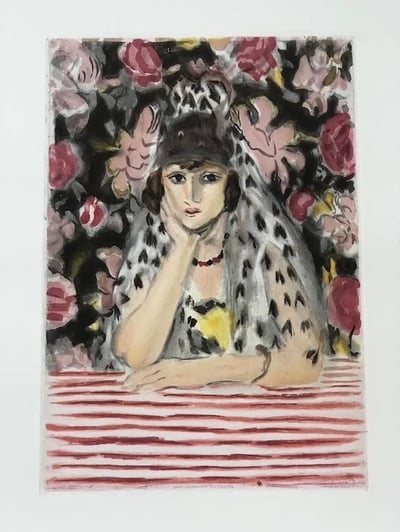
Henri Matisse
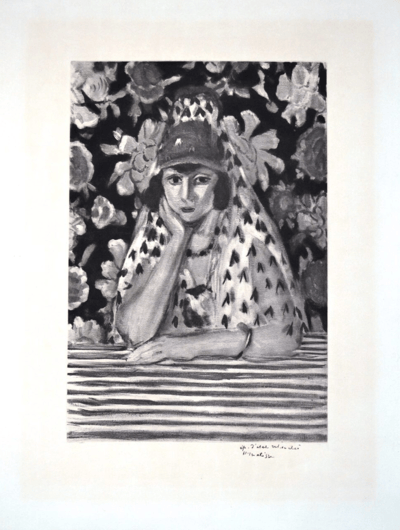
L'Espagnol à la mantille, 1925
Limited Edition Print
Etching and Aquatint
Currently Not Available
No sold works to show.
Drawing is putting a line around an idea.
- Henri Matisse
Henri Matisse was a French artist whose pioneering use of color and innovative techniques established him as one of the most influential figures in modern art. His practice spanned painting, sculpture, printmaking, and later, his renowned cut-out collages. As a leader of the Fauvist movement, Matisse used bold, non-naturalistic colors and expressive brushstrokes to create works that conveyed joy and emotion. His vibrant palette and simplified forms challenged traditional ideas of representation, focusing instead on harmony and the emotional impact of art.
In the later years of his career, Matisse developed his iconic 'cut-outs,' where he used scissors to create dynamic shapes from painted paper. This revolutionary technique demonstrated his lifelong commitment to exploring the essence of form and color. Themes of nature, human figures, and interior spaces permeate his work, which celebrates beauty and vitality. Matisse’s legacy stands alongside that of Picasso, shaping the course of 20th-century art and inspiring countless generations of artists.