

Linocut from the series "Suite Nipon pour CB".
Jean-Charles Blais’s Suite Nipon Pour CB (1985) is a linocut that presents a striking, graphic composition centered on a pair of clasped hands. Rendered in bold black and white against a vivid red background, the image emphasizes contrast and texture inherent to the linocut technique. The simplified, expressive lines carve out the figure’s torso and arms, while the hands—firmly joined—suggest themes of unity, introspection, or quiet tension. The surrounding red field, filled with abstracted interior forms, adds intensity and spatial ambiguity. Created during a period when Blais explored raw, direct imagery, the work reflects both physicality and emotional restraint within a limited but powerful visual language.
Artwork Copyright © Jean-Charles BlaisJean-Charles Blais (France, 1956) is a contemporary artist renowned for his innovative use of torn advertising posters as canvases, creating layered compositions that blend figuration and abstraction. His work often explores themes of urban life and the human form, contributing significantly to the free figuration movement.
Artwork Copyright © Jean-Charles BlaisSuite Nipon Pour CB, 1985
Form
Medium
Size
- Inches
- Centimeters
Edition
Price
- USD
- EUR
- GBP
- CHF
- Authenticity Guaranteed
- Insured Shipping
- Online Since 2005
●Inventory 16747
●Signed
●Comes with gallery invoice and certificate
●Sell Us a Similar Artwork. Learn more.
Linocut from the series "Suite Nipon pour CB".
Jean-Charles Blais’s Suite Nipon Pour CB (1985) is a linocut that presents a striking, graphic composition centered on a pair of clasped hands. Rendered in bold black and white against a vivid red background, the image emphasizes contrast and texture inherent to the linocut technique. The simplified, expressive lines carve out the figure’s torso and arms, while the hands—firmly joined—suggest themes of unity, introspection, or quiet tension. The surrounding red field, filled with abstracted interior forms, adds intensity and spatial ambiguity. Created during a period when Blais explored raw, direct imagery, the work reflects both physicality and emotional restraint within a limited but powerful visual language.
Artwork Copyright © Jean-Charles BlaisJean-Charles Blais (France, 1956) is a contemporary artist renowned for his innovative use of torn advertising posters as canvases, creating layered compositions that blend figuration and abstraction. His work often explores themes of urban life and the human form, contributing significantly to the free figuration movement.
Artwork Copyright © Jean-Charles Blais- Recently Added
- Price (Low-High)
- Price (High-Low)
- Year (Low-High)
- Year (High-Low)

Jean-Charles Blais
Suite Nipon Pour CB, 1985
Limited Edition Print
Linocut
EUR 2,200
Related Artists
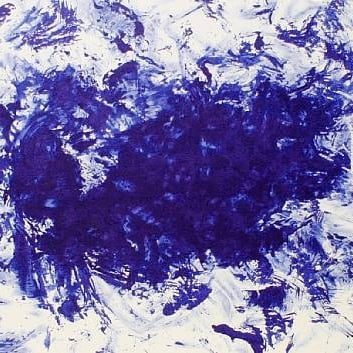
Artwork by Yves Klein
What is body art?
Body art involves creating art directly on or with the human body. Common forms include body piercings and tattoos, but it also encompasses practices like branding, scarification, scalping, body painting, full-body tattoos, body shaping, and sub-dermal implants. Body art can also refer to a subcategory of performance art where the artist's body is central to the artwork.

Jean-Charles Blais
Suite Nipon Pour CB, 1985
65.5 x 50 cm


