

// Hermit Crab Cup by Ken Price is a 1972 silkscreen print that combines playful abstraction with elements of surrealism. The composition features a stylized hermit crab positioned near a large, cup-like form against a backdrop of angular green shapes, evoking a sense of an abstracted landscape. Price, known for his whimsical and experimental approach to form, uses flat colors and simplified shapes to create a vivid, almost cartoonish environment. The bold interplay of green, purple, and earthy tones, along with the fragmented ground, imbues the scene with a sense of movement and depth. This print exemplifies Price's exploration of natural forms in a fantastical, imaginative context, inviting viewers into a world where ordinary creatures and objects take on an otherworldly quality.
Artwork Copyright © Ken PriceKen Price (USA, 1935–2012) was a celebrated sculptor and ceramicist renowned for his vibrant, biomorphic forms. Blurring the boundaries between fine art and craft, his works often featured richly textured surfaces and vivid colors. Price’s pioneering approach to ceramics transformed perceptions of the medium and influenced generations of artists.
Artwork Copyright © Ken PriceHermit Crab Cup, 1972
Form
Medium
Size
- Inches
- Centimeters
Edition
Price
Available works →
- Authenticity Guaranteed
- Insured Shipping
- Online Since 2005
●
●Inventory 4005
●Signed
●Comes with gallery invoice and certificate
●Sell Us a Similar Artwork. Learn more.
// Hermit Crab Cup by Ken Price is a 1972 silkscreen print that combines playful abstraction with elements of surrealism. The composition features a stylized hermit crab positioned near a large, cup-like form against a backdrop of angular green shapes, evoking a sense of an abstracted landscape. Price, known for his whimsical and experimental approach to form, uses flat colors and simplified shapes to create a vivid, almost cartoonish environment. The bold interplay of green, purple, and earthy tones, along with the fragmented ground, imbues the scene with a sense of movement and depth. This print exemplifies Price's exploration of natural forms in a fantastical, imaginative context, inviting viewers into a world where ordinary creatures and objects take on an otherworldly quality.
Artwork Copyright © Ken PriceKen Price (USA, 1935–2012) was a celebrated sculptor and ceramicist renowned for his vibrant, biomorphic forms. Blurring the boundaries between fine art and craft, his works often featured richly textured surfaces and vivid colors. Price’s pioneering approach to ceramics transformed perceptions of the medium and influenced generations of artists.
Artwork Copyright © Ken Price- Recently Added
- Price (Low-High)
- Price (High-Low)
- Year (Low-High)
- Year (High-Low)
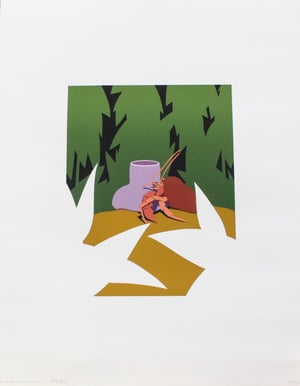
Ken Price
Hermit Crab Cup, 1972
Limited Edition Print
Silkscreen
Currently Not Available
Related Artists

Artwork by Miles Aldridge
What is contemporary art?
Contemporary art refers to avant-garde or innovative art created in the recent past or present day. The exact starting point of contemporary art varies depending on the institution, often tied to the founding year of museums or galleries that showcase the style. Contemporary art is characterized by its focus on current ideas, diverse media, and the exploration of new concepts and techniques.


Ken Price
Hermit Crab Cup, 1972
71 x 56 cm


