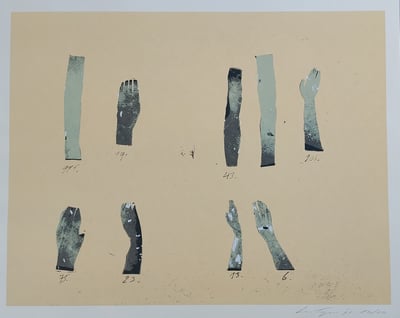
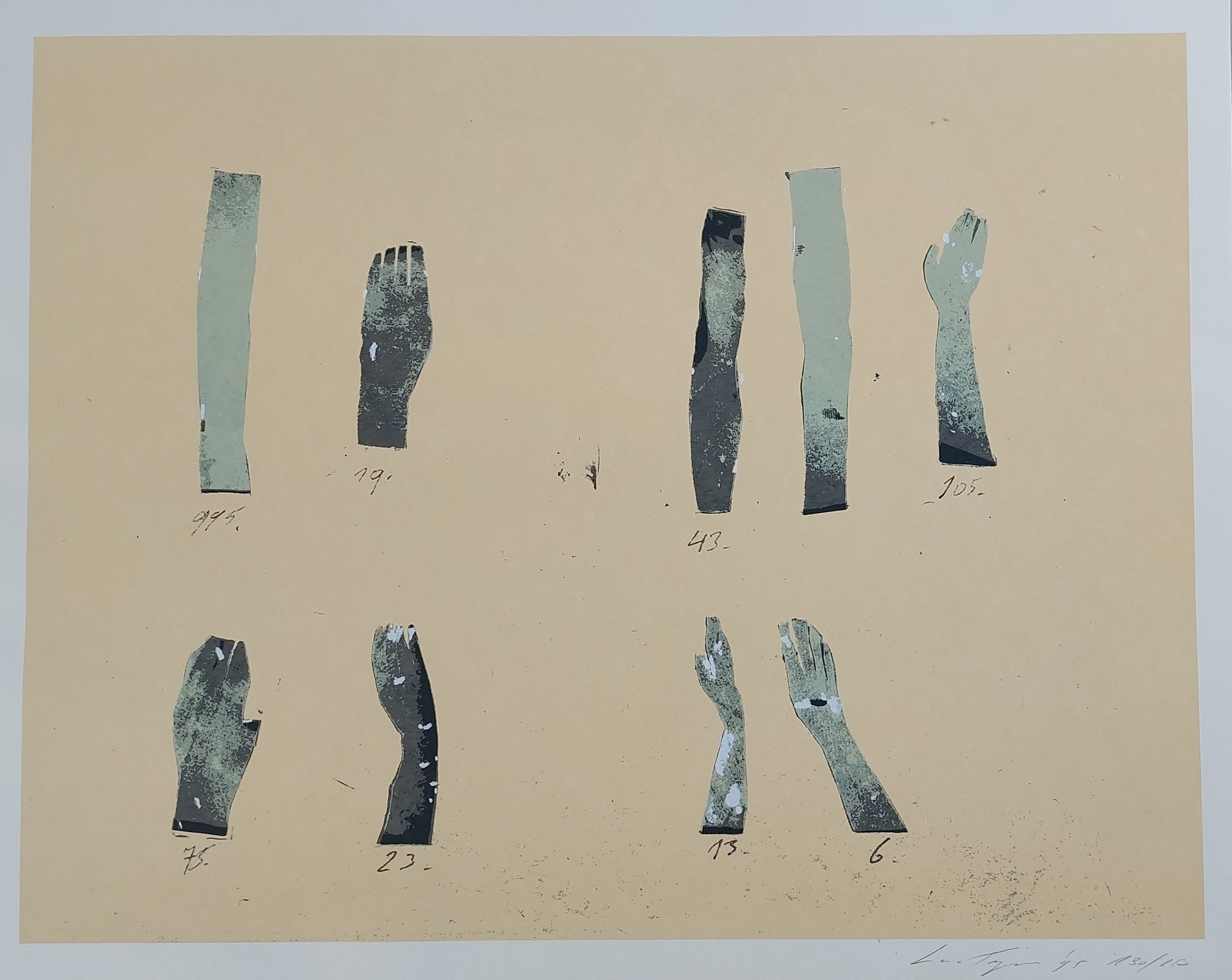
Luc Tuymans' Wiedergutmachung is a silkscreen print from 1995 that presents dismembered and stylized human limbs—arms and hands—arranged in a grid-like composition on a cream-colored background. Each limb is accompanied by a small handwritten number, evoking cataloguing or forensic documentation. The limbs appear abstracted, with subtle textures and tonal variations suggesting decay or mechanical reproduction. The title, Wiedergutmachung (German for 'reparation' or 'atonement'), alludes to post-war restitution efforts, especially in the context of Germany's response to the Holocaust, infusing the work with historical and moral weight. Tuymans’ minimalist but charged imagery confronts viewers with themes of memory, accountability, and the fragmentation of human identity. The limited color palette and precise layout reflect the artist’s characteristic restraint and psychological intensity.
Luc Tuymans (Belgium, 1958) is a prominent contemporary painter known for his muted palette and enigmatic imagery. His works often explore themes of memory, history, and politics, blending realism with abstraction. Tuymans is considered a pivotal figure in the revival of figurative painting and has exhibited widely across major international venues.
Silkscreen Silkscreen is a printmaking method that uses a screen made of silk or other mesh fabric. The screen is treated with a substance that blocks ink in certain areas, allowing ink to pass through only in the desired sections. Each color in the print requires a separate screen.
Luc Tuymans' Wiedergutmachung is a silkscreen print from 1995 that presents dismembered and stylized human limbs—arms and hands—arranged in a grid-like composition on a cream-colored background. Each limb is accompanied by a small handwritten number, evoking cataloguing or forensic documentation. The limbs appear abstracted, with subtle textures and tonal variations suggesting decay or mechanical reproduction. The title, Wiedergutmachung (German for 'reparation' or 'atonement'), alludes to post-war restitution efforts, especially in the context of Germany's response to the Holocaust, infusing the work with historical and moral weight. Tuymans’ minimalist but charged imagery confronts viewers with themes of memory, accountability, and the fragmentation of human identity. The limited color palette and precise layout reflect the artist’s characteristic restraint and psychological intensity.
Luc Tuymans (Belgium, 1958) is a prominent contemporary painter known for his muted palette and enigmatic imagery. His works often explore themes of memory, history, and politics, blending realism with abstraction. Tuymans is considered a pivotal figure in the revival of figurative painting and has exhibited widely across major international venues.
When I start to paint, it is real agony. I get nervous.
- Luc Tuymans
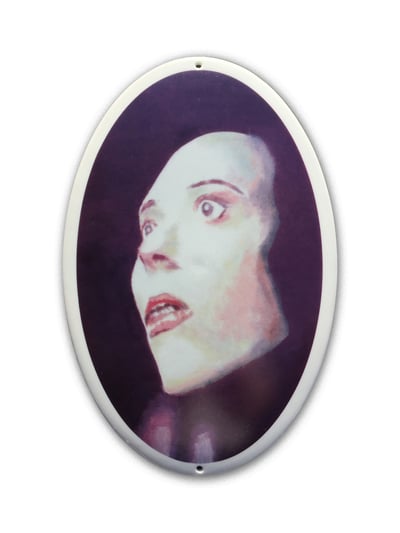
Renowned for his figurative paintings that depict images sourced from existing visual materials such as television, print and film media, Luc Tuymans is an artist who explores the cultural and historical meaning of events, often providing a different context or perspective through his trademark choppy brushstrokes and a muted, darker palette. Tuyman's subjects range from historical world events such as the second world war, to the mediocrity of every day– among his most notable works is his Heritage series which was created in response to the Oklahoma City bombing; the paintings capture the artist’s notion of a ‘traditional American life’ with subjects including a working man, a birthday cake and a portrait. Of his unique method of transforming existing media into a form of evocative art, Tuymans has remarked “There is a physical element intertwined with the painting [of an existing photograph]. It shakes loose an emotional element within the viewer.” (Artist website)
Contemporary art refers to avant-garde or innovative art created in the recent past or present day. The exact starting point of contemporary art varies depending on the institution, often tied to the founding year of museums or galleries that showcase the style. Contemporary art is characterized by its focus on current ideas, diverse media, and the exploration of new concepts and techniques.