
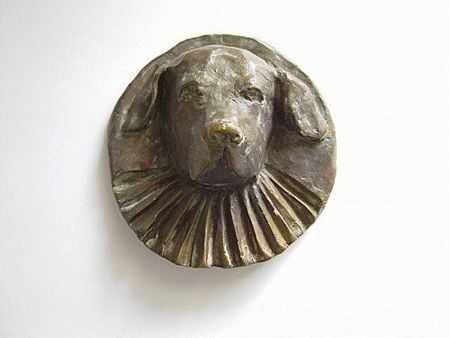
// Paloma Varga-Weisz’s Spike is a small, evocative bronze sculpture that presents a dog's head adorned with a ruffled collar, reminiscent of traditional portraiture. Measuring only 10 cm in diameter, the piece captures intricate details in the dog’s facial expression, giving it a dignified yet approachable presence. The ruffled collar around the neck lends a theatrical, almost regal quality, perhaps referencing the style of historical portraiture where animals were sometimes depicted with human attributes. Limited to an edition of 100, Spike embodies Varga-Weisz's unique approach to merging whimsy with classical art forms, imbuing the sculpture with personality and charm.
Artwork Copyright © Paloma Varga-WeiszPaloma Varga-Weisz (Germany, 1966) is a sculptor and painter recognized for her surreal, figurative works that blend historical and fantastical elements. Using wood, plaster, and watercolor, she creates eerie, often enigmatic figures that explore human vulnerability and transformation, marking her as a distinct voice in contemporary European art.
Artwork Copyright © Paloma Varga-WeiszSpike, 2007
Form
Medium
Size
- Inches
- Centimeters
Edition
Price
Available works →
- Authenticity Guaranteed
- Insured Shipping
- Online Since 2005
●
●Inventory 1457
●Signed
●Comes with gallery invoice and certificate
●Sell Us a Similar Artwork. Learn more.
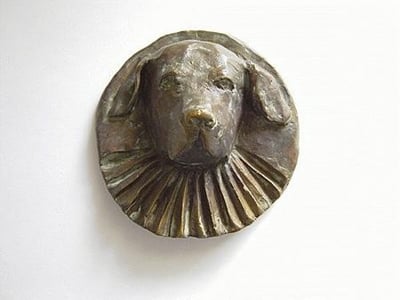
// Paloma Varga-Weisz’s Spike is a small, evocative bronze sculpture that presents a dog's head adorned with a ruffled collar, reminiscent of traditional portraiture. Measuring only 10 cm in diameter, the piece captures intricate details in the dog’s facial expression, giving it a dignified yet approachable presence. The ruffled collar around the neck lends a theatrical, almost regal quality, perhaps referencing the style of historical portraiture where animals were sometimes depicted with human attributes. Limited to an edition of 100, Spike embodies Varga-Weisz's unique approach to merging whimsy with classical art forms, imbuing the sculpture with personality and charm.
Artwork Copyright © Paloma Varga-WeiszPaloma Varga-Weisz (Germany, 1966) is a sculptor and painter recognized for her surreal, figurative works that blend historical and fantastical elements. Using wood, plaster, and watercolor, she creates eerie, often enigmatic figures that explore human vulnerability and transformation, marking her as a distinct voice in contemporary European art.
Artwork Copyright © Paloma Varga-Weisz- Recently Added
- Price (Low-High)
- Price (High-Low)
- Year (Low-High)
- Year (High-Low)
Paloma Varga-Weisz
Spike, 2007
Sculpture / Object
Bronze
Currently Not Available
Related Artists


Artwork by Miles Aldridge
What is contemporary art?
Contemporary art refers to avant-garde or innovative art created in the recent past or present day. The exact starting point of contemporary art varies depending on the institution, often tied to the founding year of museums or galleries that showcase the style. Contemporary art is characterized by its focus on current ideas, diverse media, and the exploration of new concepts and techniques.



