
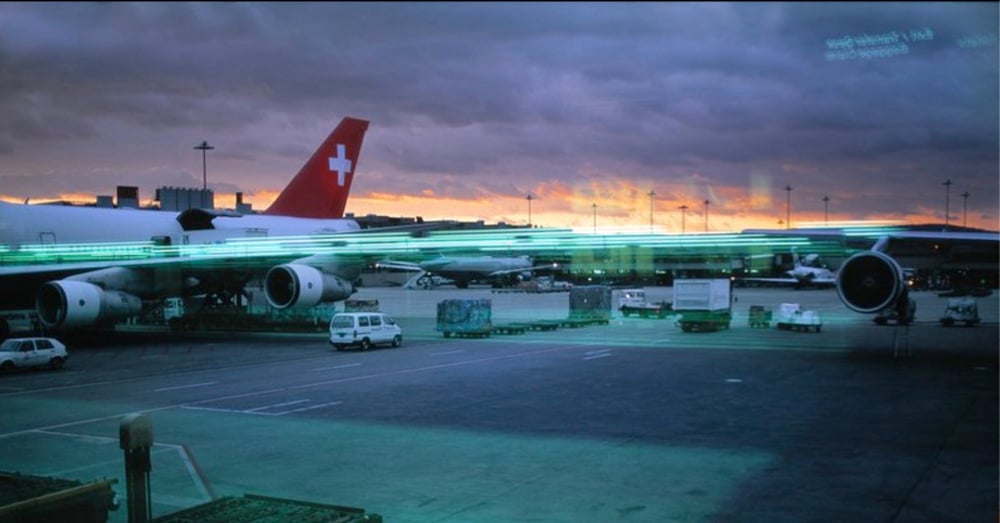
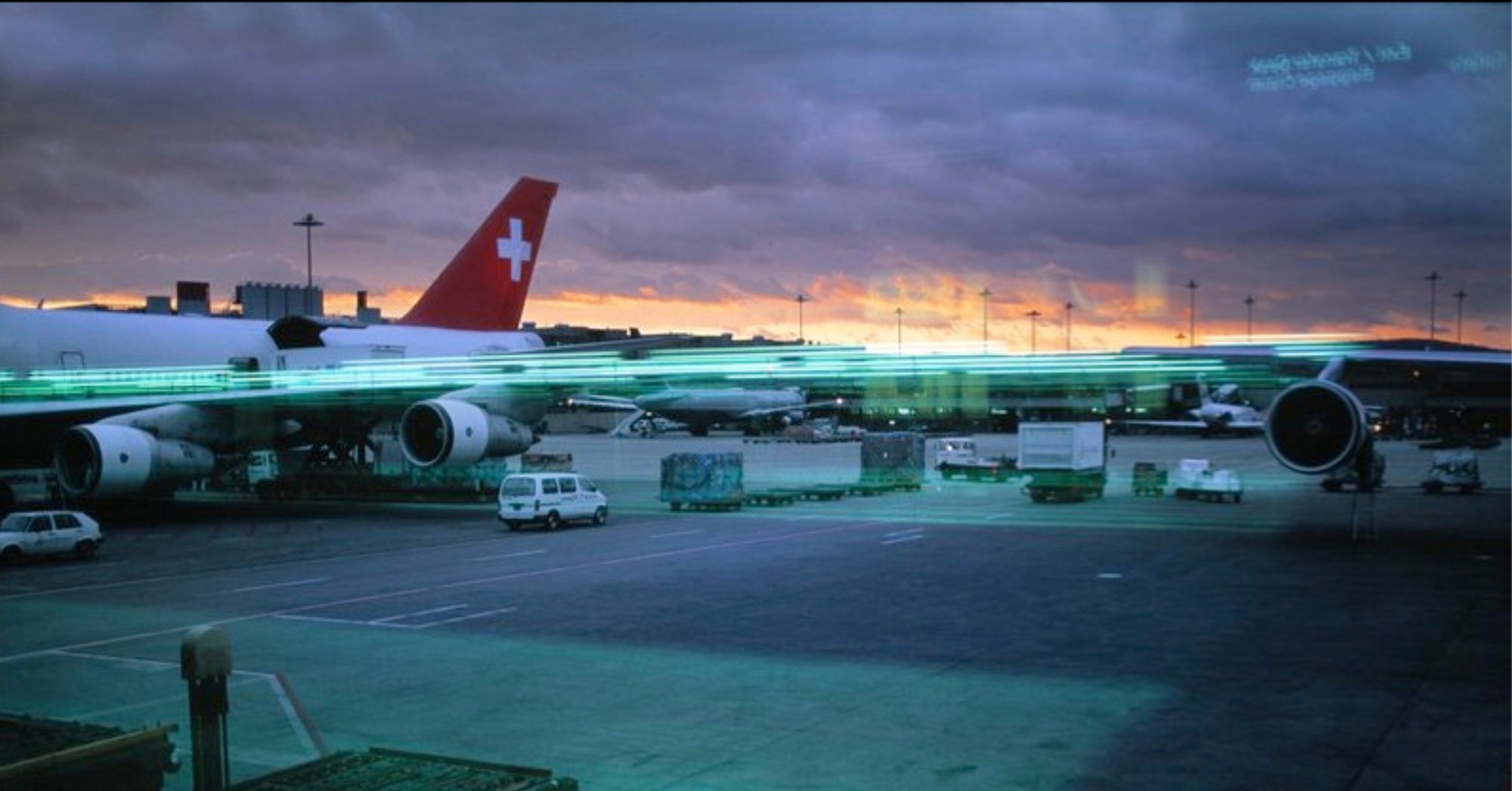
// Untitled, Zurich Airport 2000 by Peter Fischli and David Weiss is a limited edition offset print from 2007, capturing a cinematic view of Zurich Airport at dusk. The photograph features an airplane adorned with the iconic Swiss tail logo, set against a dramatic sky tinged with sunset hues. The scene is marked by a striking greenish light trail, possibly created by long-exposure photography, that stretches across the frame, adding a surreal quality to the otherwise industrial setting. This image explores themes of transience, technology, and the liminal spaces of travel, inviting viewers to reflect on the transient moments that define modern journeys. Fischli and Weiss's unique perspective brings a contemplative stillness to the busy environment of an international airport.
Artwork Copyright © Peter & David Fischl & WeissPeter Fischli (Switzerland, 1952) and David Weiss (Switzerland, 1946–2012) formed an influential artistic duo known for their playful and conceptual works. Through films, sculptures, and installations, they explored the mundane, humor, and philosophical questions, with iconic works like The Way Things Go.
Artwork Copyright © Peter & David Fischl & WeissUntitled, Zurich Airport 2000, 2007
Form
Medium
Size
- Inches
- Centimeters
Edition
Price
Available works →
- Authenticity Guaranteed
- Insured Shipping
- Online Since 2005
●
●Inventory 8134
●Signed
●Comes with gallery invoice and certificate
●Sell Us a Similar Artwork. Learn more.
// Untitled, Zurich Airport 2000 by Peter Fischli and David Weiss is a limited edition offset print from 2007, capturing a cinematic view of Zurich Airport at dusk. The photograph features an airplane adorned with the iconic Swiss tail logo, set against a dramatic sky tinged with sunset hues. The scene is marked by a striking greenish light trail, possibly created by long-exposure photography, that stretches across the frame, adding a surreal quality to the otherwise industrial setting. This image explores themes of transience, technology, and the liminal spaces of travel, inviting viewers to reflect on the transient moments that define modern journeys. Fischli and Weiss's unique perspective brings a contemplative stillness to the busy environment of an international airport.
Artwork Copyright © Peter & David Fischl & WeissPeter Fischli (Switzerland, 1952) and David Weiss (Switzerland, 1946–2012) formed an influential artistic duo known for their playful and conceptual works. Through films, sculptures, and installations, they explored the mundane, humor, and philosophical questions, with iconic works like The Way Things Go.
Artwork Copyright © Peter & David Fischl & Weiss- Recently Added
- Price (Low-High)
- Price (High-Low)
- Year (Low-High)
- Year (High-Low)

Peter & David Fischl & Weiss
Untitled, Zurich Airport 2000, 2007
Limited Edition Print
Offset Print
Currently Not Available
Related Artists


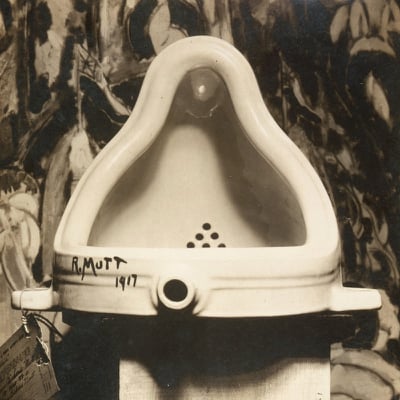
Artwork by Marcel Duchamp
What is Found Object?
A found object is a term used to describe a man-made or natural object, or a fragment of one, that an artist discovers or purchases and keeps for inspiration or as a work of art. The artist may also modify the object or incorporate it into a collage or assemblage, transforming it into a new piece of art.

Peter & David Fischl & Weiss
Untitled, Zurich Airport 2000, 2007
129 x 249 cm


