Richard Orlinski (France, 1966) is a contemporary sculptor renowned for his vibrant, faceted animal sculptures that blend Pop Art and popular culture. His 'Born Wild' series transforms primal instincts into refined art, utilizing materials like resin and aluminum. Orlinski's works are exhibited globally, making art accessible to a broad audience.
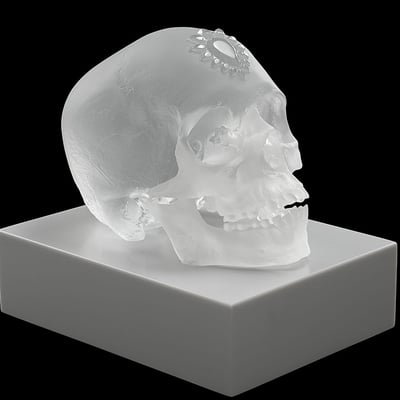
SculptureAcrylic sculpture refers to both a process and the resulting object. The artist begins by creating a sculpture from clay, plaster, or epoxy, which is then used to make a flexible mold. Melted acrylic is poured into the mold, and once it cures, the acrylic piece is hand-finished through sanding and polishing. Acrylic sculptures are valued for their clarity, durability, and ability to achieve intricate details.
Richard Orlinski (France, 1966) is a contemporary sculptor renowned for his vibrant, faceted animal sculptures that blend Pop Art and popular culture. His 'Born Wild' series transforms primal instincts into refined art, utilizing materials like resin and aluminum. Orlinski's works are exhibited globally, making art accessible to a broad audience.
It's better to be a lion for a day than a sheep all your life.
- Richard Orlinski
Richard Orlinski is a modern French artist whose sculptures have been centered around the idea "Born Wild." His works have appeared in 90 galleries around the world since 2011, and he is in the top 10 of all French artists in the world today in terms of value of works sold. The "Born Wild" movement seeks to change negative emotions into more positive impulse. The idea is to go from more primal instincts to sophisticated, civilized emotions. Richard Orlinski uses such basic forms and shapes as crocodiles, letters, panthers, skulls and even the iconic "David" form that was first sculpted by Michelangelo back in the Renaissance. Other iconic forms include the stiletto heel, blue jeans, cans and images, as well as tributes to artists in the New Realism and Pop Art movements. (Artist website)
Pop Art is an art movement that began in Britain in 1955 and in the late 1950s in the U.S. It challenged traditional fine arts by incorporating imagery from popular culture, such as news, advertising, and comic books. Pop Art often isolates and recontextualizes materials, combining them with unrelated elements. The movement is more about the attitudes and ideas that inspired it than the specific art itself. Pop Art is seen as a reaction against the dominant ideas of Abstract Expressionism, bringing everyday consumer culture into the realm of fine art.