
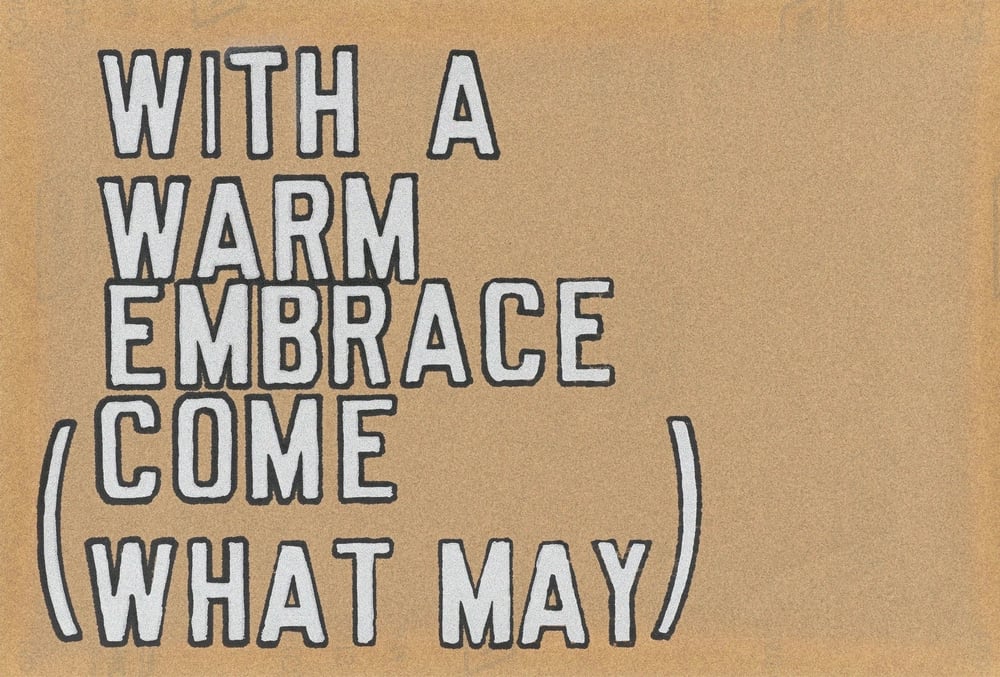
// Lawrence Weiner's With a Warm Embrace (Come What May) (1995) is a silkscreen print that showcases his conceptual approach to language and art. The piece features bold, uppercase text on a neutral tan background, with words arranged to convey both a visual rhythm and an open-ended message. The phrase With a Warm Embrace (Come What May) suggests resilience and acceptance in the face of uncertainty. Weiner’s minimalistic style emphasizes the power of words, inviting viewers to interpret the message in their own personal context, highlighting his influence on the language-based conceptual art movement.
Artwork Copyright © Lawrence WeinerLawrence Weiner (USA, 1942–2021) was a pioneering conceptual artist whose text-based works challenged traditional notions of art. Using language as his primary medium, he created pieces that emphasized ideas over physical objects. His minimal yet profound statements, often installed on walls, continue to inspire dialogue about art and its accessibility.
Artwork Copyright © Lawrence WeinerWith a warm Embrace (Come what May), 1995
Form
Medium
Size
- Inches
- Centimeters
Edition
Price
- USD
- EUR
- GBP
- CHF
- Authenticity Guaranteed
- Insured Shipping
- Online Since 2005
●Inventory 10812
●Signed
●Comes with gallery invoice and certificate
●Sell Us a Similar Artwork. Learn more.
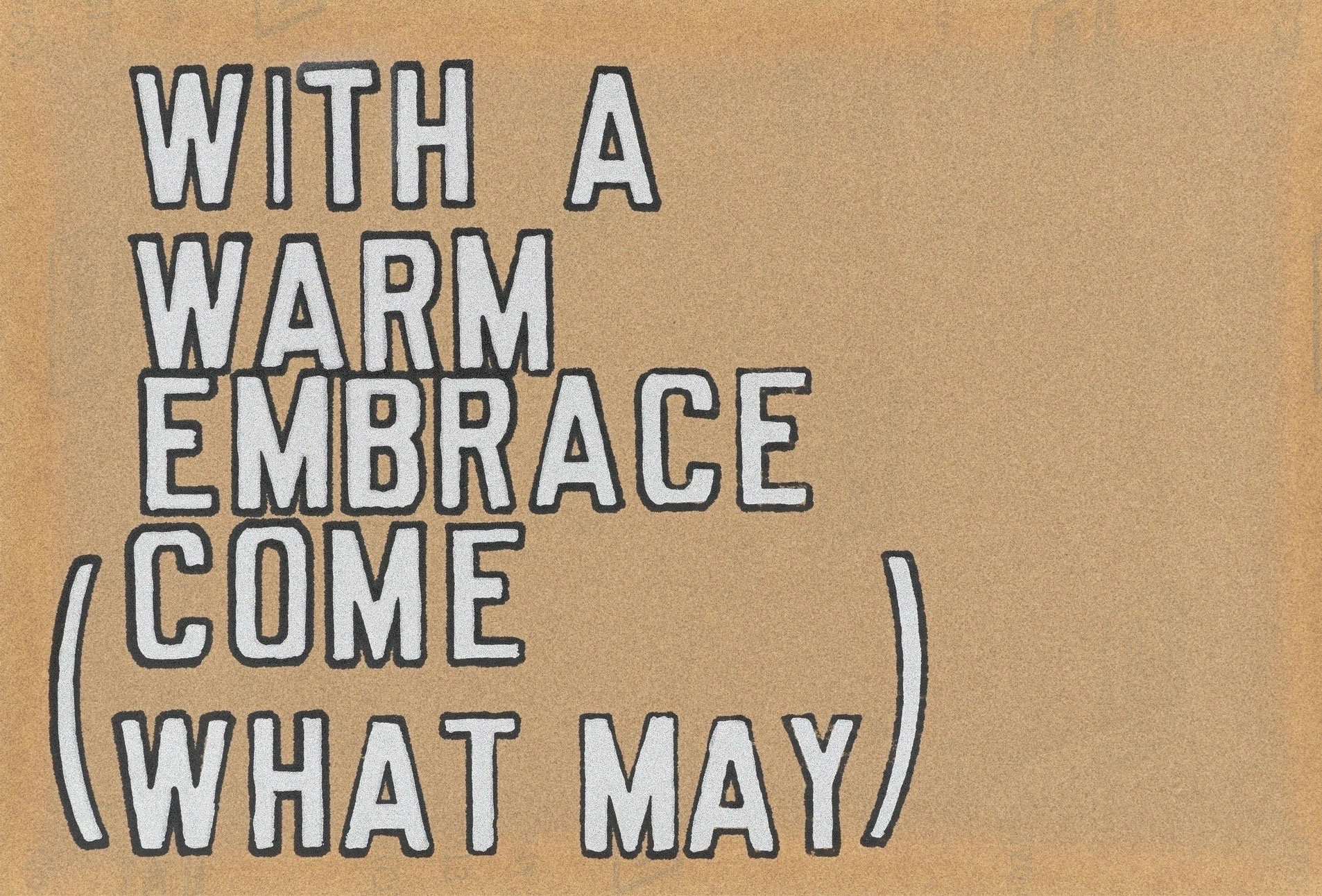
// Lawrence Weiner's With a Warm Embrace (Come What May) (1995) is a silkscreen print that showcases his conceptual approach to language and art. The piece features bold, uppercase text on a neutral tan background, with words arranged to convey both a visual rhythm and an open-ended message. The phrase With a Warm Embrace (Come What May) suggests resilience and acceptance in the face of uncertainty. Weiner’s minimalistic style emphasizes the power of words, inviting viewers to interpret the message in their own personal context, highlighting his influence on the language-based conceptual art movement.
Artwork Copyright © Lawrence WeinerLawrence Weiner (USA, 1942–2021) was a pioneering conceptual artist whose text-based works challenged traditional notions of art. Using language as his primary medium, he created pieces that emphasized ideas over physical objects. His minimal yet profound statements, often installed on walls, continue to inspire dialogue about art and its accessibility.
Artwork Copyright © Lawrence Weiner- Recently Added
- Price (Low-High)
- Price (High-Low)
- Year (Low-High)
- Year (High-Low)

Lawrence Weiner
With a warm Embrace (Come what May), 1995
Limited Edition Print
Silkscreen
EUR 6,500
Related Artists



Artwork by Laure Prouvost
What is Lettrism?
Lettrism is an art form that uses letters, words, and symbols to create artwork. The movement was established in Paris in the 1940s and later gained popularity in the 1950s in America. Lettrisme is the French spelling of the movement's name, derived from the French word for letter.

Lawrence Weiner
With a warm Embrace (Come what May), 1995
33.1 x 48.3 cm


