

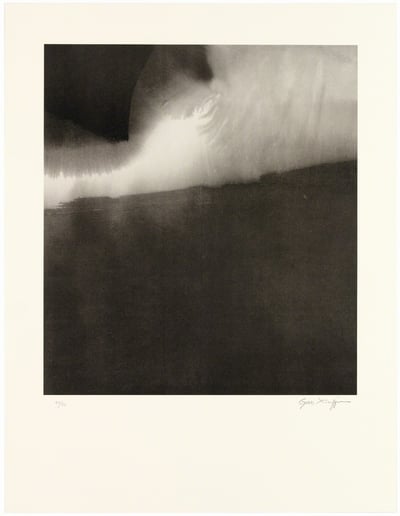
// Gao Xingjian’s S/T from 2008 is a limited-edition lithograph that encapsulates his signature style, blending abstraction with an atmospheric sense of landscape. This piece, rendered in monochromatic tones, creates a contemplative scene through gradients of light and dark. The soft, blurred transitions evoke a misty, ethereal landscape that seems to hover between reality and imagination. The subtle textures and tonal shifts suggest movement and depth, while remaining open to interpretation, allowing the viewer to project their own emotions and reflections onto the work. Xingjian’s approach captures the essence of quiet introspection and the fleeting nature of perception.
Artwork Copyright © Xingjian GaoGao Xingjian (China/France, 1940) is a Chinese-born French artist, writer, and Nobel laureate. Known for his ink paintings, Gao's minimalist style blends traditional Chinese techniques with modern abstraction. His works often explore themes of exile, identity, and spiritual introspection, reflecting his experiences as a political exile and a global cultural figure.
Artwork Copyright © Xingjian GaoS/T, 2008
Form
Medium
Size
- Inches
- Centimeters
Edition
Price
Available works →
- Authenticity Guaranteed
- Insured Shipping
- Online Since 2005
●
●Inventory 2971
●Signed
●Comes with gallery invoice and certificate
●Sell Us a Similar Artwork. Learn more.
// Gao Xingjian’s S/T from 2008 is a limited-edition lithograph that encapsulates his signature style, blending abstraction with an atmospheric sense of landscape. This piece, rendered in monochromatic tones, creates a contemplative scene through gradients of light and dark. The soft, blurred transitions evoke a misty, ethereal landscape that seems to hover between reality and imagination. The subtle textures and tonal shifts suggest movement and depth, while remaining open to interpretation, allowing the viewer to project their own emotions and reflections onto the work. Xingjian’s approach captures the essence of quiet introspection and the fleeting nature of perception.
Artwork Copyright © Xingjian GaoGao Xingjian (China/France, 1940) is a Chinese-born French artist, writer, and Nobel laureate. Known for his ink paintings, Gao's minimalist style blends traditional Chinese techniques with modern abstraction. His works often explore themes of exile, identity, and spiritual introspection, reflecting his experiences as a political exile and a global cultural figure.
Artwork Copyright © Xingjian Gao- Recently Added
- Price (Low-High)
- Price (High-Low)
- Year (Low-High)
- Year (High-Low)
Xingjian Gao
S/T, 2008
Limited Edition Print
Lithograph
Currently Not Available
Related Artists
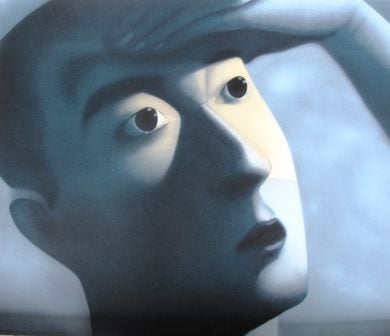
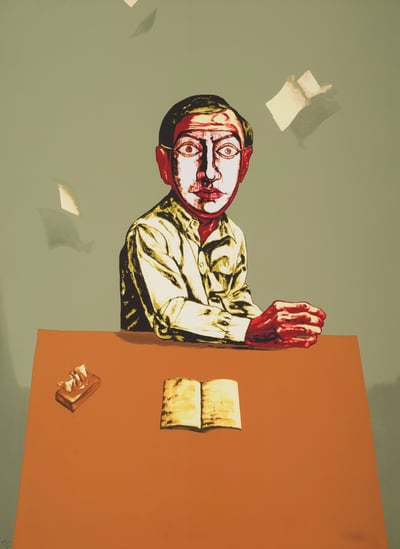

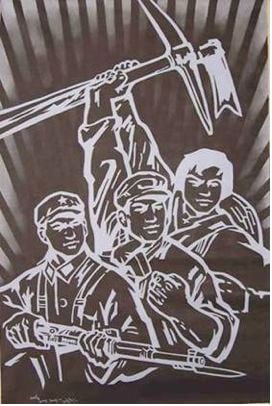

Artwork by Feng Zhengjie
What is Chinese contemporary art?
Chinese Contemporary Art is marked by a wide range of styles and experimental approaches. In the 1980s, avant-garde exhibitions were often shut down by government officials. The 1990s saw the rise of political pop and cynical realism, while China's One-Child Policy influenced artists to explore the individual as a subject matter.

Xingjian Gao
S/T, 2008
65 x 50 cm


