

Constant Permeke
Constant Permeke (Belgium, 1886–1952) was a key figure in Flemish Expressionism, known for his emotive depictions of rural life. His paintings, characterized by earthy tones and bold forms, often portrayed farmers and fishermen, emphasizing their strength and struggles. Permeke’s work also extended to sculpture, reflecting his deep connection to humanity and nature.
© Constant Permeke. All rights reserved.
- Recently Added
- Price (Low-High)
- Price (High-Low)
- Year (Low-High)
- Year (High-Low)
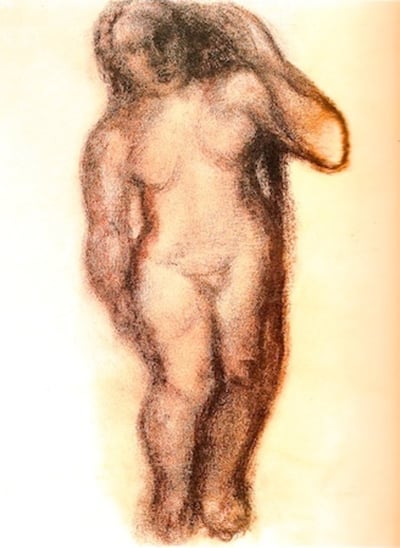
Constant Permeke
Naakt, 1938
Drawing / Watercolor
Mixed Media
EUR 10,000 - 14,000
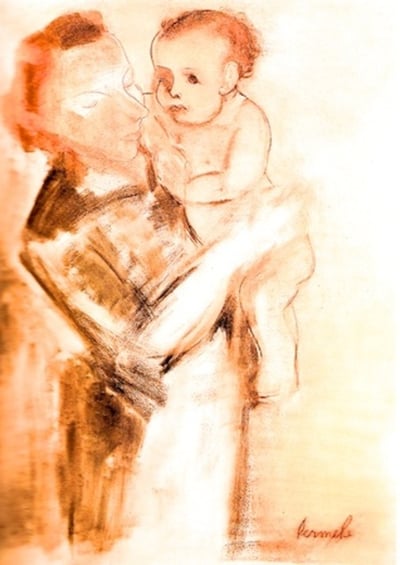
Constant Permeke
Moederschap, 1949
Drawing / Watercolor
Mixed Media
EUR 30,000 - 40,000
No sold works to show.
Sculpting is an art for the blind.
- Constant Permeke
- Constant Permeke
Considered to be the leading artist of Flemish Expressionism, Constant Permeke was a renowned painter and sculptor who drew his inspiration from the working classes and various landscapes. The majority of Permeke’s outputs were created between the two world wars and often focussed on the strife of the peasant population and working people; one of his most famous paintings, The Two Sailor Brothers, is a fitting example of the era in which his work was centred around fishermen and the sea. Periods of Permeke’s life were more comfortable than others, and he began to paint landscapes of the places he had lived, such as the mountainsides he frequented during his stay in Vevey, Switzerland. Eventually, Permeke tried his hand at sculpture, and the figures would often denote the human experience on an individual, existential basis – Niobe is perhaps his most notable sculpture. Unique among Flemish Expressionists, Permeke was the only artist of his kind to use charcoal as a medium for his monumental drawings; his paintings were also formed from a dark palette to highlight the bleak and dark times that his subjects were experiencing.
Related Artists


Related Articles
Artists - February 4, 2025
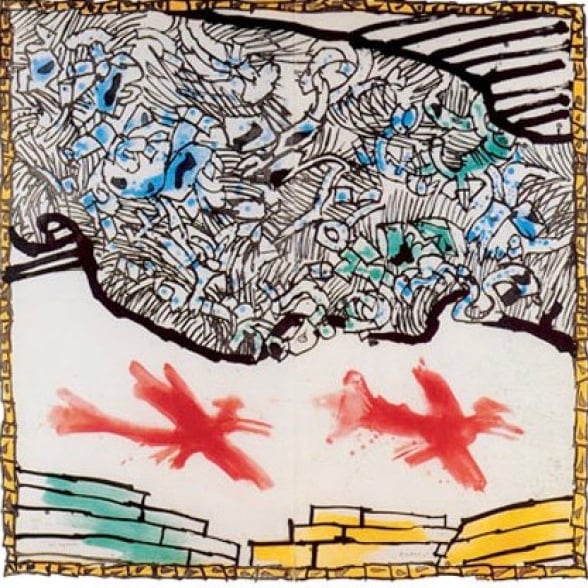
Pierre Alechinsky: Bridging East and West in Modern Art
Discover how Pierre Alechinsky fused European expressionism with Japanese calligraphy, pioneering a unique cross-cultural artistic language.Read More
Popular, Art Movements - November 20, 2024
Understanding Abstract Expressionism: Emotion and Gesture
Explore the emotional depth of Abstract Expressionism! Discover how artists like Pollock and Rothko used gesture and color to convey human complexity.Read More
News, Popular, Collecting, Artists - August 12, 2026
In Minor Keys: Finding Intimacy and Identity at the 61st Venice Biennale — and in Your Collection
Explore how Koyo Kouoh’s 61st Venice Biennale vision, In Minor Keys, is shifting contemporary collecting toward quiet introspection, memory, and personal identi…Read More Artwork by Helen Frankenthaler
What is abstract expressionism?
Abstract Expressionism is an art movement that emerged in the United States during the 1940s and 1950s. Characterized by large, abstract canvases, the movement emphasized spontaneous, expressive brushwork and the use of color and form to convey emotion rather than represent reality. Artists like Jackson Pollock, Mark Rothko, and Willem de Kooning are key fig…
Explore »

