

Netherlands
The contemporary art scene in the Netherlands is renowned for its innovative spirit and diverse creative expressions. Key institutions like the Stedelijk Museum in Amsterdam and Museum Boijmans Van Beuningen in Rotterdam showcase internationally acclaimed artists and foster emerging talent. Prominent figures such as Marlene Dumas, known for her thought-provoking paintings, and Rineke Dijkstra, celebrated for her intimate portraiture, underscore the country's contribution to contemporary art. Events like the annual Amsterdam Art Weekend further highlight the Netherlands' dynamic art scene. Discover Dutch contemporary art on Composition Gallery's website.
- Show All
- Established
- Discoveries
- Show All
Artworks Related to Netherlands
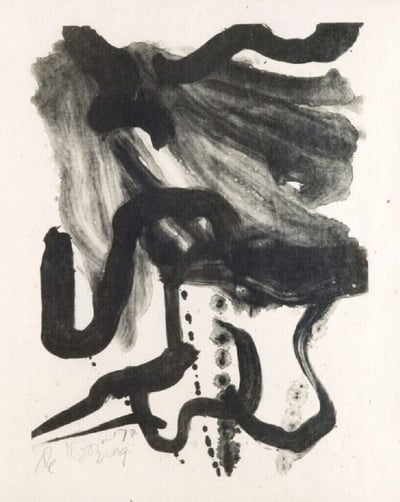
Willem de Kooning
Woman with long hair and corset, 1970
Limited Edition Print
Lithograph
Inquire For Price

Karel Appel
Untitled (Colorful Figure), 1998
Drawing / Watercolor
Pastel
EUR 7,500
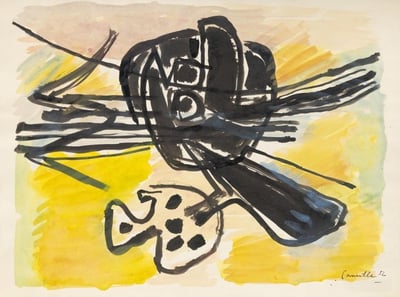
Guillaume Corneille
Composition abstraite, 1952
Drawing / Watercolor
Mixed Media
EUR 11,500
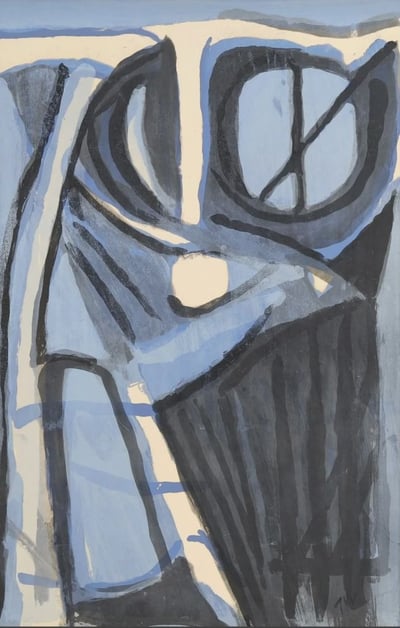
Bram Van Velde
MP 166, 1975
Limited Edition Print
Lithograph
EUR 2,350
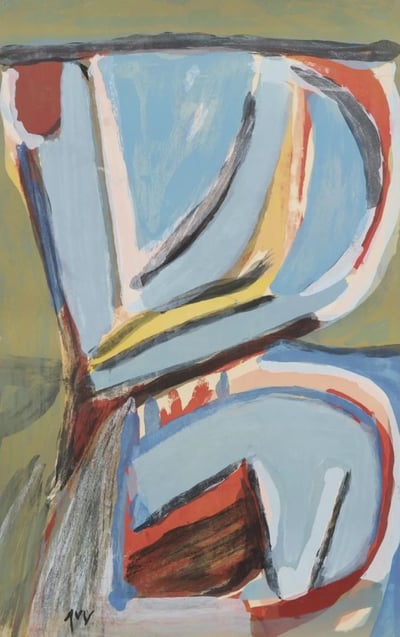
Bram Van Velde
MP 167, 1975
Limited Edition Print
Lithograph
EUR 2,350

Guillaume Corneille
Chats Champêtres, 2008
Limited Edition Print
Engraving
EUR 1,500

Guillaume Corneille
Plat, 1999
Ceramics
Plate
EUR 3,500

Guillaume Corneille
Femme rose aux cheveux bleus, 1999
Limited Edition Print
Mixed Media
EUR 1,500

Guillaume Corneille
La femme et l’oiseau rouge, 1995
Limited Edition Print
Lithograph
EUR 1,500

Willem de Kooning
Rainbow: Thelonious Monk Devil at the Keyboard, 1972/76
Limited Edition Print
Lithograph
Currently Not Available

Willem de Kooning
Untitled from Self Portrait in a Convex Mirror, 1984
Limited Edition Print
Lithograph
Inquire For Price

Karel Appel
A Group of 3 Screenprints, 1975 / 1978
Limited Edition Print
Screen-print
USD 2,810
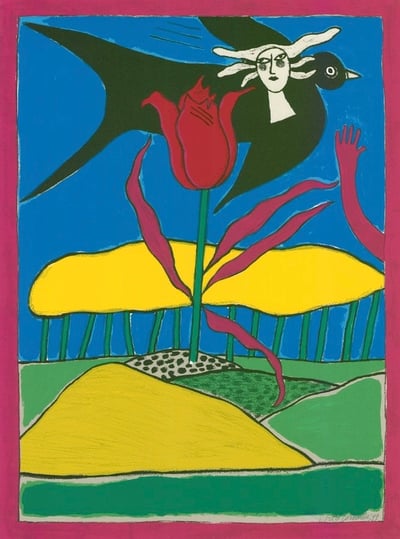
Guillaume Corneille
Däumelinchen, 1999
Limited Edition Print
Lithograph
EUR 980
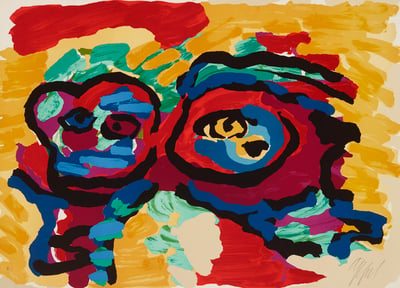
Karel Appel
Two Figures, c. 1980
Limited Edition Print
Lithograph
USD 1,000
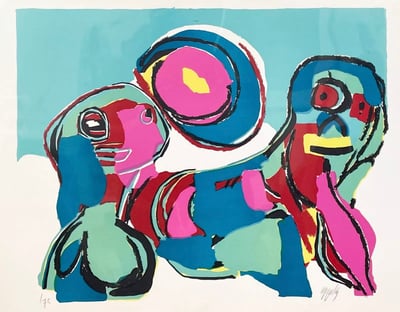
Karel Appel
Composition , 1969
Limited Edition Print
Lithograph
USD 950
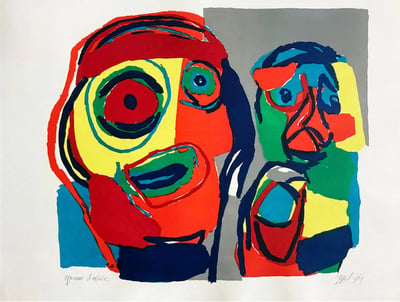
Karel Appel
Serie Personages, 1969
Limited Edition Print
Lithograph
USD 780
Related Articles


New Topographics is a term coined in 1975 by curator William Jenkins to describe a group of photographers whose work focused on formal black-and-white images of urban and industrial landscapes. Jenkins initially described their aesthetic as banal, but the photographers themselves argued that their compositions were as significant as those of natural landscapes, emphasizing the beauty in everyday, man-made environments.

Original artwork is art that stems directly from the personal inspiration and creativity of an artist. It is not a direct copy of another artist’s work, though it may be inspired by it. The subject matter can be similar, but it cannot be an exact replication. The term also refers to a unique piece, as opposed to a multiple or edition.
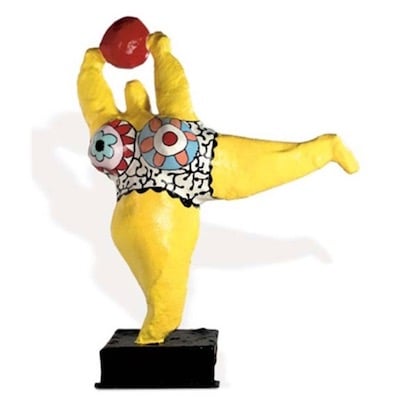
Papier-mâché is a composite material made from pieces of paper or pulp, reinforced with textiles and bound with adhesives like starch, wallpaper paste, or glue. There are two main methods to create papier-mâché: one involves layering strips of paper soaked in adhesive, while the other uses a pulp made by boiling or soaking paper and then adding glue. Though each method has a different process, both yield similar results.
Can't find your Answer?
Thank you! Your question has been sent — we'll get back to you shortly.
