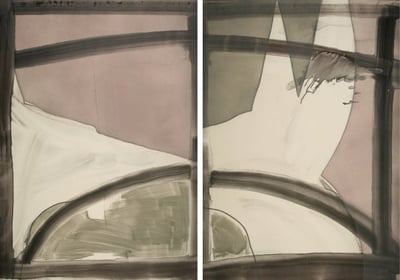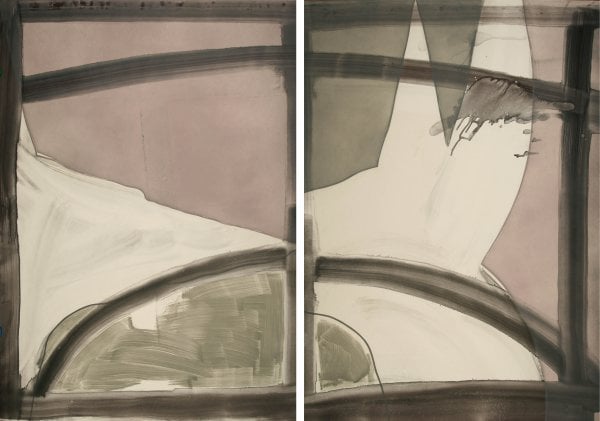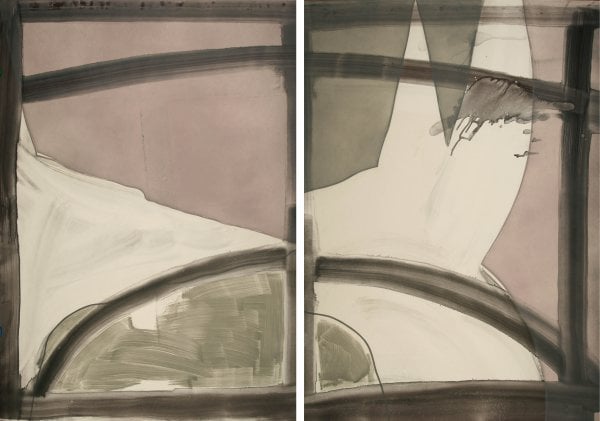
Etching and monotype - 2 plates of 140 x 100 cm. each Printed on Hahnemuhle, 300 gr. Total size 140 x 200 cm. - e/u (e?preuve unique) 8/8
Dogs (Diptych, Pale Tones) by Alison Wilding is a monotype and etching created in 2005, characterized by its soft, muted tones and abstract forms. This diptych, composed of two large panels, each measuring 140 x 100 cm, features broad, sweeping strokes and layered shapes that suggest a mysterious, almost dreamlike landscape. The pale colors, dominated by shades of grey, white, and soft brown, create a quiet, contemplative mood. The composition’s abstract forms evoke fluidity and ambiguity, leaving space for viewers to interpret the imagery. Wilding's use of Hahnemuhle paper and unique printing techniques lends a delicate texture to the surface, enhancing the ethereal quality of the work. Limited to an edition of eight unique impressions, this piece demonstrates Wilding’s skill in balancing abstraction with a hint of representational depth.
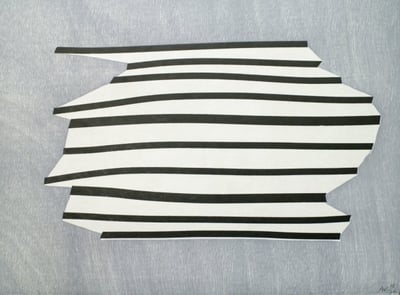
Ludwig Wilding (Germany, 1927–2010) was a pivotal figure in Op and Kinetic art. His three-dimensional works, often in black and white, created dynamic optical illusions that challenged visual perception. Exhibiting internationally, Wilding's art continues to influence contemporary explorations of movement and space.
MonotypeMonotype is a printmaking technique where an image is painted or drawn on a nonabsorbent, smooth surface, traditionally an etching plate of copper, but now also acrylic, zinc, or glass. The image is then transferred to paper using a printing press, creating a unique print. The first pressing removes most of the ink, making it difficult to produce additional prints with the same richness, resulting in a one-of-a-kind artwork.
Etching and monotype - 2 plates of 140 x 100 cm. each Printed on Hahnemuhle, 300 gr. Total size 140 x 200 cm. - e/u (e?preuve unique) 8/8
Dogs (Diptych, Pale Tones) by Alison Wilding is a monotype and etching created in 2005, characterized by its soft, muted tones and abstract forms. This diptych, composed of two large panels, each measuring 140 x 100 cm, features broad, sweeping strokes and layered shapes that suggest a mysterious, almost dreamlike landscape. The pale colors, dominated by shades of grey, white, and soft brown, create a quiet, contemplative mood. The composition’s abstract forms evoke fluidity and ambiguity, leaving space for viewers to interpret the imagery. Wilding's use of Hahnemuhle paper and unique printing techniques lends a delicate texture to the surface, enhancing the ethereal quality of the work. Limited to an edition of eight unique impressions, this piece demonstrates Wilding’s skill in balancing abstraction with a hint of representational depth.
Ludwig Wilding (Germany, 1927–2010) was a pivotal figure in Op and Kinetic art. His three-dimensional works, often in black and white, created dynamic optical illusions that challenged visual perception. Exhibiting internationally, Wilding's art continues to influence contemporary explorations of movement and space.
Different performances have different kinds of outcomes. I would say live bodies sometimes activate a space.
- Alison Wilding
Alison Wilding is a twentieth century English sculptor. She studied at Nottingham College of Art, the Ravensbourne College of Art and Design and finally at the Royal College of Art, where she left in 1973. Although she began her career specializing in multimedia artworks, she is perhaps best known for her abstract sculptures which she used a large array of materials to create. She has worked with wood, bronze, stone, wax, silk, steel and a whole host of other materials. One of her best known pieces of work is called Stormy Weather and beeswax, oil and pigment rubbed into steel. She was inventive and groundbreaking in her methodologies. She made one significant piece of public artwork which is located on the River Wear in Sunderland. The piece is calledAmbit and consists of a number of steel tubes which float on the river and are lit at night. Alison Wilding was nominated for the Turner Prize in 1988 and 1992.
Contemporary art refers to avant-garde or innovative art created in the recent past or present day. The exact starting point of contemporary art varies depending on the institution, often tied to the founding year of museums or galleries that showcase the style. Contemporary art is characterized by its focus on current ideas, diverse media, and the exploration of new concepts and techniques.