The work was originally commissioned and published by The Multiple Store in London who sold this edition to Plinth; hand signed at the base of work
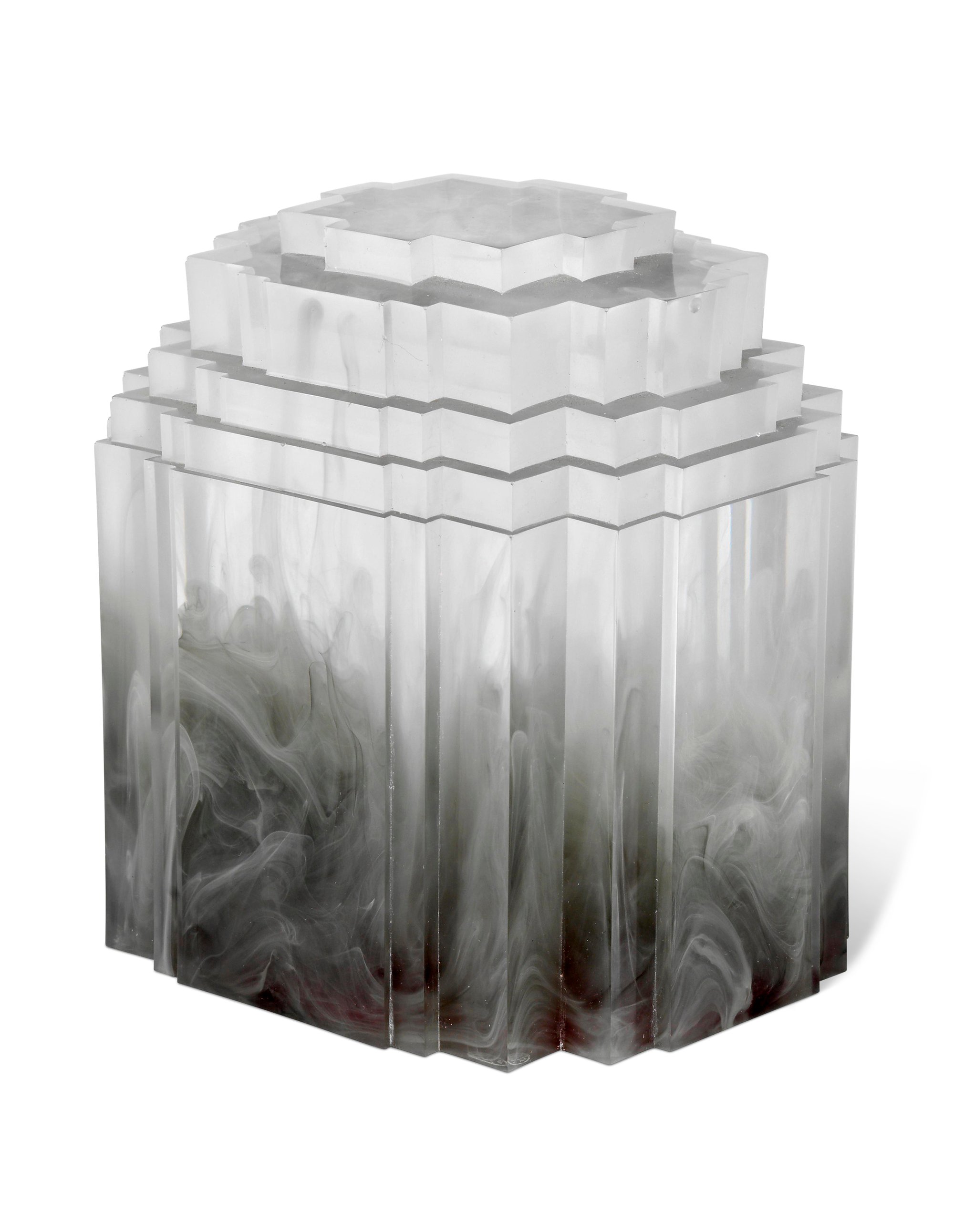
Rising by Alison Wilding, a 2001 sculpture crafted from resin, presents a captivating, architectural form composed of tiered, translucent layers. The geometric, stepped structure resembles an abstracted ziggurat or temple, creating a sense of upward movement. Within the resin, swirling shades of grey and smoky textures create an ethereal effect, as though clouds or mist are trapped within the sculpture. This interplay between solid form and shifting interior suggests themes of impermanence and transformation. Wilding’s work often explores the contrast between material density and transparency, and Rising embodies this exploration with elegance and subtlety.
Ludwig Wilding (Germany, 1927–2010) was a pivotal figure in Op and Kinetic art. His three-dimensional works, often in black and white, created dynamic optical illusions that challenged visual perception. Exhibiting internationally, Wilding's art continues to influence contemporary explorations of movement and space.
Resin Resin can be derived from both natural sources, such as pine sap, and synthetic processes. Natural resin comes from tree sap, while synthetic resin is a type of dense, easily molded plastic. Resin is commonly used in sculpture, and it can also enhance the vibrancy of paint colors.
The work was originally commissioned and published by The Multiple Store in London who sold this edition to Plinth; hand signed at the base of work
Rising by Alison Wilding, a 2001 sculpture crafted from resin, presents a captivating, architectural form composed of tiered, translucent layers. The geometric, stepped structure resembles an abstracted ziggurat or temple, creating a sense of upward movement. Within the resin, swirling shades of grey and smoky textures create an ethereal effect, as though clouds or mist are trapped within the sculpture. This interplay between solid form and shifting interior suggests themes of impermanence and transformation. Wilding’s work often explores the contrast between material density and transparency, and Rising embodies this exploration with elegance and subtlety.
Ludwig Wilding (Germany, 1927–2010) was a pivotal figure in Op and Kinetic art. His three-dimensional works, often in black and white, created dynamic optical illusions that challenged visual perception. Exhibiting internationally, Wilding's art continues to influence contemporary explorations of movement and space.
Different performances have different kinds of outcomes. I would say live bodies sometimes activate a space.
- Alison Wilding
Alison Wilding is a twentieth century English sculptor. She studied at Nottingham College of Art, the Ravensbourne College of Art and Design and finally at the Royal College of Art, where she left in 1973. Although she began her career specializing in multimedia artworks, she is perhaps best known for her abstract sculptures which she used a large array of materials to create. She has worked with wood, bronze, stone, wax, silk, steel and a whole host of other materials. One of her best known pieces of work is called Stormy Weather and beeswax, oil and pigment rubbed into steel. She was inventive and groundbreaking in her methodologies. She made one significant piece of public artwork which is located on the River Wear in Sunderland. The piece is calledAmbit and consists of a number of steel tubes which float on the river and are lit at night. Alison Wilding was nominated for the Turner Prize in 1988 and 1992.
Contemporary art refers to avant-garde or innovative art created in the recent past or present day. The exact starting point of contemporary art varies depending on the institution, often tied to the founding year of museums or galleries that showcase the style. Contemporary art is characterized by its focus on current ideas, diverse media, and the exploration of new concepts and techniques.