
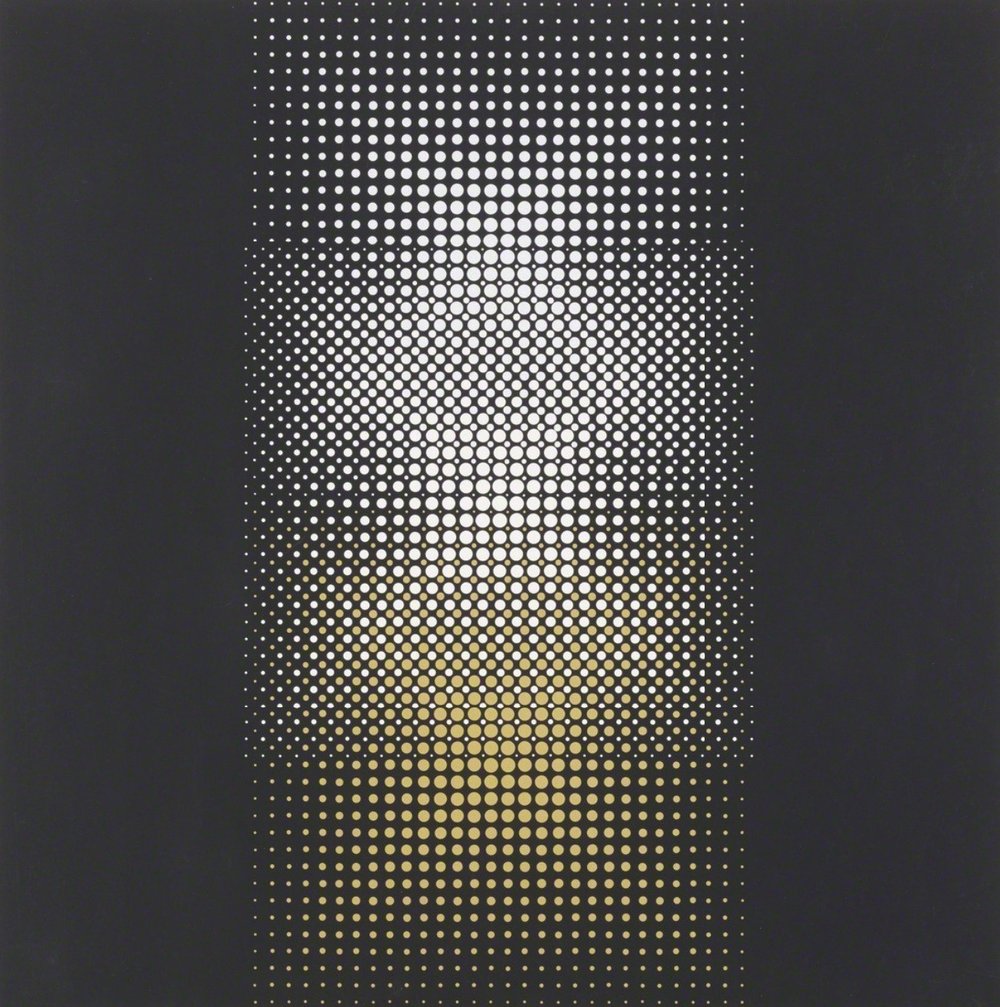
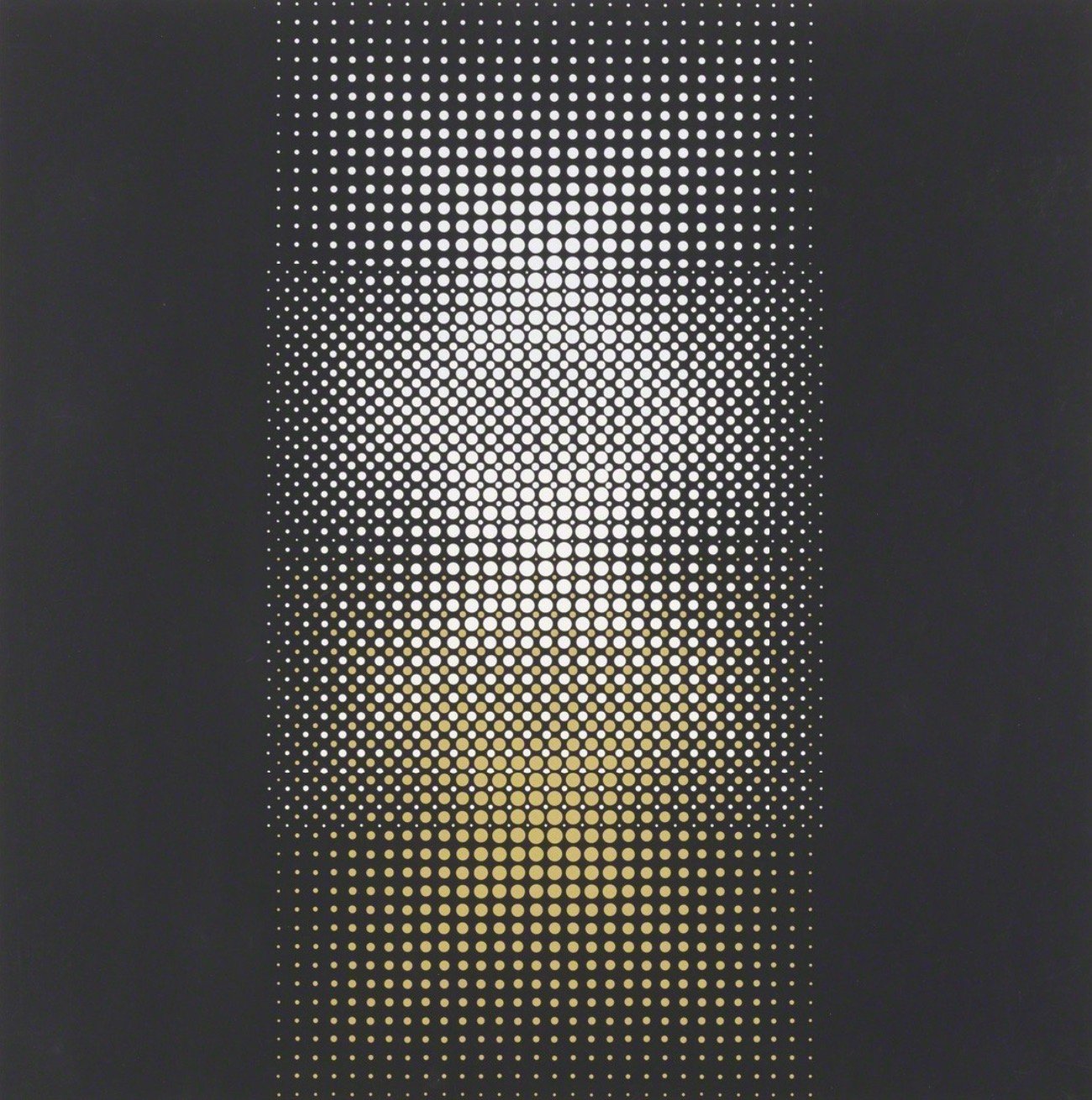
// Komposition VI by Almir Mavignier, a limited edition lithograph from 1965, embodies the principles of Op Art with its precise arrangement of dots forming a gradient. The pattern transitions smoothly from dark to light, creating an illusion of depth and a pulsating rhythm as the eye is drawn towards the central glow. Each dot is meticulously placed, demonstrating Mavignier's mastery in manipulating optical effects and spatial perception. This piece, with an edition size of 125, captures the viewer's attention with its dynamic yet balanced composition, showcasing Mavignier's skill in blending mathematics and art to produce a visually immersive experience.
Artwork Copyright © Almir MavignierAlmir Mavignier (Brazil, 1925–2018) was a pioneer of Op Art and Concrete Art, celebrated for his precise, geometric compositions. Using optical effects and vibrant colors, his works create dynamic visual experiences. Mavignier played a vital role in bridging Brazilian modernism with international art movements, influencing the development of abstract art worldwide.
Artwork Copyright © Almir MavignierKomposition VI, 1965
Form
Medium
Size
- Inches
- Centimeters
Edition
Price
Available works →
- Authenticity Guaranteed
- Insured Shipping
- Online Since 2005
●
●Inventory 6915
●Signed
●Comes with gallery invoice and certificate
●Sell Us a Similar Artwork. Learn more.
// Komposition VI by Almir Mavignier, a limited edition lithograph from 1965, embodies the principles of Op Art with its precise arrangement of dots forming a gradient. The pattern transitions smoothly from dark to light, creating an illusion of depth and a pulsating rhythm as the eye is drawn towards the central glow. Each dot is meticulously placed, demonstrating Mavignier's mastery in manipulating optical effects and spatial perception. This piece, with an edition size of 125, captures the viewer's attention with its dynamic yet balanced composition, showcasing Mavignier's skill in blending mathematics and art to produce a visually immersive experience.
Artwork Copyright © Almir MavignierAlmir Mavignier (Brazil, 1925–2018) was a pioneer of Op Art and Concrete Art, celebrated for his precise, geometric compositions. Using optical effects and vibrant colors, his works create dynamic visual experiences. Mavignier played a vital role in bridging Brazilian modernism with international art movements, influencing the development of abstract art worldwide.
Artwork Copyright © Almir Mavignier- Recently Added
- Price (Low-High)
- Price (High-Low)
- Year (Low-High)
- Year (High-Low)
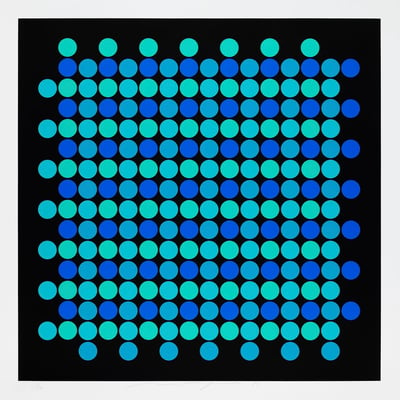
Almir Mavignier
Untiteld from 9x5 Konkret Portfolio, 1979
Limited Edition Print
Screen-print
EUR 1,600
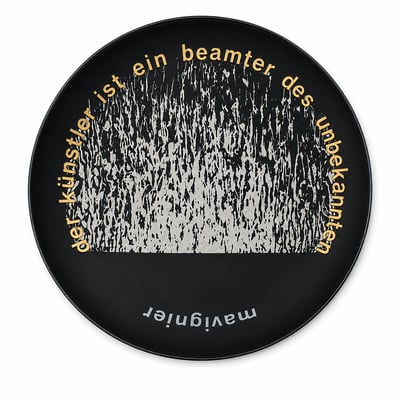
Almir Mavignier
der künstler ist ein beamter....., 1979
Sculpture / Object
Plate
EUR 980

Almir Mavignier
Komposition VI, 1965
Limited Edition Print
Lithograph
Currently Not Available
Available works by Almir Mavignier
See all →Almir Mavignier
Untiteld from 9x5 Konkret Portfolio, 1979
Limited Edition Print
Screen-print
EUR 1,600
Almir Mavignier
der künstler ist ein beamter....., 1979
Sculpture / Object
Plate
EUR 980
Related Artists


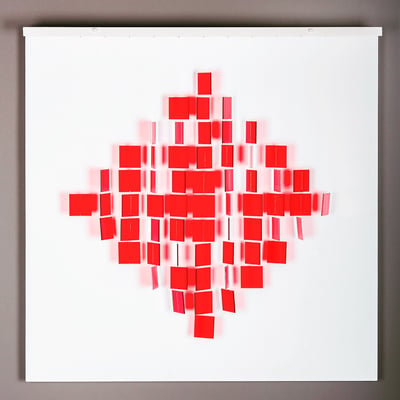

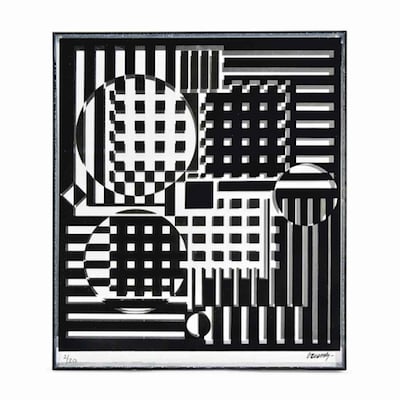
Artwork by Victor Vasarely
What is Op Art?
Op Art is a visual art style that uses optical illusions to create the impression of movement, vibrating patterns, flashing, or hidden images. The works are typically abstract, with many well-known pieces in black and white. The roots of Op Art can be traced back to earlier movements like Futurism, Constructivism, Dada, and Neo-Impressionism, particularly in their use of color effects and graphic design.

Almir Mavignier
Komposition VI, 1965
60 x 60 cm


