

With certificate signed by the artist
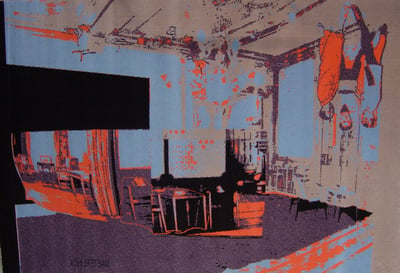
Maeterlinck - reverse by Anne-Mie Van Kerckhoven, created in 2003, is a tapestry that employs vibrant and contrasting colors to depict an interior space with an abstract, almost dreamlike quality. The artwork uses layers of purple, orange, and blue, creating a surreal representation of a room with furniture, windows, and ambiguous forms that seem to float or shift within the composition. The title, referencing the Belgian playwright Maurice Maeterlinck, suggests themes of illusion, the subconscious, and possibly the reversal of reality. Van Kerckhoven’s work often explores psychological and existential themes, and this piece invites the viewer to question the boundaries of perception and the nature of the depicted space.
Artwork Copyright © Anne-Mie Van KerckhovenAnne-Mie Van Kerckhoven (Belgium, 1951) is a multidisciplinary artist blending technology, feminism, and philosophy in her work. Using digital media, painting, and text, she explores the interplay of science and mysticism. Her art challenges conventional thinking, creating provocative dialogues about consciousness and societal constructs.
Artwork Copyright © Anne-Mie Van KerckhovenMaeterlinck - reverse, 2003
Form
Medium
Size
- Inches
- Centimeters
Edition
Price
Available works →
- Authenticity Guaranteed
- Insured Shipping
- Online Since 2005
●
●Inventory 3497
●Signed
●Comes with gallery invoice and certificate
●Sell Us a Similar Artwork. Learn more.
With certificate signed by the artist
Maeterlinck - reverse by Anne-Mie Van Kerckhoven, created in 2003, is a tapestry that employs vibrant and contrasting colors to depict an interior space with an abstract, almost dreamlike quality. The artwork uses layers of purple, orange, and blue, creating a surreal representation of a room with furniture, windows, and ambiguous forms that seem to float or shift within the composition. The title, referencing the Belgian playwright Maurice Maeterlinck, suggests themes of illusion, the subconscious, and possibly the reversal of reality. Van Kerckhoven’s work often explores psychological and existential themes, and this piece invites the viewer to question the boundaries of perception and the nature of the depicted space.
Artwork Copyright © Anne-Mie Van KerckhovenAnne-Mie Van Kerckhoven (Belgium, 1951) is a multidisciplinary artist blending technology, feminism, and philosophy in her work. Using digital media, painting, and text, she explores the interplay of science and mysticism. Her art challenges conventional thinking, creating provocative dialogues about consciousness and societal constructs.
Artwork Copyright © Anne-Mie Van Kerckhoven- Recently Added
- Price (Low-High)
- Price (High-Low)
- Year (Low-High)
- Year (High-Low)
Anne-Mie Van Kerckhoven
Maeterlinck - reverse, 2003
Tapestry
Tapestry
Currently Not Available
Related Artists
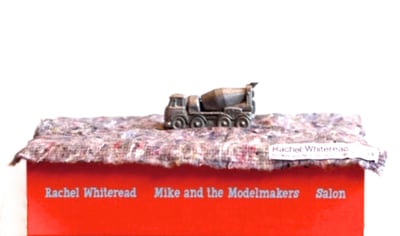

Artwork by Laure Prouvost
What is Lettrism?
Lettrism is an art form that uses letters, words, and symbols to create artwork. The movement was established in Paris in the 1940s and later gained popularity in the 1950s in America. Lettrisme is the French spelling of the movement's name, derived from the French word for letter.

Anne-Mie Van Kerckhoven
Maeterlinck - reverse, 2003
160 x 235 cm


