

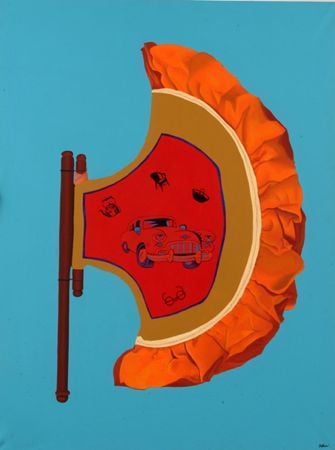
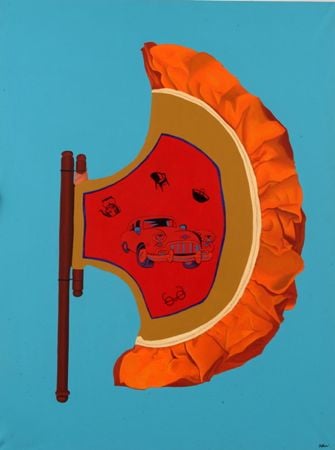
// This untitled painting by Babu Eshwar Prasad, created in 2006, is an acrylic on canvas that combines vibrant color and symbolic imagery. The composition centers on an object that resembles a hand-held fan or parasol, richly detailed in shades of red and orange against a bright blue background. Within the fan’s design, we see various symbols, including a classic car and animals, possibly signifying aspects of modernity, tradition, and cultural identity. The crisp, graphic style and the striking contrast of colors draw attention to the object’s intricate form, giving it a surreal, almost pop-art quality. Prasad’s work often blends humor with social commentary, and this piece invites viewers to interpret the significance of these motifs, perhaps reflecting on the intersections of past and present within Indian culture.
Artwork Copyright © Babu Eshwar PrasadBabu Eshwar Prasad (India, 1968) is a multidisciplinary artist known for his innovative use of painting, sculpture, and video art. His works often address themes of urbanization, environmental change, and cultural narratives, blending traditional and contemporary aesthetics. Prasad’s thought-provoking pieces have been showcased in prominent exhibitions worldwide.
Artwork Copyright © Babu Eshwar PrasadUntitled, 2006
Form
Medium
Size
- Inches
- Centimeters
Edition
Price
- USD
- EUR
- GBP
- CHF
- Authenticity Guaranteed
- Insured Shipping
- Online Since 2005
●Inventory 1424
●Signed
●Comes with gallery invoice and certificate
●Any questions?
// This untitled painting by Babu Eshwar Prasad, created in 2006, is an acrylic on canvas that combines vibrant color and symbolic imagery. The composition centers on an object that resembles a hand-held fan or parasol, richly detailed in shades of red and orange against a bright blue background. Within the fan’s design, we see various symbols, including a classic car and animals, possibly signifying aspects of modernity, tradition, and cultural identity. The crisp, graphic style and the striking contrast of colors draw attention to the object’s intricate form, giving it a surreal, almost pop-art quality. Prasad’s work often blends humor with social commentary, and this piece invites viewers to interpret the significance of these motifs, perhaps reflecting on the intersections of past and present within Indian culture.
Artwork Copyright © Babu Eshwar PrasadBabu Eshwar Prasad (India, 1968) is a multidisciplinary artist known for his innovative use of painting, sculpture, and video art. His works often address themes of urbanization, environmental change, and cultural narratives, blending traditional and contemporary aesthetics. Prasad’s thought-provoking pieces have been showcased in prominent exhibitions worldwide.
Artwork Copyright © Babu Eshwar Prasad- Recently Added
- Price (Low-High)
- Price (High-Low)
- Year (Low-High)
- Year (High-Low)
Babu Eshwar Prasad
Untitled, 2006
Painting
Acrylic on canvas
EUR 2,000
Related Artists

Artwork by SH Raza
What is Contemporary art from India?
Contemporary art from India dates from 1985 to the present, marking the post-liberalization era. During this period, artists have felt free to create independently of traditional Hindu or social conventions. They often incorporate distinctly Indian materials and objects in their work, reflecting a blend of modern ideas and cultural heritage.
Babu Eshwar Prasad
Untitled, 2006
120 x 90 cm


