Laminated MDF wall clock.
Printed title verso, not signed.
Edition of unknown size.
Too Big to Fail by Barbara Kruger, created in 2021, transforms a functional wall clock into a platform for socio-political commentary. Made from laminated MDF and measuring 10 inches square, the piece features bold white text on black reading “TOO BIG TO FAIL,” with the word “FAIL” inverted and partially obscured by the red clock hands. The phrase, widely associated with financial institutions during the 2008 economic crisis, becomes a critique of unchecked corporate power and systemic inequality. True to Kruger’s style, the work uses striking typography and minimal color to provoke reflection through visual simplicity and conceptual weight.
Artwork Copyright © Barbara KrugerBarbara Kruger (USA, 1945) is a leading conceptual artist known for her bold text-and-image works that critique consumerism, gender, and power. Often employing striking red, black, and white graphics, her art challenges societal norms with phrases like 'Your body is a battleground.' Kruger’s works remain iconic in contemporary visual culture.
Artwork Copyright © Barbara KrugerToo Big to Fail, 2021
Form
Medium
Size
- Inches
- Centimeters
Edition
Price
- USD
- EUR
- GBP
- CHF
- Authenticity Guaranteed
- Insured Shipping
- Online Since 2005
●Inventory 16281
●Not signed
●Comes with gallery invoice and certificate
●Sell Us a Similar Artwork. Learn more.
Laminated MDF wall clock.
Printed title verso, not signed.
Edition of unknown size.
Too Big to Fail by Barbara Kruger, created in 2021, transforms a functional wall clock into a platform for socio-political commentary. Made from laminated MDF and measuring 10 inches square, the piece features bold white text on black reading “TOO BIG TO FAIL,” with the word “FAIL” inverted and partially obscured by the red clock hands. The phrase, widely associated with financial institutions during the 2008 economic crisis, becomes a critique of unchecked corporate power and systemic inequality. True to Kruger’s style, the work uses striking typography and minimal color to provoke reflection through visual simplicity and conceptual weight.
Artwork Copyright © Barbara KrugerBarbara Kruger (USA, 1945) is a leading conceptual artist known for her bold text-and-image works that critique consumerism, gender, and power. Often employing striking red, black, and white graphics, her art challenges societal norms with phrases like 'Your body is a battleground.' Kruger’s works remain iconic in contemporary visual culture.
Artwork Copyright © Barbara KrugerAvailability
Size
Form
Medium
SORT BY
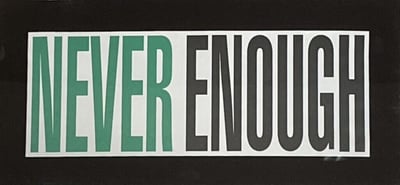
Barbara Kruger
Swimming Pool, 2019
Limited Edition Print
Screen-print
GBP 2,250 - 2,900

Barbara Kruger
Too Big to Fail, 2021
Sculpture / Object
Mixed Media
GBP 4,700

Barbara Kruger
Untitled (2Kiss), 2024
Sculpture / Object
Mixed Media
EUR 1,850

Barbara Kruger
Untitled (Kiss), 2019
Sculpture / Object
Wood
USD 3,500 - 6,000

Barbara Kruger
Untitled (Vase), 2020
Sculpture / Object
Ceramic
GBP 1,800
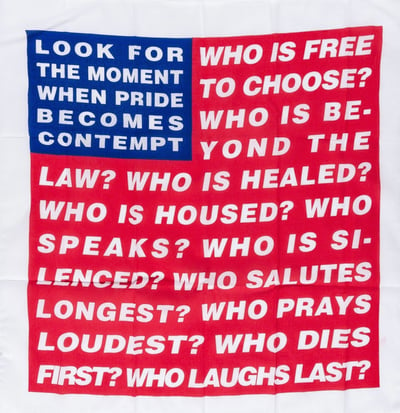
Barbara Kruger
Untitled (Flag), 2020
Tapestry
Mixed Media
GBP 1,800

Barbara Kruger
Knowledge is Power, 1989
Limited Edition Print
Lithograph
Currently Not Available
Related Artists



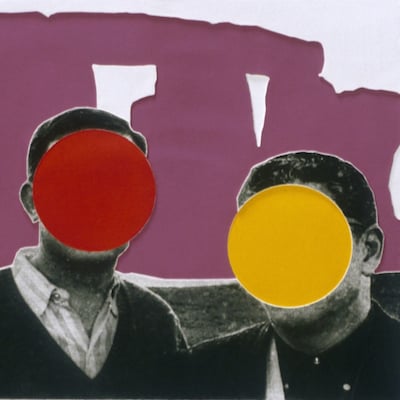
Artwork by John Baldessari
What is conceptual art?
Sometimes referred to as Conceptualism, this is an art form where the idea(s) or concept(s) behind the work take precedence over material concerns and traditional aesthetics. Many conceptual artworks can be created by anyone simply by following written instructions. The concept or idea is the most essential aspect of the artwork.