

acrylic on paper, mounted on canvas - ca 1980
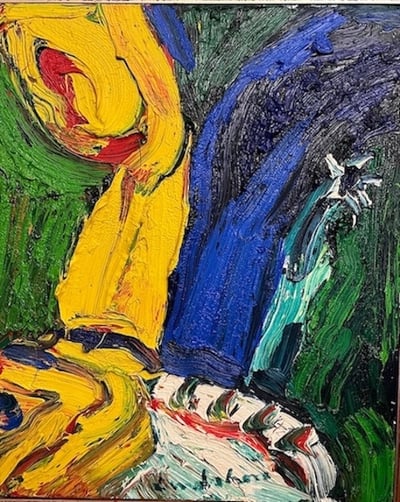
L'Attente by Bengt Lindström, created around 1980, is a vivid and expressive acrylic painting on paper mounted on canvas. The artwork features a bold palette of greens, blues, reds, and yellows that swirl and overlap, creating dynamic textures and movement. Lindström's characteristic brushstrokes are thick and gestural, lending the piece a sense of intensity and emotional depth. The central figure appears abstracted yet retains a discernible face and hands, seemingly caught in a moment of contemplation or waiting, as the title suggests. The heavy use of color and form embodies Lindström's unique expressionistic style, where human figures are imbued with a raw, almost primal energy. This work captures the essence of emotion through powerful color contrasts and fluid lines, reflecting Lindström’s fascination with the human psyche and primal states of being.
Artwork Copyright © Bengt LindstromBengt Lindström (Sweden, 1925–2008) was a painter and sculptor celebrated for his bold, vibrant use of color and expressive, distorted faces. Influenced by Nordic mythology and Sámi culture, his dynamic works bridged modern expressionism and folkloric storytelling, cementing his legacy in 20th-century art.
Artwork Copyright © Bengt LindstromL'Attente
Form
Medium
Size
- Inches
- Centimeters
Edition
Easily Unframed
Price
- USD
- EUR
- GBP
- CHF
- Authenticity Guaranteed
- Insured Shipping
- Online Since 2005
●Inventory 4061
●Hand Signed
●Comes with gallery invoice and certificate
●Sell Us a Similar Artwork. Learn more.
acrylic on paper, mounted on canvas - ca 1980
L'Attente by Bengt Lindström, created around 1980, is a vivid and expressive acrylic painting on paper mounted on canvas. The artwork features a bold palette of greens, blues, reds, and yellows that swirl and overlap, creating dynamic textures and movement. Lindström's characteristic brushstrokes are thick and gestural, lending the piece a sense of intensity and emotional depth. The central figure appears abstracted yet retains a discernible face and hands, seemingly caught in a moment of contemplation or waiting, as the title suggests. The heavy use of color and form embodies Lindström's unique expressionistic style, where human figures are imbued with a raw, almost primal energy. This work captures the essence of emotion through powerful color contrasts and fluid lines, reflecting Lindström’s fascination with the human psyche and primal states of being.
Artwork Copyright © Bengt LindstromBengt Lindström (Sweden, 1925–2008) was a painter and sculptor celebrated for his bold, vibrant use of color and expressive, distorted faces. Influenced by Nordic mythology and Sámi culture, his dynamic works bridged modern expressionism and folkloric storytelling, cementing his legacy in 20th-century art.
Artwork Copyright © Bengt Lindstrom- Recently Added
- Price (Low-High)
- Price (High-Low)
- Year (Low-High)
- Year (High-Low)

Bengt Lindstrom
L’introspection, Unknown
Painting
Acrylic on canvas
EUR 8,500
Bengt Lindstrom
L'œil du prophète, 1999
Painting
Oil on canvas
EUR 9,600

Bengt Lindstrom
Komposition, 1976
Limited Edition Print
Lithograph
USD 750

Bengt Lindstrom
L'Attente
Painting
Acrylic on paper
EUR 9,500
Related Artists


Artwork by Roger Raveel
What is new figuration?
Neo-Figurative Art is a collective term that refers to the revival of figurative art in America and Europe during the 1960s, following a period dominated by abstraction. Michel Ragon, a French art critic, argued that this resurgence of figuration occurred during a critical time of social and political upheaval in both regions.


Bengt Lindstrom
L'Attente
105 x 75 cm


