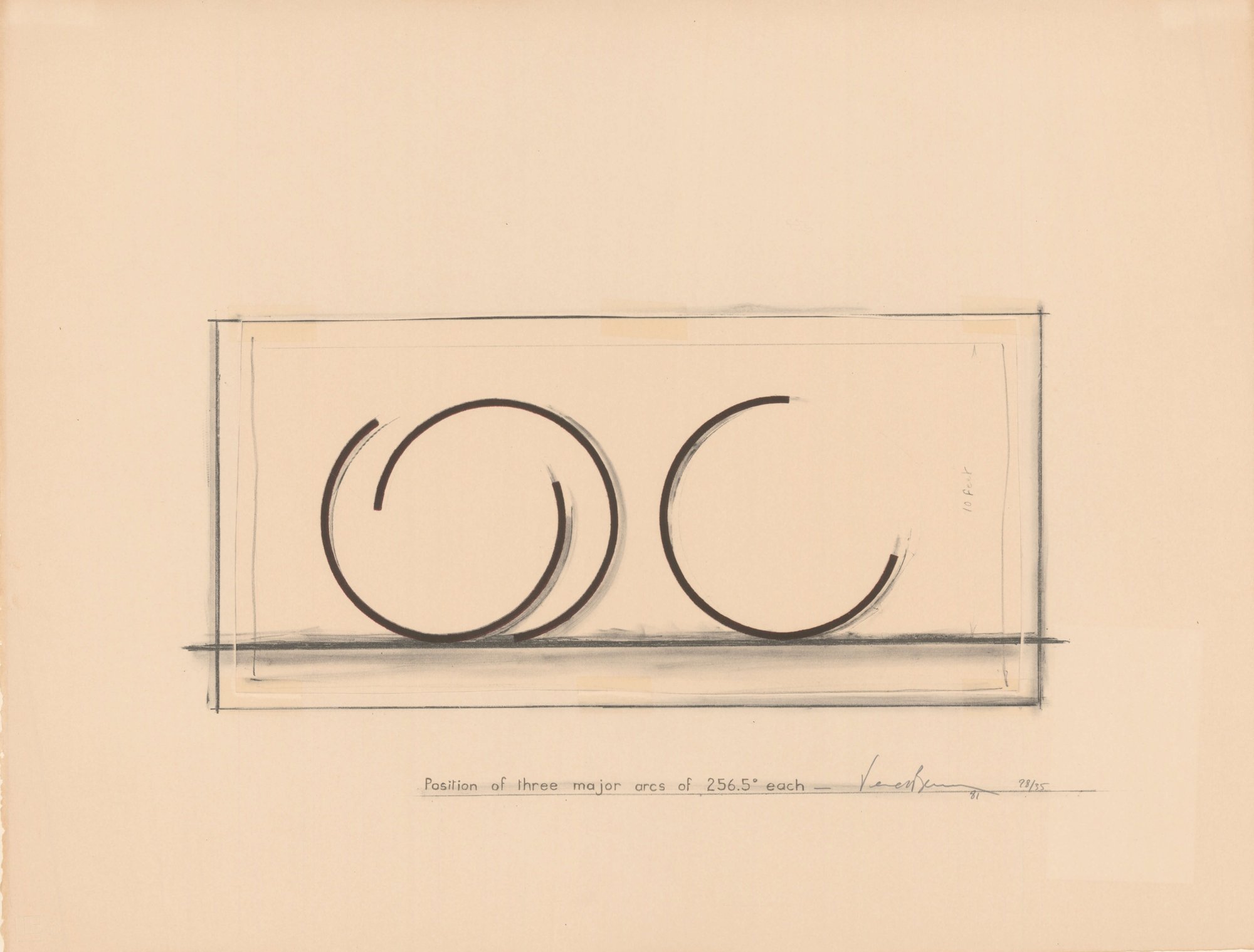
Lithograph and collage on paper - Signed, dated and numbered - Titled lower center, with artist's dry stamp lower left
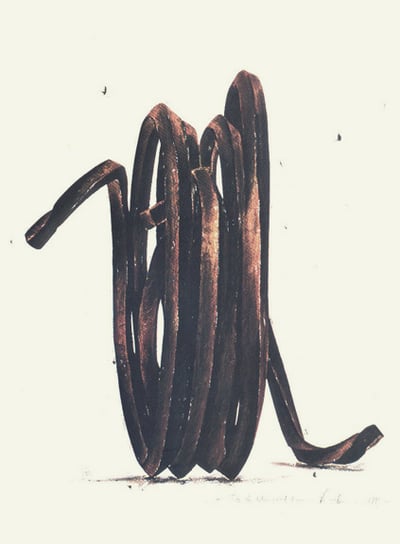
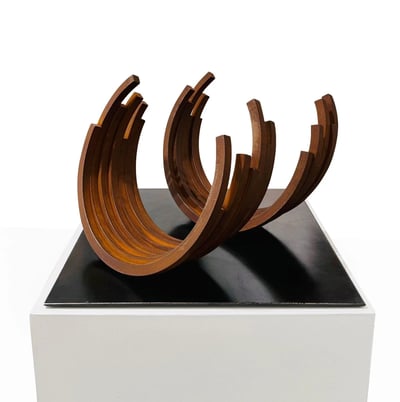
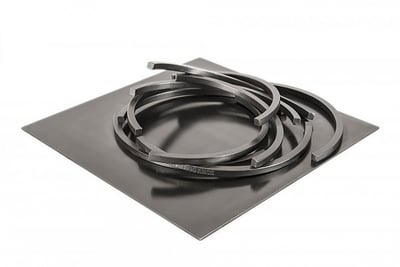
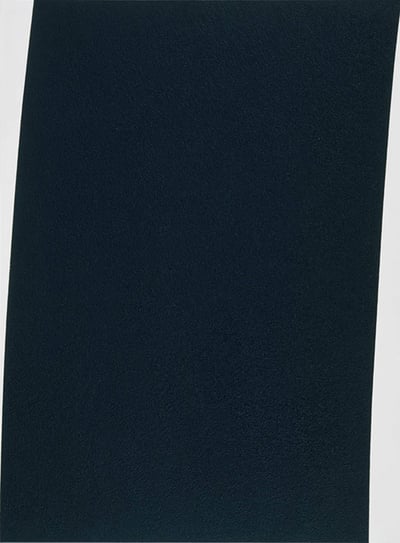
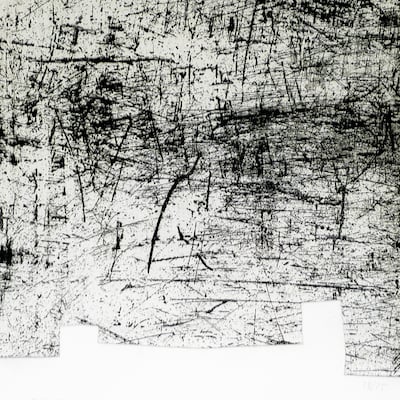
Bernar Venet’s Position of Three Major Arcs of 265.5° Each is a 1981 mixed media lithograph that combines elements of mathematical precision with minimalist aesthetics. Created with lithography and collage on paper, the work features two large arcs positioned within a rectangular frame, each precisely marked with an angle of 265.5 degrees. The drawing is annotated in the artist's hand, giving it a blueprint-like quality, where calculated arcs are presented as art. Venet’s work frequently explores the intersection of mathematics and visual art, inviting viewers to reflect on structure, proportion, and the beauty inherent in geometric forms. The minimalist design and technical notation add a scientific rigor, making it as much a conceptual study as a visual piece.
Bernar Venet (France, 1941) is a sculptor celebrated for his monumental steel sculptures and mathematical approach to art. Known for his signature curved and angled lines, Venet’s work explores concepts of order and chaos, often using industrial materials to create large-scale public installations worldwide.
Mixed MediaMixed media refers to artwork that incorporates more than one medium within a single piece. Unlike multimedia art, which combines distinct forms of visual art and often includes elements like sound, video, or digital media, mixed media focuses on combining traditional art materials, such as paint, ink, and collage. Mixed media art allows artists to achieve a wide range of effects and textures by layering and blending different materials.
Lithograph and collage on paper - Signed, dated and numbered - Titled lower center, with artist's dry stamp lower left
Bernar Venet’s Position of Three Major Arcs of 265.5° Each is a 1981 mixed media lithograph that combines elements of mathematical precision with minimalist aesthetics. Created with lithography and collage on paper, the work features two large arcs positioned within a rectangular frame, each precisely marked with an angle of 265.5 degrees. The drawing is annotated in the artist's hand, giving it a blueprint-like quality, where calculated arcs are presented as art. Venet’s work frequently explores the intersection of mathematics and visual art, inviting viewers to reflect on structure, proportion, and the beauty inherent in geometric forms. The minimalist design and technical notation add a scientific rigor, making it as much a conceptual study as a visual piece.
Bernar Venet (France, 1941) is a sculptor celebrated for his monumental steel sculptures and mathematical approach to art. Known for his signature curved and angled lines, Venet’s work explores concepts of order and chaos, often using industrial materials to create large-scale public installations worldwide.
At first, I have a vision. Then, I do a little drawing with the question of proportions as the principal concern.
- Bernar Venet
Bernar Venet is a French conceptual artist and has his works displayed around the world. After Bernar Venet completed his military service he began to explore art by working with tar as paint and using coal to create sculptures. He later ventured into using cardboard to make sculptures and his exhibits were placed alongside New Realists and Pop artists work in the Salon Comparaisons in Paris. In the mid-1960's Bernar Venet was influenced by the trend in using typical, simple and massive forms in sculptures. He also became interested in how mathematics and logic could be incorporated into their shapes. Bernar Venet would take several years to put his ideas into art forms. He spent time teaching as he entered a period of retrospection. By the 1980's Bernar Venet was beginning to develop logical lines in his art work and also composed, imagined and choreographed designs and costumes for the production of Graduation, the ballet. He has worked in many mediums; painting, sculpture, music composition, film, photography and the performing arts. Bernar Venet’s most famous designs; however, were created in the 1990's with his pieces, Indeterminate Lines series, the Arcs, Angles and Straight Lines sculptures.Some of these pieces are so large he has to move hundreds of tons by truck to transport them in pieces. They are then reassembled on location based on instability, uncertainty and concepts of disorder. These sculptures are now exhibited at different locations worldwide including Versailles. Bernar Venet’s intention through his art is to raise questions. His pieces bring something new to the art world with the challenge to convince people that anything is possible. His early works with tar were daring and his pile of coal, Tas de Charbon was important for art history as it is the first sculpture not to have a definite form. This was a sculpture that could change in size, shape and volume and still be defined as a sculpture. (Artist website)
Abstract art uses form, shape, line, and color to create a visual experience without attempting to represent external reality. The composition exists independently of the world's visual references, focusing on expressing ideas and emotions through non-representational means.