
Donald Judd
Donald Judd (USA, 1928–1994) was a pivotal figure in Minimalist art. Renowned for his geometric sculptures and installations, he emphasized industrial materials like steel, aluminum, and Plexiglas. Judd's work focused on spatial relationships and simplicity, rejecting traditional representation. His legacy includes the Chinati Foundation, preserving his vision in Marfa, Texas.
© Donald Judd. All rights reserved.
- Recently Added
- Price (Low-High)
- Price (High-Low)
- Year (Low-High)
- Year (High-Low)

Donald Judd
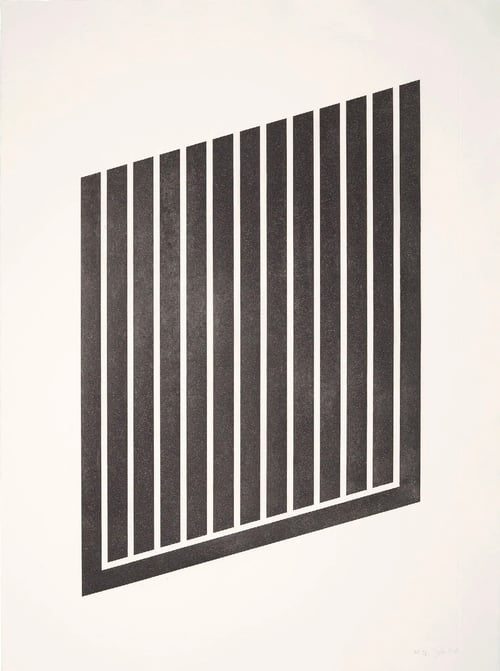
A Group of 4 Aquatints 1, 1978-79
Limited Edition Print
Aquatint
Currently Not Available
Donald Judd
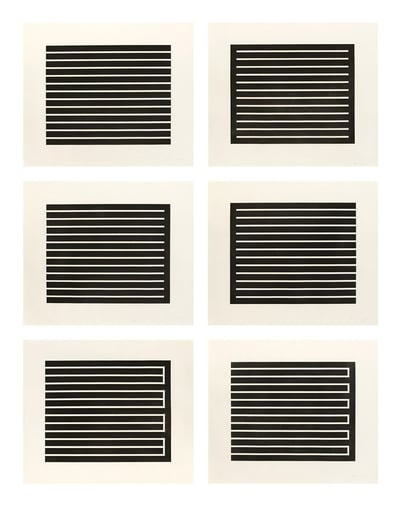
Untitled (set of 6), 1980
Limited Edition Print
Aquatint
Currently Not Available

Donald Judd
Untitled (from Kunstmarkt Köln), 1969
Limited Edition Print
Offset Print
Currently Not Available
Most art is fragile and some should be placed and never moved away.
- Donald Judd
- Donald Judd
Renowned for his large-scale and often unadorned sculptures and installations, Donald Judd was an acclaimed artist who was often tagged to the minimalist movement, though Judd himself vehemently refuted this categorisation. Judd’s sculptures were designed with the aim of exploring spatiality and an object’s relationship to its viewer; such materials as plexiglass, steel and concrete are arranged in precise, carefully thought out shapes and emphasise the purity of the objects themselves – Judd has described his sculptures as ‘the simple expression of complex thought’. Judd has commissioned an aluminium work for Northern Kentucky University, and an untitled three-part sculpture comprised of concrete and steel for Laumeier Sculpture Park. In keeping with his spatial creativity, Judd’s lifelong interest in architecture led to him creating not only his sculptures, but the spaces in which he exhibited them – such an approach inspired artists and designers including David Batchelor and Anish Kapoor. (Artist website)
Related Artists
Related Articles

Art Movements - April 12, 2024
The Visual Language of Geometric abstraction
Dive into the world of geometric abstraction! Discover how artists use shape, color, and space to create harmony, rhythm, and timeless expression.Read More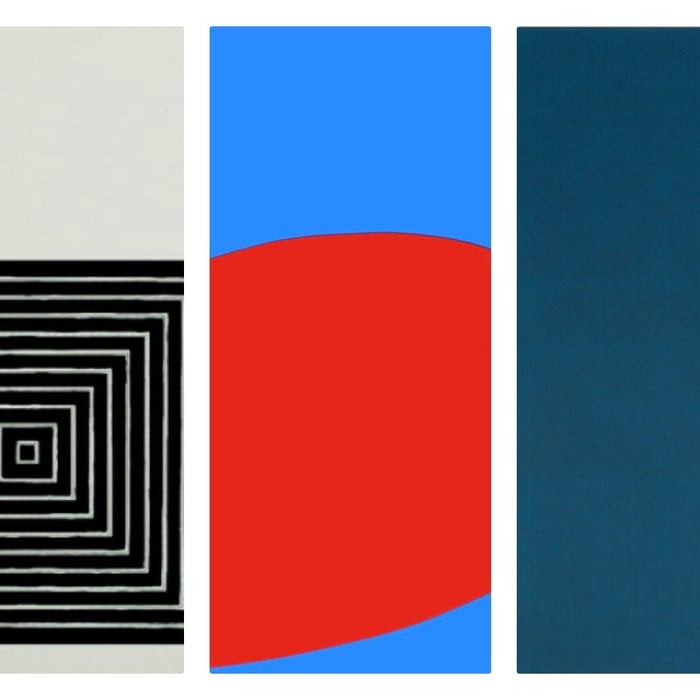

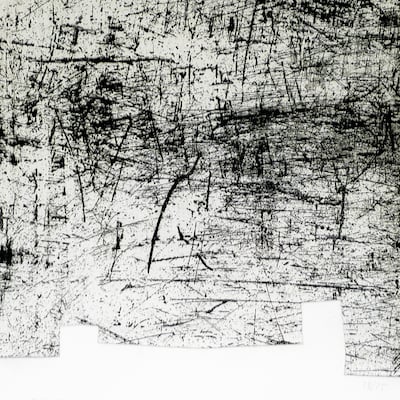 Artwork by Eduardo Chillida
What is abstract art?
Abstract art uses form, shape, line, and color to create a visual experience without attempting to represent external reality. The composition exists independently of the world's visual references, focusing on expressing ideas and emotions through non-representational means.
Explore »

