
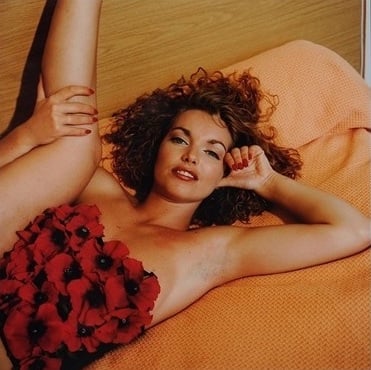
// Chambre Close by Bettina Rheims, created in 2008, is a C-print photograph capturing an intimate, relaxed moment that blends sensuality with a casual allure. The image features a woman reclining on a bed with her curly hair framing her face and a confident, playful expression. She is partially covered by red flowers across her chest, adding a touch of boldness and color to the scene. The warm tones of the bedding and the soft lighting enhance the cozy, inviting atmosphere, while her direct gaze draws the viewer in, creating a sense of connection. Known for exploring themes of femininity and eroticism, Rheims presents a portrait that feels both personal and performative, inviting viewers into a private, comfortable space that emphasizes natural beauty and self-assurance.
Artwork Copyright © Bettina RheimsBettina Rheims (France, 1952) is a French photographer renowned for her provocative portraits that explore themes of femininity, sexuality, and identity. Her notable works include 'Female Trouble' (1989) and 'Chambre Close' (1992). Rheims has collaborated with novelist Serge Bramly and has been honored with the Grand Prix de la Photographie de la Ville de Paris in 1994.
Artwork Copyright © Bettina RheimsChambre close, 2008
Form
Medium
Size
- Inches
- Centimeters
Edition
Price
Available works →
- Authenticity Guaranteed
- Insured Shipping
- Online Since 2005
●
●Inventory 8377
●Signed
●Comes with gallery invoice and certificate
●Sell Us a Similar Artwork. Learn more.
// Chambre Close by Bettina Rheims, created in 2008, is a C-print photograph capturing an intimate, relaxed moment that blends sensuality with a casual allure. The image features a woman reclining on a bed with her curly hair framing her face and a confident, playful expression. She is partially covered by red flowers across her chest, adding a touch of boldness and color to the scene. The warm tones of the bedding and the soft lighting enhance the cozy, inviting atmosphere, while her direct gaze draws the viewer in, creating a sense of connection. Known for exploring themes of femininity and eroticism, Rheims presents a portrait that feels both personal and performative, inviting viewers into a private, comfortable space that emphasizes natural beauty and self-assurance.
Artwork Copyright © Bettina RheimsBettina Rheims (France, 1952) is a French photographer renowned for her provocative portraits that explore themes of femininity, sexuality, and identity. Her notable works include 'Female Trouble' (1989) and 'Chambre Close' (1992). Rheims has collaborated with novelist Serge Bramly and has been honored with the Grand Prix de la Photographie de la Ville de Paris in 1994.
Artwork Copyright © Bettina Rheims- Recently Added
- Price (Low-High)
- Price (High-Low)
- Year (Low-High)
- Year (High-Low)

Bettina Rheims
Paris. Sens Uniques (from: Rose. C'est Paris), 2009
Limited Edition Print
Pigment print
Currently Not Available

Bettina Rheims
Chambre close, 2008
Limited Edition Print
C-Print
Currently Not Available
Related Artists


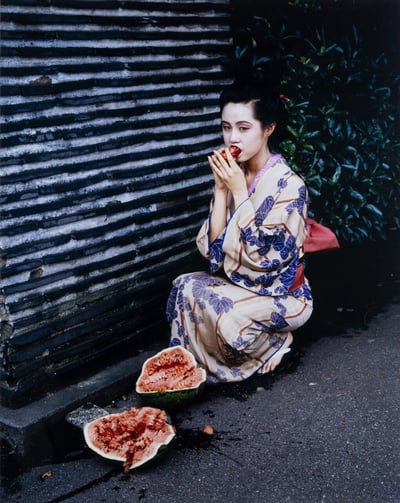


Artwork by Miles Aldridge
What is contemporary art?
Contemporary art refers to avant-garde or innovative art created in the recent past or present day. The exact starting point of contemporary art varies depending on the institution, often tied to the founding year of museums or galleries that showcase the style. Contemporary art is characterized by its focus on current ideas, diverse media, and the exploration of new concepts and techniques.


Bettina Rheims
Chambre close, 2008
18 x 18 cm


