

From Merce Cunningham Dance Company: 50th Anniversary
- Chromogenic print
- Signed, numbered and dated
Candida Höfer’s Theatre Municipal Calais II (2001) is a chromogenic print that offers a glimpse into the behind-the-scenes spaces of an ornate theater. The photograph captures the back of the stage area, with long, heavy curtains in deep blue and red hanging in parallel, creating a sense of depth and rhythm. The juxtaposition of the richly adorned golden architectural details with the more utilitarian backstage elements evokes a contrast between the theatrical illusion and its reality. Höfer’s meticulous composition and use of lighting highlight the interplay of space and texture, offering a contemplative view of the structure and its dualities. This limited edition print is signed, numbered, and dated by the artist.
Artwork Copyright © Candida HoferCandida Höfer (Germany, 1944) is a German photographer renowned for her large-scale color images of empty interiors. Her work focuses on symmetry, the architecture's sense of scale, and proportion. Höfer studied at the Kunstakademie Düsseldorf from 1973 to 1982, first in film with the Danish filmmaker Ole John, then in photography with Bernd and Hilla Becher.
Artwork Copyright © Candida HoferTheatre Municipal Calais II , 2001
Form
Medium
Size
- Inches
- Centimeters
Edition
Price
Available works →
- Authenticity Guaranteed
- Insured Shipping
- Online Since 2005
●
●Inventory 12227
●Signed
●Comes with gallery invoice and certificate
●Sell Us a Similar Artwork. Learn more.
From Merce Cunningham Dance Company: 50th Anniversary
- Chromogenic print
- Signed, numbered and dated
Candida Höfer’s Theatre Municipal Calais II (2001) is a chromogenic print that offers a glimpse into the behind-the-scenes spaces of an ornate theater. The photograph captures the back of the stage area, with long, heavy curtains in deep blue and red hanging in parallel, creating a sense of depth and rhythm. The juxtaposition of the richly adorned golden architectural details with the more utilitarian backstage elements evokes a contrast between the theatrical illusion and its reality. Höfer’s meticulous composition and use of lighting highlight the interplay of space and texture, offering a contemplative view of the structure and its dualities. This limited edition print is signed, numbered, and dated by the artist.
Artwork Copyright © Candida HoferCandida Höfer (Germany, 1944) is a German photographer renowned for her large-scale color images of empty interiors. Her work focuses on symmetry, the architecture's sense of scale, and proportion. Höfer studied at the Kunstakademie Düsseldorf from 1973 to 1982, first in film with the Danish filmmaker Ole John, then in photography with Bernd and Hilla Becher.
Artwork Copyright © Candida Hofer- Recently Added
- Price (Low-High)
- Price (High-Low)
- Year (Low-High)
- Year (High-Low)

Candida Hofer
Historisch-Geographischer Schul-Atlas, 2009
Photography
C-Print
EUR 1,350

Candida Hofer
Bahnhof Stadelhofen Zurich, 1991
Photography
Photograph
EUR 5,800
Available works by Candida Hofer
See all →Candida Hofer
Historisch-Geographischer Schul-Atlas, 2009
Photography
C-Print
EUR 1,350
Candida Hofer
Bahnhof Stadelhofen Zurich, 1991
Photography
Photograph
EUR 5,800
Related Artists

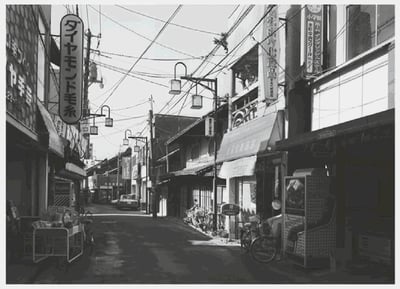


Artwork by Bernd & Hilla Becher
What is the Dusseldorf school of photography?
The Düsseldorf School of Photography refers to a group of photographers who studied under Bernd and Hilla Becher at the Kunstakademie Düsseldorf during the 1970s. This group was known for its devotion to the black-and-white industrial images characteristic of the German tradition known as New Objectivity. The photographers focused on precise, methodical documentation of industrial structures, often using a detached and objective approach.


