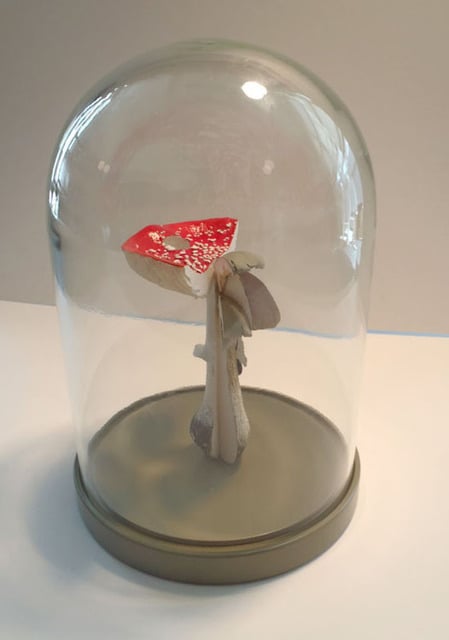
Hand painted polyurethane-resin in glass dome with wood base - (Amanita muscaria/Coprinus comatus/Boletus edulis/Pleurotus ostreatus)
Multiple Mushroom Dome by Carsten Höller, created in 2012, is a mixed-media sculpture that combines nature-inspired elements with a scientific display aesthetic. Encased in a glass dome with a wooden base, the artwork features a hand-painted polyurethane-resin model of a mushroom, blending characteristics of various fungi species, including Amanita muscaria, Coprinus comatus, Boletus edulis, and Pleurotus ostreatus. The mushroom’s whimsical, almost fantastical appearance is heightened by the vibrant red cap, reminiscent of the iconic Amanita muscaria. Höller’s work often explores themes of perception, biology, and surrealism, inviting viewers to engage with nature in an unfamiliar, almost laboratory-like context. This piece blurs the line between art and natural science, evoking curiosity and a sense of wonder.
Artwork Copyright © Carsten HollerCarsten Höller (Belgium, 1961) is a Belgian-born artist known for his interactive installations that blend art, science, and play. Utilizing his background in biology, Höller creates experiential works like slides, carousels, and upside-down goggles, inviting viewers to engage physically and question perception. Notable projects include 'Test Site' at Tate Modern and 'The Double Club' in London.
Artwork Copyright © Carsten HollerMultiple Mushroom Dome , 2012
Form
Medium
Size
- Inches
- Centimeters
Edition
Price
Available works →
- Authenticity Guaranteed
- Insured Shipping
- Online Since 2005
●
●Inventory 2386
●Signed
●Comes with gallery invoice and certificate
●Sell Us a Similar Artwork. Learn more.
Hand painted polyurethane-resin in glass dome with wood base - (Amanita muscaria/Coprinus comatus/Boletus edulis/Pleurotus ostreatus)
Multiple Mushroom Dome by Carsten Höller, created in 2012, is a mixed-media sculpture that combines nature-inspired elements with a scientific display aesthetic. Encased in a glass dome with a wooden base, the artwork features a hand-painted polyurethane-resin model of a mushroom, blending characteristics of various fungi species, including Amanita muscaria, Coprinus comatus, Boletus edulis, and Pleurotus ostreatus. The mushroom’s whimsical, almost fantastical appearance is heightened by the vibrant red cap, reminiscent of the iconic Amanita muscaria. Höller’s work often explores themes of perception, biology, and surrealism, inviting viewers to engage with nature in an unfamiliar, almost laboratory-like context. This piece blurs the line between art and natural science, evoking curiosity and a sense of wonder.
Artwork Copyright © Carsten HollerCarsten Höller (Belgium, 1961) is a Belgian-born artist known for his interactive installations that blend art, science, and play. Utilizing his background in biology, Höller creates experiential works like slides, carousels, and upside-down goggles, inviting viewers to engage physically and question perception. Notable projects include 'Test Site' at Tate Modern and 'The Double Club' in London.
Artwork Copyright © Carsten Holler- Recently Added
- Price (Low-High)
- Price (High-Low)
- Year (Low-High)
- Year (High-Low)
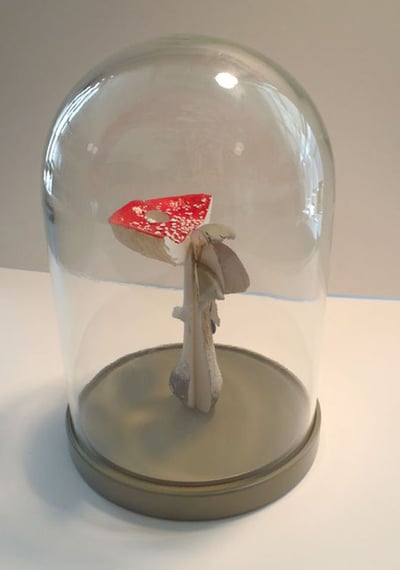
Carsten Holler
Multiple Mushroom Dome , 2012
Sculpture / Object
Mixed Media
Currently Not Available
Related Artists

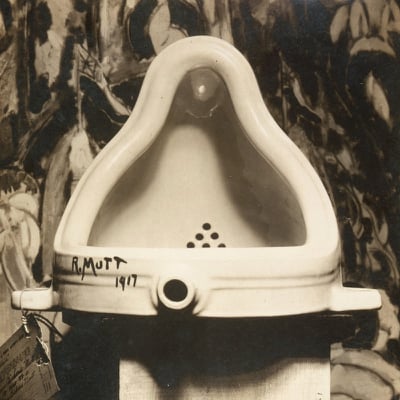
Artwork by Marcel Duchamp
What is Found Object?
A found object is a term used to describe a man-made or natural object, or a fragment of one, that an artist discovers or purchases and keeps for inspiration or as a work of art. The artist may also modify the object or incorporate it into a collage or assemblage, transforming it into a new piece of art.