
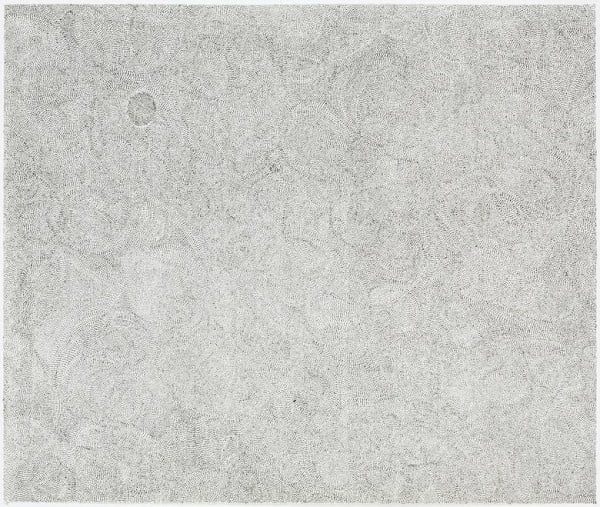
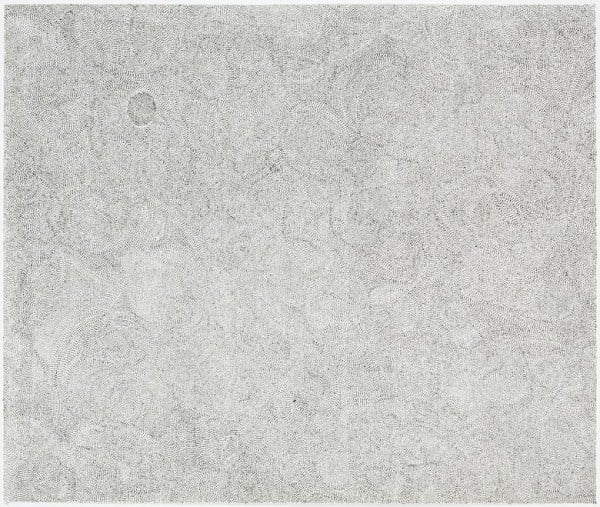
// This Untitled etching by Chris Ofili is a delicate exploration of texture and subtle detail. Known for his vibrant, often intricate works, Ofili here employs a monochromatic approach, inviting viewers to engage closely with the piece to discern its layered, almost ghostly forms. The limited edition print, one of only 50, has a refined composition that may appear minimal from a distance but reveals complex patterns and soft, swirling shapes upon closer inspection. Measuring 41 cm by 50 cm, the work uses the etching technique to create a nuanced play of light and shadow, reminiscent of Ofili's skill in blending subtlety with depth. This piece offers a contemplative experience, drawing viewers into a world of quiet, introspective beauty.
Artwork Copyright © Chris OfiliChris Ofili (UK, 1968) is a contemporary artist known for his vibrant paintings blending African iconography, pop culture, and spiritual themes. Often incorporating unconventional materials like elephant dung, his work challenges narratives around identity and race. Ofili won the Turner Prize in 1998 and represented Britain at the 2003 Venice Biennale.
Artwork Copyright © Chris OfiliUntitled
Form
Medium
Size
- Inches
- Centimeters
Edition
Price
Available works →
- Authenticity Guaranteed
- Insured Shipping
- Online Since 2005
●
●Inventory 5473
●Signed
●Comes with gallery invoice and certificate
●Sell Us a Similar Artwork. Learn more.
// This Untitled etching by Chris Ofili is a delicate exploration of texture and subtle detail. Known for his vibrant, often intricate works, Ofili here employs a monochromatic approach, inviting viewers to engage closely with the piece to discern its layered, almost ghostly forms. The limited edition print, one of only 50, has a refined composition that may appear minimal from a distance but reveals complex patterns and soft, swirling shapes upon closer inspection. Measuring 41 cm by 50 cm, the work uses the etching technique to create a nuanced play of light and shadow, reminiscent of Ofili's skill in blending subtlety with depth. This piece offers a contemplative experience, drawing viewers into a world of quiet, introspective beauty.
Artwork Copyright © Chris OfiliChris Ofili (UK, 1968) is a contemporary artist known for his vibrant paintings blending African iconography, pop culture, and spiritual themes. Often incorporating unconventional materials like elephant dung, his work challenges narratives around identity and race. Ofili won the Turner Prize in 1998 and represented Britain at the 2003 Venice Biennale.
Artwork Copyright © Chris Ofili- Recently Added
- Price (Low-High)
- Price (High-Low)
- Year (Low-High)
- Year (High-Low)

Chris Ofili
Untitled
Limited Edition Print
Etching
Currently Not Available
Related Artists


Artwork by Wang Guangyi
What is Political Pop?
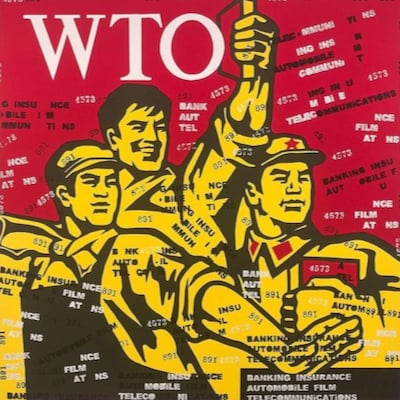
Political Pop was an art movement that emerged in China during the 1980s, blending the Pop Art style of Western countries with the socialist realism of China. This movement arose during a time of rapid social and political change in China, as artists sought to create works that questioned and critiqued these cultural shifts. Political Pop often juxtaposed iconic images from Chinese propaganda with Western consumer culture, highlighting the tensions between tradition and modernization.

Chris Ofili
Untitled
41 x 50 cm


