

// Untitled: (What is freedom?) by Claire Fontaine, a screen print from 2012, presents a series of provocative questions in colorful, bold text against a black background. The questions explore themes of freedom, capitalism, and societal structures, challenging viewers to reflect on concepts like market-driven values, income inequality, and the exclusivity of art. By posing questions such as Is there any possible freedom from the market and its unreasonable rules? and Why is capitalistic libidinal economy not a form of mental illness?, Fontaine interrogates the psychological and social impact of economic systems. The use of a rainbow color scheme juxtaposed with critical content emphasizes the tension between idealism and the stark realities of contemporary life.
Artwork Copyright © Claire FontaineClaire Fontaine (France, 2004) is a collective feminist conceptual artist founded by Fulvia Carnevale and James Thornhill. Adopting the name of a popular French stationery brand, they declare themselves a 'readymade artist,' critiquing authorship and authority through appropriation and expropriation. Their works, including neon signs and installations, address political and social issues, such as the 'Foreigners Everywhere' series exhibited at the 2024 Venice Biennale.
Artwork Copyright © Claire FontaineUntitled: (What is freedom?), 2012
Form
Medium
Size
- Inches
- Centimeters
Edition
Price
- USD
- EUR
- GBP
- CHF
- Authenticity Guaranteed
- Insured Shipping
- Online Since 2005
●Inventory 7779
●Signed
●Comes with gallery invoice and certificate
●Any questions?
// Untitled: (What is freedom?) by Claire Fontaine, a screen print from 2012, presents a series of provocative questions in colorful, bold text against a black background. The questions explore themes of freedom, capitalism, and societal structures, challenging viewers to reflect on concepts like market-driven values, income inequality, and the exclusivity of art. By posing questions such as Is there any possible freedom from the market and its unreasonable rules? and Why is capitalistic libidinal economy not a form of mental illness?, Fontaine interrogates the psychological and social impact of economic systems. The use of a rainbow color scheme juxtaposed with critical content emphasizes the tension between idealism and the stark realities of contemporary life.
Artwork Copyright © Claire FontaineClaire Fontaine (France, 2004) is a collective feminist conceptual artist founded by Fulvia Carnevale and James Thornhill. Adopting the name of a popular French stationery brand, they declare themselves a 'readymade artist,' critiquing authorship and authority through appropriation and expropriation. Their works, including neon signs and installations, address political and social issues, such as the 'Foreigners Everywhere' series exhibited at the 2024 Venice Biennale.
Artwork Copyright © Claire Fontaine- Recently Added
- Price (Low-High)
- Price (High-Low)
- Year (Low-High)
- Year (High-Low)

Claire Fontaine
Untitled: (Castor # 2.), 2013
Limited Edition Print
Digital Print on paper
EUR 2,000

Claire Fontaine
Untitled: (Castor # 1. & # 2.), 2013
Limited Edition Print
Archival Print
EUR 3,500

Claire Fontaine
Untitled: (Castor # 1.), 2013
Limited Edition Print
Digital Print on paper
EUR 2,000

Claire Fontaine
Untitled: (What is freedom?), 2012
Limited Edition Print
Screen-print
EUR 2,500
Related Artists



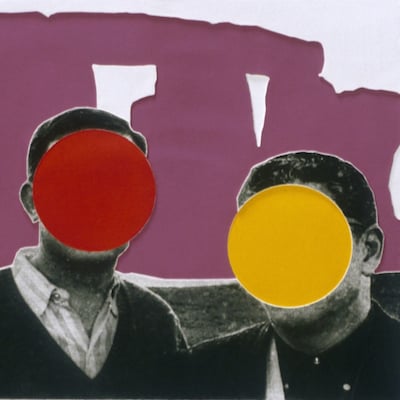
Artwork by John Baldessari
What is conceptual art?
Sometimes referred to as Conceptualism, this is an art form where the idea(s) or concept(s) behind the work take precedence over material concerns and traditional aesthetics. Many conceptual artworks can be created by anyone simply by following written instructions. The concept or idea is the most essential aspect of the artwork.


Claire Fontaine
Untitled: (What is freedom?), 2012
120 x 90 x 1 cm


