

Lithograph on paper. Signed and numbered.
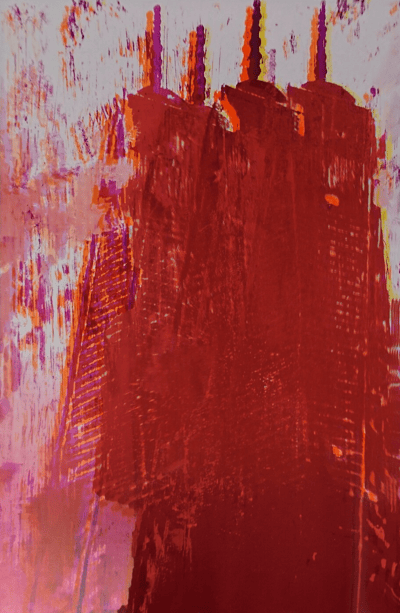
Enoc Perez's Freedom Tower 3 (2017) is a lithograph that presents the Freedom Tower with an intense and expressive red palette. The artwork features bold brushstrokes and a layered, abstract composition, creating a dynamic sense of movement and depth. The red tones dominate the piece, with subtle hints of pink and orange, suggesting a fiery and atmospheric aura around the tower. The textured and blurred effect enhances the sense of temporality and fragility, symbolizing the complex historical and emotional narratives associated with iconic structures like the Freedom Tower. This limited edition print, signed and numbered, is a powerful example of Perez's abstract interpretation of architectural form.
Artwork Copyright © Enoc PerezEnoc Perez (Puerto Rico, 1967) is a contemporary artist renowned for his vibrant paintings and oil stick drawings of Modernist architecture. His works often depict iconic buildings, exploring themes of utopia and cultural identity. Perez's distinctive style and technique have earned him international acclaim, with exhibitions in major galleries worldwide.
Artwork Copyright © Enoc PerezFreedom Tower 3, 2017
Form
Medium
Size
- Inches
- Centimeters
Edition
Price
Available works →
- Authenticity Guaranteed
- Insured Shipping
- Online Since 2005
●
●Inventory 13139
●Signed
●Comes with gallery invoice and certificate
●Sell Us a Similar Artwork. Learn more.
Lithograph on paper. Signed and numbered.
Enoc Perez's Freedom Tower 3 (2017) is a lithograph that presents the Freedom Tower with an intense and expressive red palette. The artwork features bold brushstrokes and a layered, abstract composition, creating a dynamic sense of movement and depth. The red tones dominate the piece, with subtle hints of pink and orange, suggesting a fiery and atmospheric aura around the tower. The textured and blurred effect enhances the sense of temporality and fragility, symbolizing the complex historical and emotional narratives associated with iconic structures like the Freedom Tower. This limited edition print, signed and numbered, is a powerful example of Perez's abstract interpretation of architectural form.
Artwork Copyright © Enoc PerezEnoc Perez (Puerto Rico, 1967) is a contemporary artist renowned for his vibrant paintings and oil stick drawings of Modernist architecture. His works often depict iconic buildings, exploring themes of utopia and cultural identity. Perez's distinctive style and technique have earned him international acclaim, with exhibitions in major galleries worldwide.
Artwork Copyright © Enoc Perez- Recently Added
- Price (Low-High)
- Price (High-Low)
- Year (Low-High)
- Year (High-Low)

Enoc Perez
Freedom Tower 1, 2017
Limited Edition Print
Lithograph
Currently Not Available
Enoc Perez
Freedom Tower 3, 2017
Limited Edition Print
Lithograph
Currently Not Available

Enoc Perez
Puerto Rico 3G 1/20, 2016
Limited Edition Print
Mixed Media
Currently Not Available
Related Artists


Artwork by Miles Aldridge
What is contemporary art?
Contemporary art refers to avant-garde or innovative art created in the recent past or present day. The exact starting point of contemporary art varies depending on the institution, often tied to the founding year of museums or galleries that showcase the style. Contemporary art is characterized by its focus on current ideas, diverse media, and the exploration of new concepts and techniques.


Enoc Perez
Freedom Tower 3, 2017
94.5 x 63.5 cm


