

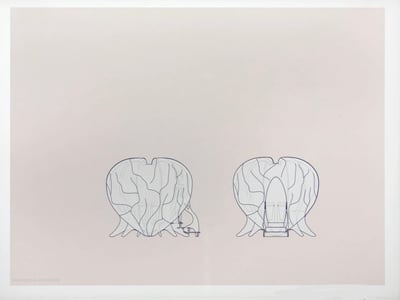
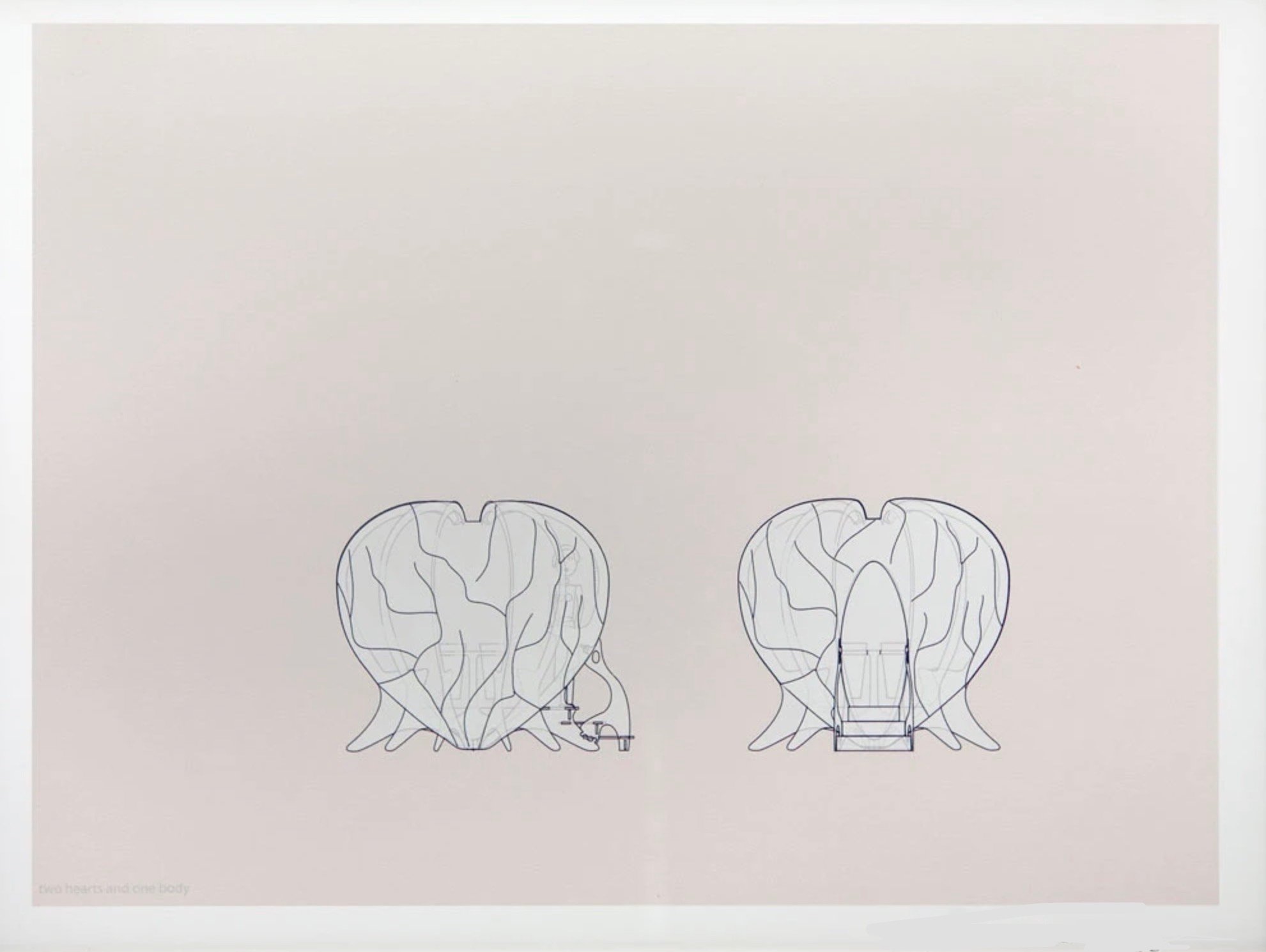
// Ernesto Neto’s Two Hearts and One Body (2010) is a lithograph that presents two simplified, heart-shaped forms with subtle organic patterns, delicately drawn against a soft, pale background. Each heart is depicted with a minimalistic outline, with one showing a small figure and the other an entrance-like structure, suggesting themes of connection, unity, and shared existence. Neto’s work often explores the relationship between form, space, and human connection, and this piece captures these ideas in a minimalist style. The gentle lines and restrained palette give the artwork a serene and contemplative quality, inviting viewers to consider the symbolic union of two hearts within a single entity.
Artwork Copyright © Ernesto NetoErnesto Neto (Brazil, 1964) is a leading contemporary artist known for his immersive, organic installations. Using materials like fabric, spices, and sand, his works invite sensory exploration and interaction, often evoking themes of nature, spirituality, and community. Neto’s art bridges the physical and emotional, creating spaces for reflection and connection.
Artwork Copyright © Ernesto NetoTwo hearts and one body, 2010
Form
Medium
Size
- Inches
- Centimeters
Edition
Price
Available works →
- Authenticity Guaranteed
- Insured Shipping
- Online Since 2005
●
●Inventory 8168
●Signed
●Comes with gallery invoice and certificate
●Sell Us a Similar Artwork. Learn more.
// Ernesto Neto’s Two Hearts and One Body (2010) is a lithograph that presents two simplified, heart-shaped forms with subtle organic patterns, delicately drawn against a soft, pale background. Each heart is depicted with a minimalistic outline, with one showing a small figure and the other an entrance-like structure, suggesting themes of connection, unity, and shared existence. Neto’s work often explores the relationship between form, space, and human connection, and this piece captures these ideas in a minimalist style. The gentle lines and restrained palette give the artwork a serene and contemplative quality, inviting viewers to consider the symbolic union of two hearts within a single entity.
Artwork Copyright © Ernesto NetoErnesto Neto (Brazil, 1964) is a leading contemporary artist known for his immersive, organic installations. Using materials like fabric, spices, and sand, his works invite sensory exploration and interaction, often evoking themes of nature, spirituality, and community. Neto’s art bridges the physical and emotional, creating spaces for reflection and connection.
Artwork Copyright © Ernesto Neto- Recently Added
- Price (Low-High)
- Price (High-Low)
- Year (Low-High)
- Year (High-Low)

Ernesto Neto
Untitled, 1999
Drawing / Watercolor
Mixed Media
Inquire For Price
Ernesto Neto
Two hearts and one body, 2010
Limited Edition Print
Lithograph
Currently Not Available
Available works by Ernesto Neto
See all →Ernesto Neto
Untitled, 1999
Drawing / Watercolor
Mixed Media
Inquire For Price
Related Artists


Artwork by Alberto Biasi
What is interactive art?
Interactive art is a form of art where the spectator is actively involved by the artist to achieve the artwork's purpose. This involvement can include allowing the visitor to walk around, in, or on the art installation, or even becoming a part of the artwork itself. Works in this category often feature computers, sensors, and interfaces that respond to various inputs such as meteorological changes, heat, motion, or other types of data programmed by the artist.
Ernesto Neto
Two hearts and one body, 2010
27 x 35 cm


