

Hand painted on paper with artist painted frame - Each work is unique and sold individually - In mint condition
Gary Hume's Window Painting (from 1000 Windows Paintings), created in 2013, is a minimalist piece that explores simplicity and the power of color fields. This artwork features a stark black square framed by a vivid yellow border, creating a bold visual contrast. The use of black in the central field absorbs light, giving the work a sense of depth and mystery, while the bright yellow frame brings a vibrant energy to the otherwise subdued composition. As part of a series of unique works, each individually hand-painted by Hume, this piece captures his fascination with color interaction and the play between light and dark, inviting viewers to contemplate the essence of form and color in a restrained, yet powerful manner.
Artwork Copyright © Gary HumeGary Hume (United Kingdom, 1962) is a British artist associated with the Young British Artists (YBAs) movement. Renowned for his high-gloss enamel paintings on aluminum panels, Hume's work often features bold, simplified forms and vibrant colors. His subjects range from everyday objects to abstract compositions, exploring the interplay between abstraction and representation.
Artwork Copyright © Gary HumeWindow Painting (from 1000 Windows Paintings), 2013
Form
Medium
Size
- Inches
- Centimeters
Edition
Price
Available works →
- Authenticity Guaranteed
- Insured Shipping
- Online Since 2005
●
●Inventory 8214
●Signed
●Comes with gallery invoice and certificate
●Sell Us a Similar Artwork. Learn more.
Hand painted on paper with artist painted frame - Each work is unique and sold individually - In mint condition
Gary Hume's Window Painting (from 1000 Windows Paintings), created in 2013, is a minimalist piece that explores simplicity and the power of color fields. This artwork features a stark black square framed by a vivid yellow border, creating a bold visual contrast. The use of black in the central field absorbs light, giving the work a sense of depth and mystery, while the bright yellow frame brings a vibrant energy to the otherwise subdued composition. As part of a series of unique works, each individually hand-painted by Hume, this piece captures his fascination with color interaction and the play between light and dark, inviting viewers to contemplate the essence of form and color in a restrained, yet powerful manner.
Artwork Copyright © Gary HumeGary Hume (United Kingdom, 1962) is a British artist associated with the Young British Artists (YBAs) movement. Renowned for his high-gloss enamel paintings on aluminum panels, Hume's work often features bold, simplified forms and vibrant colors. His subjects range from everyday objects to abstract compositions, exploring the interplay between abstraction and representation.
Artwork Copyright © Gary Hume- Recently Added
- Price (Low-High)
- Price (High-Low)
- Year (Low-High)
- Year (High-Low)

Gary Hume
9 Works: Sister Troop, 2009
Limited Edition Print
Silkscreen
Currently Not Available
Related Artists
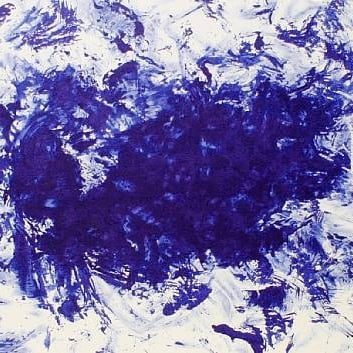
Artwork by Yves Klein
What is body art?
Body art involves creating art directly on or with the human body. Common forms include body piercings and tattoos, but it also encompasses practices like branding, scarification, scalping, body painting, full-body tattoos, body shaping, and sub-dermal implants. Body art can also refer to a subcategory of performance art where the artist's body is central to the artwork.


