

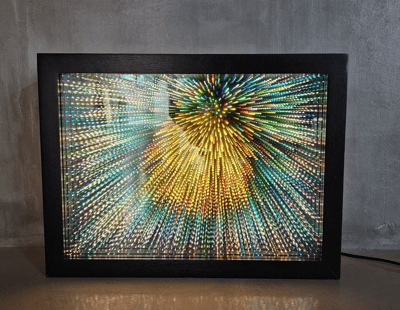
Hand-painted mirror, LED light, wood, glass paint, glass, mirror, one-way mirror and electric energy.
Signed on a sticker label.
Iván Navarro’s Mist II (Version 1) (2020) is a mesmerizing light installation that explores perception, illusion, and the interplay between materiality and energy. Encased within a black wooden frame, the work features a radiant, multidimensional explosion of LED lights, mirrors, and reflective surfaces, creating a hypnotic sense of infinite depth. The dynamic interplay of colors and light suggests movement, evoking celestial phenomena, fireworks, or the pulsating rhythm of electrical currents—an ongoing theme in Navarro’s work.
By manipulating mirrors and LED technology, Navarro invites viewers into an optical space that feels boundless yet contained, challenging the perception of physical and metaphysical limits. This unique piece exemplifies his ability to transform light into an immersive experience, blurring the line between sculpture, installation, and conceptual art.
Artwork Copyright © Ivan NavarroIván Navarro (Chile, 1972) is a contemporary artist renowned for his innovative use of light, mirrors, and neon to create thought-provoking sculptures and installations. His works often explore themes of power, control, and social issues, reflecting his experiences growing up under Chile's military dictatorship. Navarro's art challenges perceptions of space and reality, engaging viewers in a dialogue about political and social structures.
Artwork Copyright © Ivan NavarroMist II (Version 1), 2020
Form
Medium
Size
- Inches
- Centimeters
Edition
Price
- Authenticity Guaranteed
- Insured Shipping
- Online Since 2005
●Inventory 15587
●Signed
●Comes with gallery invoice and certificate
●Sell Us a Similar Artwork. Learn more.
Hand-painted mirror, LED light, wood, glass paint, glass, mirror, one-way mirror and electric energy.
Signed on a sticker label.
Iván Navarro’s Mist II (Version 1) (2020) is a mesmerizing light installation that explores perception, illusion, and the interplay between materiality and energy. Encased within a black wooden frame, the work features a radiant, multidimensional explosion of LED lights, mirrors, and reflective surfaces, creating a hypnotic sense of infinite depth. The dynamic interplay of colors and light suggests movement, evoking celestial phenomena, fireworks, or the pulsating rhythm of electrical currents—an ongoing theme in Navarro’s work.
By manipulating mirrors and LED technology, Navarro invites viewers into an optical space that feels boundless yet contained, challenging the perception of physical and metaphysical limits. This unique piece exemplifies his ability to transform light into an immersive experience, blurring the line between sculpture, installation, and conceptual art.
Artwork Copyright © Ivan NavarroIván Navarro (Chile, 1972) is a contemporary artist renowned for his innovative use of light, mirrors, and neon to create thought-provoking sculptures and installations. His works often explore themes of power, control, and social issues, reflecting his experiences growing up under Chile's military dictatorship. Navarro's art challenges perceptions of space and reality, engaging viewers in a dialogue about political and social structures.
Artwork Copyright © Ivan NavarroAvailability
Size
Form
Medium
SORT BY

Ivan Navarro
Carta visual (Protest), 2019
Limited Edition Print
Lithograph
EUR 2,000
Ivan Navarro
Mist II (Version 1), 2020
Sculpture / Object
Installation
Inquire For Price
Ivan Navarro
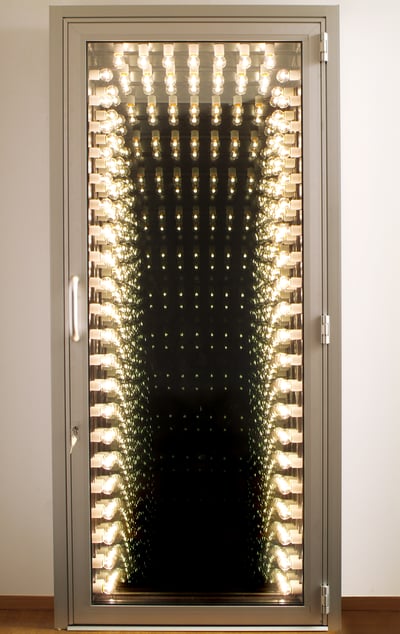
There is Hole in the Spectacle, 2006
Sculpture / Object
Mixed Media
EUR 54,000 - 64,000

Ivan Navarro
Sopa de letras, 2021
Limited Edition Print
Lithograph
EUR 1,600

Ivan Navarro
Carta Visual (Sign), 2019
Limited Edition Print
Lithograph
EUR 2,000

Ivan Navarro
Carta visual (Rise), 2019
Limited Edition Print
Lithograph
Currently Not Available
Related Artists



Artwork by Miles Aldridge
What is contemporary art?
Contemporary art refers to avant-garde or innovative art created in the recent past or present day. The exact starting point of contemporary art varies depending on the institution, often tied to the founding year of museums or galleries that showcase the style. Contemporary art is characterized by its focus on current ideas, diverse media, and the exploration of new concepts and techniques.



