

Jack Youngerman’s Untitled 2 from The White Portfolio (1972) continues his minimalist exploration of organic abstraction through intaglio. Measuring 36 x 27 inches, this embossed white-on-white print is part of a limited edition of 150. The composition features fluid, leaf-like and winged forms that appear to rise subtly from the surface, evoking movement and natural elegance. Signed and dated in pencil, this refined work exemplifies Youngerman’s masterful use of form, light, and negative space.
Artwork Copyright © Jack YoungermanJack Youngerman (USA, 1926–2020) was a painter and sculptor known for his bold, geometric abstractions. Influenced by European modernism and American abstract expressionism, he explored dynamic forms and vivid color contrasts. Youngerman's work often reflected organic motifs, bridging hard-edged abstraction with nature-inspired fluidity, securing his place in the postwar art movement.
Artwork Copyright © Jack YoungermanUntitled 2, from the White Portfolio, 1972
Form
Medium
Size
- Inches
- Centimeters
Edition
Price
- Authenticity Guaranteed
- Insured Shipping
- Online Since 2005
●Inventory 16500
●Signed
●Comes with gallery invoice and certificate
●Sell Us a Similar Artwork. Learn more.
Jack Youngerman’s Untitled 2 from The White Portfolio (1972) continues his minimalist exploration of organic abstraction through intaglio. Measuring 36 x 27 inches, this embossed white-on-white print is part of a limited edition of 150. The composition features fluid, leaf-like and winged forms that appear to rise subtly from the surface, evoking movement and natural elegance. Signed and dated in pencil, this refined work exemplifies Youngerman’s masterful use of form, light, and negative space.
Artwork Copyright © Jack YoungermanJack Youngerman (USA, 1926–2020) was a painter and sculptor known for his bold, geometric abstractions. Influenced by European modernism and American abstract expressionism, he explored dynamic forms and vivid color contrasts. Youngerman's work often reflected organic motifs, bridging hard-edged abstraction with nature-inspired fluidity, securing his place in the postwar art movement.
Artwork Copyright © Jack Youngerman- Recently Added
- Price (Low-High)
- Price (High-Low)
- Year (Low-High)
- Year (High-Low)
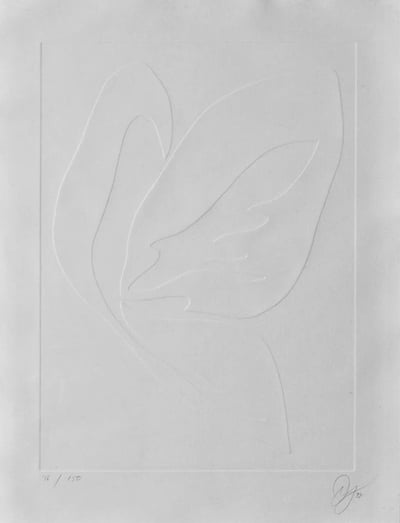
Jack Youngerman
Untitled 2, from the White Portfolio, 1972
Limited Edition Print
Intaglio
Inquire For Price
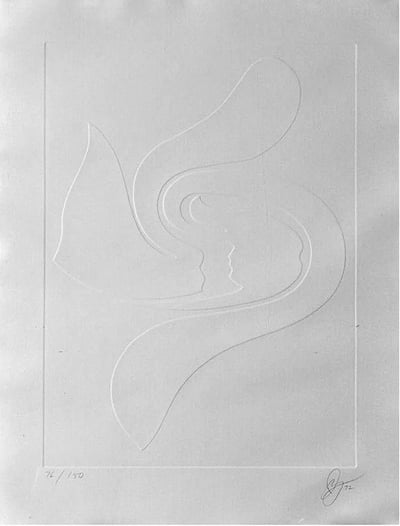
Jack Youngerman
Untitled 1, from the White Portfolio, 1972
Limited Edition Print
Intaglio
Inquire For Price
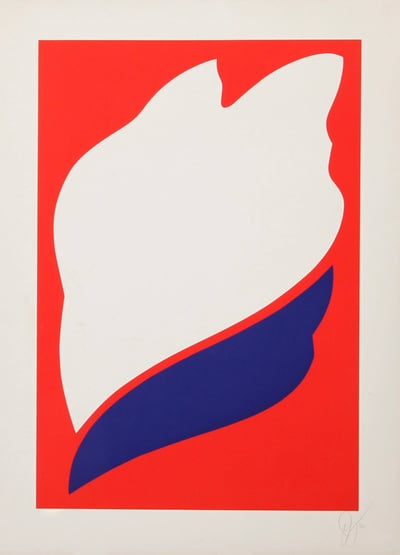
Jack Youngerman
Peace, 1973
Limited Edition Print
Silkscreen
EUR 1,700
Related Artists
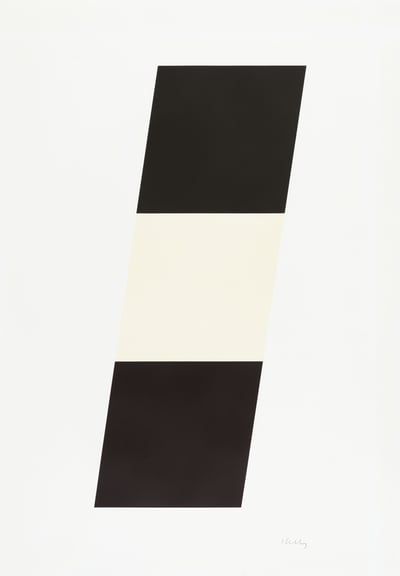


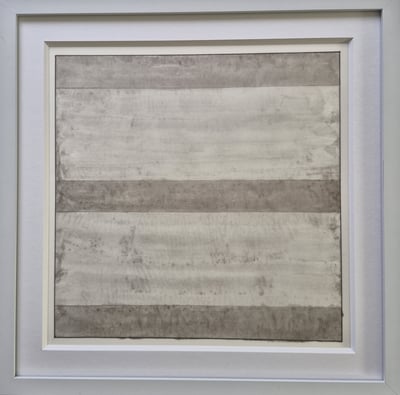

Artwork by Ellsworth Kelly
What is Colour Field Painting?
Colour Field Painting is an abstract style characterized by large areas of a single color or simple, solid colors. The term was first used in the 1950s to describe the work of three American Abstract Expressionist painters—Barnett Newman, Mark Rothko, and Clyfford Still. Their work emphasized the emotional power of color and the creation of vast, meditative spaces through expansive color fields.

Jack Youngerman
Untitled 2, from the White Portfolio, 1972
91.4 x 68.6 cm


