

Mixed media on paper
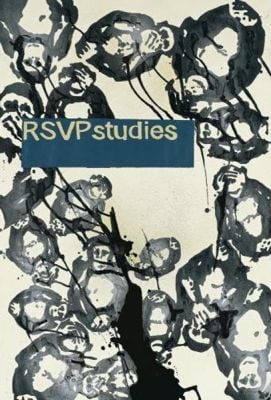
Jitish Kallat’s RSVP Studies - 3 from 2005 is a mixed-media artwork on paper that combines gouache with expressive ink splatters and figures. The composition features a cluster of monochromatic faces in various expressions, arranged densely around the title “RSVP studies” set in a bold, blue rectangular block. The crowd-like arrangement of faces suggests themes of urban density, collective identity, and anonymity. Kallat’s use of dynamic brushstrokes and splatters injects a sense of chaos and movement, symbolizing the overwhelming presence of people in urban environments. This work exemplifies Kallat’s exploration of social commentary through abstract and representational forms, capturing the essence of contemporary human experience.
Artwork Copyright © Jitish KallatJitish Kallat (India, 1974) is a contemporary artist whose diverse practice includes painting, sculpture, and installation. Known for exploring themes like time, memory, and urban life, his work often transforms everyday materials into profound reflections. As Artistic Director of the 2014 Kochi-Muziris Biennale, he played a pivotal role in globalizing Indian contemporary art.
Artwork Copyright © Jitish KallatRSVP Studies - 3, 2005
Form
Medium
Size
- Inches
- Centimeters
Edition
Price
- USD
- EUR
- GBP
- CHF
- Authenticity Guaranteed
- Insured Shipping
- Online Since 2005
●Inventory 1431
●Signed
●Comes with gallery invoice and certificate
●Any questions?
Mixed media on paper
Jitish Kallat’s RSVP Studies - 3 from 2005 is a mixed-media artwork on paper that combines gouache with expressive ink splatters and figures. The composition features a cluster of monochromatic faces in various expressions, arranged densely around the title “RSVP studies” set in a bold, blue rectangular block. The crowd-like arrangement of faces suggests themes of urban density, collective identity, and anonymity. Kallat’s use of dynamic brushstrokes and splatters injects a sense of chaos and movement, symbolizing the overwhelming presence of people in urban environments. This work exemplifies Kallat’s exploration of social commentary through abstract and representational forms, capturing the essence of contemporary human experience.
Artwork Copyright © Jitish KallatJitish Kallat (India, 1974) is a contemporary artist whose diverse practice includes painting, sculpture, and installation. Known for exploring themes like time, memory, and urban life, his work often transforms everyday materials into profound reflections. As Artistic Director of the 2014 Kochi-Muziris Biennale, he played a pivotal role in globalizing Indian contemporary art.
Artwork Copyright © Jitish Kallat- Recently Added
- Price (Low-High)
- Price (High-Low)
- Year (Low-High)
- Year (High-Low)
Jitish Kallat
RSVP Studies - 3, 2005
Painting
Gouache
EUR 12,000
Related Artists


Artwork by Laure Prouvost
What is Lettrism?
Lettrism is an art form that uses letters, words, and symbols to create artwork. The movement was established in Paris in the 1940s and later gained popularity in the 1950s in America. Lettrisme is the French spelling of the movement's name, derived from the French word for letter.

Jitish Kallat
RSVP Studies - 3, 2005
99 x 67 cm


