

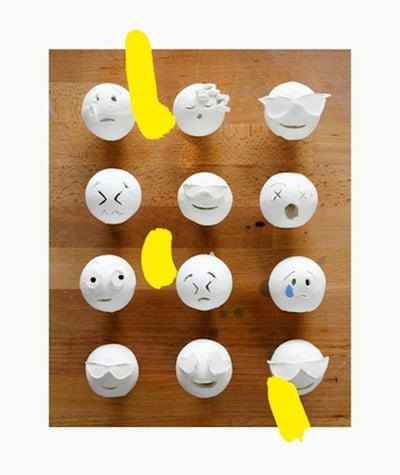
Inkjet print and streaks of Flashe vinyl paint (manually by the artist) on Gampi paper. Size: 49.5 × 41.6 cm Numbered and signed by the artist on the front.
This compelling work by Laura Owens exemplifies her signature approach of blending mechanical reproduction with painterly intervention. An inkjet-printed ground on delicate Gampi paper serves as the canvas for sweeping, hand-applied streaks of Flashe vinyl paint, each mark asserting the artist’s physical presence against the precision of digital output. The tension between the printed layer and the gestural overpainting speaks to Owens’s sustained investigation of what constitutes a painting in the contemporary era. Numbered and signed, this hybrid print-painting from a leading figure in American contemporary art offers a luminous, tactile encounter with the boundaries of medium and process.
Artwork Copyright © Laura OwensLaura Owens (USA, 1970) is a contemporary painter recognized for her large-scale works that blend diverse art historical references and techniques. Her innovative approach challenges traditional painting conventions, incorporating elements from digital media and craft. Owens has exhibited globally, including a mid-career survey at the Whitney Museum of American Art.
Artwork Copyright © Laura OwensUntitled, 2014
Form
Medium
Size
- Inches
- Centimeters
Edition
Price
- USD
- EUR
- GBP
- CHF
- Authenticity Guaranteed
- Insured Shipping
- Online Since 2005
●Inventory 17347
●Signed
●Comes with gallery invoice and certificate
●Sell Us a Similar Artwork. Learn more.
Inkjet print and streaks of Flashe vinyl paint (manually by the artist) on Gampi paper. Size: 49.5 × 41.6 cm Numbered and signed by the artist on the front.
This compelling work by Laura Owens exemplifies her signature approach of blending mechanical reproduction with painterly intervention. An inkjet-printed ground on delicate Gampi paper serves as the canvas for sweeping, hand-applied streaks of Flashe vinyl paint, each mark asserting the artist’s physical presence against the precision of digital output. The tension between the printed layer and the gestural overpainting speaks to Owens’s sustained investigation of what constitutes a painting in the contemporary era. Numbered and signed, this hybrid print-painting from a leading figure in American contemporary art offers a luminous, tactile encounter with the boundaries of medium and process.
Artwork Copyright © Laura OwensLaura Owens (USA, 1970) is a contemporary painter recognized for her large-scale works that blend diverse art historical references and techniques. Her innovative approach challenges traditional painting conventions, incorporating elements from digital media and craft. Owens has exhibited globally, including a mid-career survey at the Whitney Museum of American Art.
Artwork Copyright © Laura Owens- Recently Added
- Price (Low-High)
- Price (High-Low)
- Year (Low-High)
- Year (High-Low)
Laura Owens
Untitled, 2014
Limited Edition Print
Mixed Media
EUR 1,050

Laura Owens
Untitled (Pink Grid and Droplets), 2018
Limited Edition Print
Monoprint
USD 17,750
Related Artists
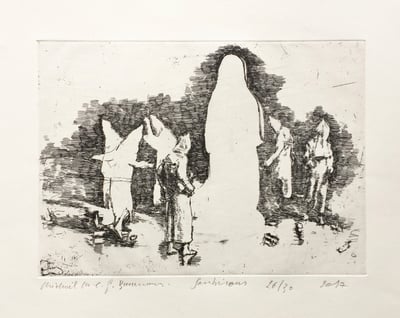

Artwork by Willem de Kooning
What is Gestural?
Gestural art is a term that describes painting with freely sweeping brushstrokes. The primary goal of gestural art is to allow the artist to physically express emotional impulses. The varied, yet expressive paint marks are intended to convey the artist's inner thoughts and emotions, which viewers are believed to understand through the dynamic and spontaneous application of paint.

Laura Owens
Untitled, 2014
49.5 x 41.6 cm


