


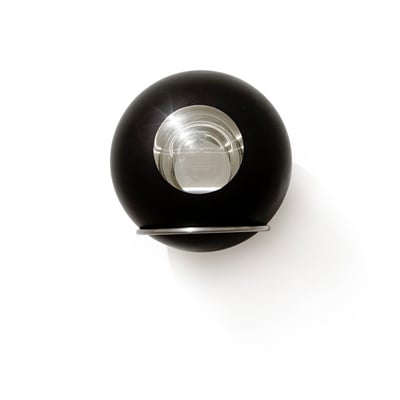
Brushed aluminum and Plexiglas; Signed and numbered on the certificate of authenticity. This work is from an edition of 100. The remaining work available has the colors: green, brown, orange and blue
Poetry must be made by all! Transform the world by Liam Gillick is a minimalist mixed media sculpture from 2004, crafted with brushed aluminum and Plexiglas. This piece, part of an edition of 100, embodies Gillick's focus on modern industrial aesthetics, with clean lines and layers of color visible through a slim, horizontal form. The bands of green, brown, orange, and blue subtly emerge beneath the metallic surface, creating a visual rhythm that hints at the layered complexity of societal transformation—a theme Gillick frequently explores. The title, with its bold, declarative message, challenges viewers to consider the role of creativity in enacting change.
Artwork Copyright © Liam GillickLiam Gillick (United Kingdom, 1964) is a British artist whose work spans installation, sculpture, and writing. He explores the aesthetics of the constructed world and examines ideological control systems that have emerged with globalization and neoliberalism. Gillick's minimalist abstractions often critique modernist legacies in architecture and design.
Artwork Copyright © Liam GillickPoetry must be made by all! Transform the world, 2004
Form
Medium
Size
- Inches
- Centimeters
Edition
Price
- USD
- EUR
- GBP
- CHF
- Authenticity Guaranteed
- Insured Shipping
- Online Since 2005
●Inventory 8982
●Signed
●Comes with gallery invoice and certificate
●Sell Us a Similar Artwork. Learn more.
Brushed aluminum and Plexiglas; Signed and numbered on the certificate of authenticity. This work is from an edition of 100. The remaining work available has the colors: green, brown, orange and blue
Poetry must be made by all! Transform the world by Liam Gillick is a minimalist mixed media sculpture from 2004, crafted with brushed aluminum and Plexiglas. This piece, part of an edition of 100, embodies Gillick's focus on modern industrial aesthetics, with clean lines and layers of color visible through a slim, horizontal form. The bands of green, brown, orange, and blue subtly emerge beneath the metallic surface, creating a visual rhythm that hints at the layered complexity of societal transformation—a theme Gillick frequently explores. The title, with its bold, declarative message, challenges viewers to consider the role of creativity in enacting change.
Artwork Copyright © Liam GillickLiam Gillick (United Kingdom, 1964) is a British artist whose work spans installation, sculpture, and writing. He explores the aesthetics of the constructed world and examines ideological control systems that have emerged with globalization and neoliberalism. Gillick's minimalist abstractions often critique modernist legacies in architecture and design.
Artwork Copyright © Liam Gillick- Recently Added
- Price (Low-High)
- Price (High-Low)
- Year (Low-High)
- Year (High-Low)

Liam Gillick
Poetry must be made by all! Transform the world, 2004
Sculpture / Object
Mixed Media
EUR 1,570
Liam Gillick
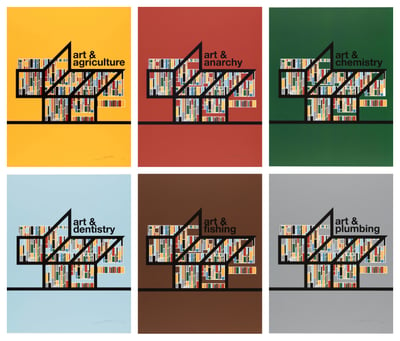
Agriculture, Dentistry, Anarchy..., 2011
Limited Edition Print
Silkscreen
EUR 8,500
Related Artists
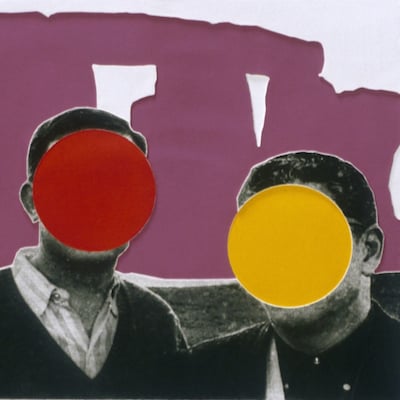
Artwork by John Baldessari
What is conceptual art?
Sometimes referred to as Conceptualism, this is an art form where the idea(s) or concept(s) behind the work take precedence over material concerns and traditional aesthetics. Many conceptual artworks can be created by anyone simply by following written instructions. The concept or idea is the most essential aspect of the artwork.

Liam Gillick
Poetry must be made by all! Transform the world, 2004
29.2 x 5.1 x 1.9 cm


