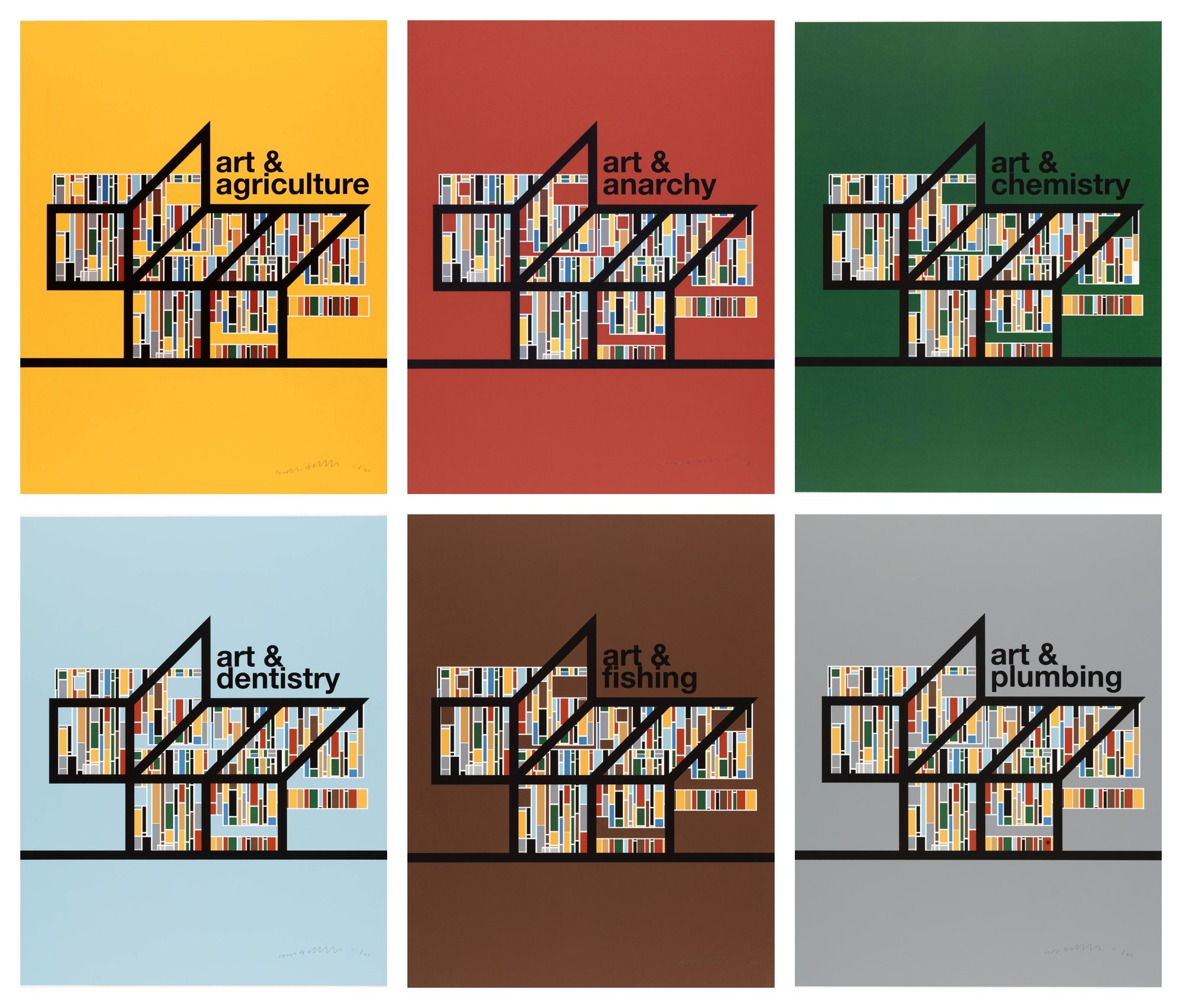
Portfolio of 6 silkscreens
Liam Gillick’s Agriculture, Dentistry, Anarchy… from 2011 is a portfolio of six silkscreens that explore the intersection of art with various disciplines. Each print in the series features the phrase “art &” followed by a different field—agriculture, anarchy, chemistry, dentistry, fishing, and plumbing—set against vibrant colored backgrounds with abstracted bookshelf-like graphics. The structure suggests a modular framework, highlighting the adaptability and interconnectedness of art with diverse areas of human activity. Gillick’s work challenges the boundaries between fields, provoking thought on how art informs, critiques, and coexists with both scientific and practical domains in society.
Artwork Copyright © Liam GillickLiam Gillick (United Kingdom, 1964) is a British artist whose work spans installation, sculpture, and writing. He explores the aesthetics of the constructed world and examines ideological control systems that have emerged with globalization and neoliberalism. Gillick's minimalist abstractions often critique modernist legacies in architecture and design.
Artwork Copyright © Liam GillickAgriculture, Dentistry, Anarchy..., 2011
Form
Medium
Size
- Inches
- Centimeters
Edition
Price
- USD
- EUR
- GBP
- CHF
- Authenticity Guaranteed
- Insured Shipping
- Online Since 2005
●Inventory 2973
●Signed
●Comes with gallery invoice and certificate
●Any questions?
Portfolio of 6 silkscreens
Liam Gillick’s Agriculture, Dentistry, Anarchy… from 2011 is a portfolio of six silkscreens that explore the intersection of art with various disciplines. Each print in the series features the phrase “art &” followed by a different field—agriculture, anarchy, chemistry, dentistry, fishing, and plumbing—set against vibrant colored backgrounds with abstracted bookshelf-like graphics. The structure suggests a modular framework, highlighting the adaptability and interconnectedness of art with diverse areas of human activity. Gillick’s work challenges the boundaries between fields, provoking thought on how art informs, critiques, and coexists with both scientific and practical domains in society.
Artwork Copyright © Liam GillickLiam Gillick (United Kingdom, 1964) is a British artist whose work spans installation, sculpture, and writing. He explores the aesthetics of the constructed world and examines ideological control systems that have emerged with globalization and neoliberalism. Gillick's minimalist abstractions often critique modernist legacies in architecture and design.
Artwork Copyright © Liam Gillick- Recently Added
- Price (Low-High)
- Price (High-Low)
- Year (Low-High)
- Year (High-Low)

Liam Gillick
Poetry must be made by all! Transform the world, 2004
Sculpture / Object
Mixed Media
EUR 1,570
Liam Gillick
Agriculture, Dentistry, Anarchy..., 2011
Limited Edition Print
Silkscreen
EUR 8,500
Related Artists
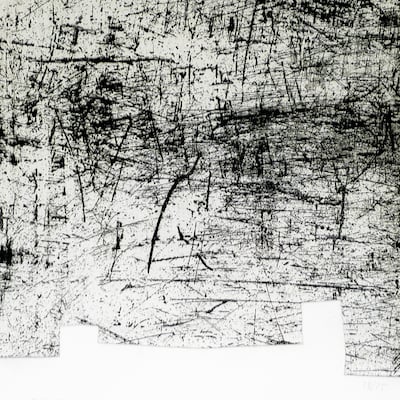
Artwork by Eduardo Chillida
What is abstract art?
Abstract art uses form, shape, line, and color to create a visual experience without attempting to represent external reality. The composition exists independently of the world's visual references, focusing on expressing ideas and emotions through non-representational means.