
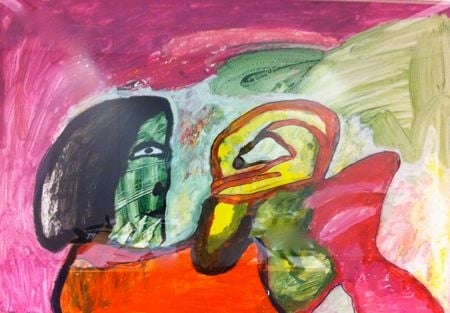
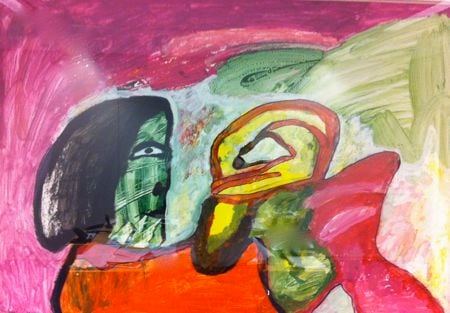
// Lucebert’s Untitled (Vivid Facescape) from 1989 is an expressive mixed-media work that captures the artist’s fascination with abstracted, surreal forms and vivid color. This artwork presents an enigmatic scene with distorted facial features rendered in bold strokes of green, yellow, red, and pink. The vibrant colors and exaggerated forms create a sense of tension and dynamism, evoking complex emotions and possibly alluding to themes of identity and psychological depth. Known for his exploration of human expression through abstraction, Lucebert’s work in this piece is both chaotic and captivating, inviting the viewer to interpret the layered emotions within the faces. This artwork exemplifies Lucebert's signature style, combining intense color with expressive forms that challenge traditional representations of the human face.
Artwork Copyright © LucebertLucebert (Netherlands, 1924–1994), born Lubertus Jacobus Swaanswijk, was a pivotal figure in post-war Dutch art and literature. As a leading poet of the Vijftigers movement and a member of the CoBrA group, he merged avant-garde poetry with expressionist painting, creating works that challenged traditional forms and explored the human condition.
Artwork Copyright © LucebertUntitled (Vivid Facescape), 1989
Form
Medium
Size
- Inches
- Centimeters
Edition
Price
- USD
- EUR
- GBP
- CHF
- Authenticity Guaranteed
- Insured Shipping
- Online Since 2005
●Inventory 1535
●Signed
●Comes with gallery invoice and certificate
●Sell Us a Similar Artwork. Learn more.
// Lucebert’s Untitled (Vivid Facescape) from 1989 is an expressive mixed-media work that captures the artist’s fascination with abstracted, surreal forms and vivid color. This artwork presents an enigmatic scene with distorted facial features rendered in bold strokes of green, yellow, red, and pink. The vibrant colors and exaggerated forms create a sense of tension and dynamism, evoking complex emotions and possibly alluding to themes of identity and psychological depth. Known for his exploration of human expression through abstraction, Lucebert’s work in this piece is both chaotic and captivating, inviting the viewer to interpret the layered emotions within the faces. This artwork exemplifies Lucebert's signature style, combining intense color with expressive forms that challenge traditional representations of the human face.
Artwork Copyright © LucebertLucebert (Netherlands, 1924–1994), born Lubertus Jacobus Swaanswijk, was a pivotal figure in post-war Dutch art and literature. As a leading poet of the Vijftigers movement and a member of the CoBrA group, he merged avant-garde poetry with expressionist painting, creating works that challenged traditional forms and explored the human condition.
Artwork Copyright © Lucebert- Recently Added
- Price (Low-High)
- Price (High-Low)
- Year (Low-High)
- Year (High-Low)
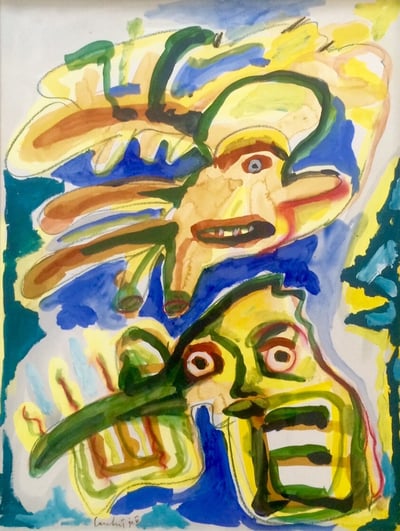
Lucebert
Untitled (Expressive Figures), 1990
Drawing / Watercolor
Mixed Media
EUR 4,850
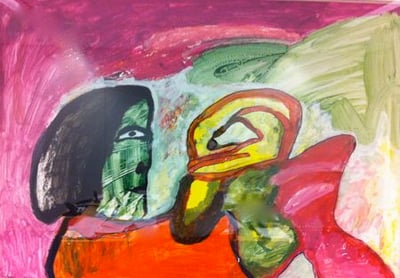
Lucebert
Untitled (Vivid Facescape), 1989
Drawing / Watercolor
Mixed Media
EUR 6,750
Related Artists
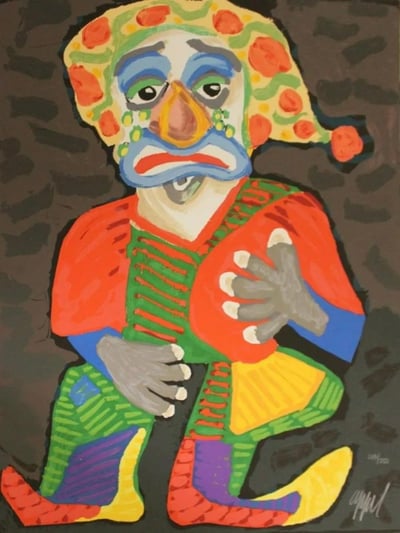


Artwork by Man Ray
What is avant-garde?
Avant-garde refers to innovative and experimental ideas in the arts that challenge established norms and conventions. Originating from the French term for advance guard, it describes both the movement and the artists who push the boundaries of creativity, often exploring new techniques, forms, and concepts. The avant-garde has been a driving force in various art movements throughout history, such as Dadaism, Surrealism, and Abstract Expressionism, continually reshaping the landscape of art and culture.
Lucebert
Untitled (Vivid Facescape), 1989
68 x 98 cm


