

7 etchings on copper plate, Sommerset laid paper 300 gram, each hand signed, numbered and dated by the artist.
Symmetrical Jails by Luis Camnitzer is a series of seven etchings that explore themes of confinement and symmetry. Each etching presents intricate, mirrored linework that resembles architectural or cage-like structures, suggestive of jails or enclosures. The symmetrical designs create a sense of repetition and order, contrasting with the underlying theme of entrapment. Rendered on Sommerset laid paper with a 300-gram weight, the crisp black lines against the white background emphasize precision and control. This limited edition series of 18 is hand-signed, numbered, and dated by Camnitzer, highlighting his conceptual approach to social and political commentary through minimalist forms.
Artwork Copyright © Luis CamnitzerLuis Camnitzer (Uruguay, 1937) is a conceptual artist, writer, and educator whose work critiques politics, power, and cultural systems. Employing text, installations, and prints, he explores themes of memory, identity, and societal structures. A pioneer of Latin American conceptual art, Camnitzer’s influence extends globally through his art and teachings.
Artwork Copyright © Luis CamnitzerSymmetrical Jails, 2014
Form
Medium
Size
- Inches
- Centimeters
Edition
Price
- USD
- EUR
- GBP
- CHF
- Authenticity Guaranteed
- Insured Shipping
- Online Since 2005
●Inventory 5154
●Signed
●Comes with gallery invoice and certificate
●Sell Us a Similar Artwork. Learn more.
7 etchings on copper plate, Sommerset laid paper 300 gram, each hand signed, numbered and dated by the artist.
Symmetrical Jails by Luis Camnitzer is a series of seven etchings that explore themes of confinement and symmetry. Each etching presents intricate, mirrored linework that resembles architectural or cage-like structures, suggestive of jails or enclosures. The symmetrical designs create a sense of repetition and order, contrasting with the underlying theme of entrapment. Rendered on Sommerset laid paper with a 300-gram weight, the crisp black lines against the white background emphasize precision and control. This limited edition series of 18 is hand-signed, numbered, and dated by Camnitzer, highlighting his conceptual approach to social and political commentary through minimalist forms.
Artwork Copyright © Luis CamnitzerLuis Camnitzer (Uruguay, 1937) is a conceptual artist, writer, and educator whose work critiques politics, power, and cultural systems. Employing text, installations, and prints, he explores themes of memory, identity, and societal structures. A pioneer of Latin American conceptual art, Camnitzer’s influence extends globally through his art and teachings.
Artwork Copyright © Luis Camnitzer- Recently Added
- Price (Low-High)
- Price (High-Low)
- Year (Low-High)
- Year (High-Low)
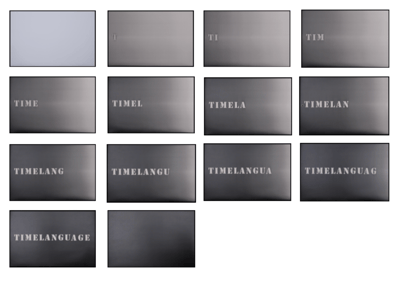
Luis Camnitzer
TIMELANGUAGE, 2016
Limited Edition Print
Mixed Media
EUR 35,000
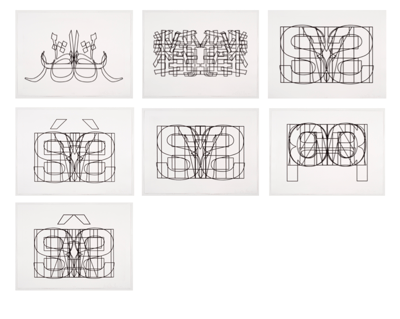
Luis Camnitzer
Symmetrical Jails, 2014
Limited Edition Print
Etching
USD 50,000

Luis Camnitzer
Two Parallel lines , 2014
Limited Edition Print
Digital Print on paper
EUR 9,000
Related Artists

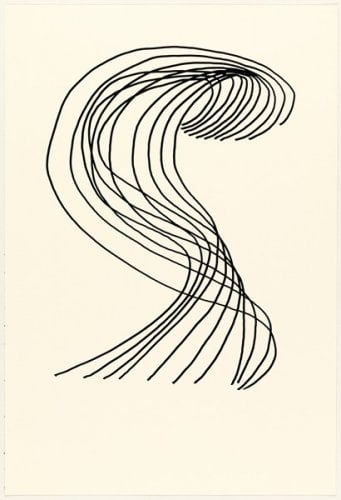


Artwork by Laure Prouvost
What is Lettrism?
Lettrism is an art form that uses letters, words, and symbols to create artwork. The movement was established in Paris in the 1940s and later gained popularity in the 1950s in America. Lettrisme is the French spelling of the movement's name, derived from the French word for letter.


Luis Camnitzer
Symmetrical Jails, 2014
56 x 76 cm


