
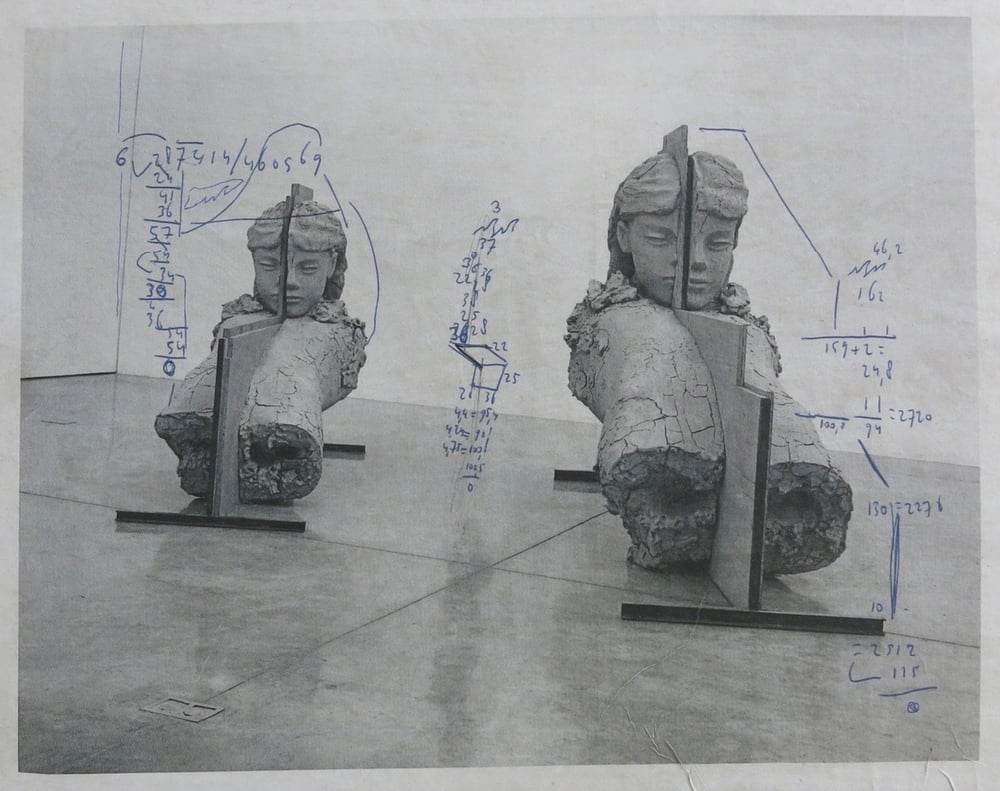
Edition of 40 + 10 AP - Offset print on paper, pen, acrylic paint, papier-mâché, plywood - In excellent condition
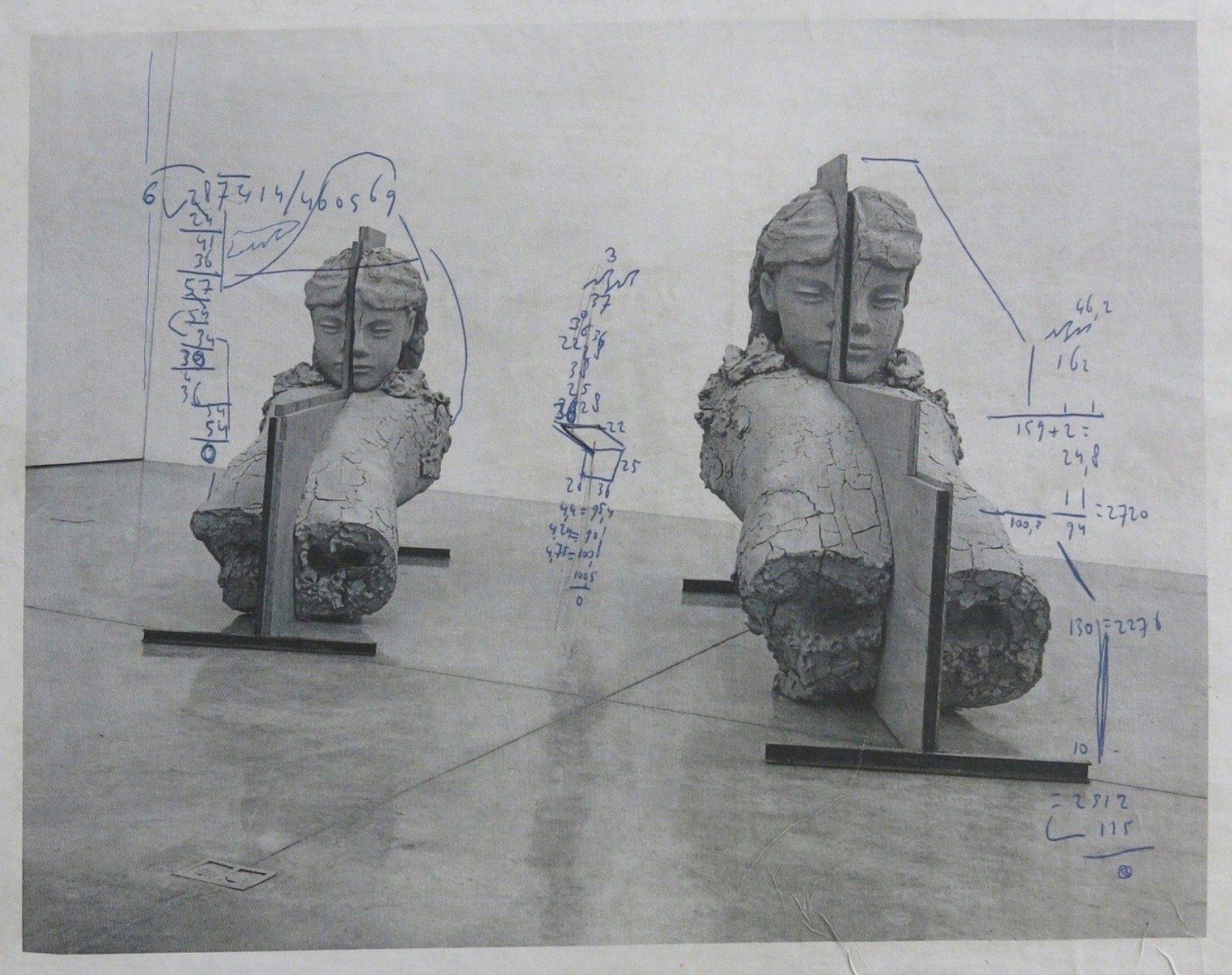
Man-size Calculation Casting Shadow by Mark Manders, created in 2017, is a mixed-media print that combines offset print on paper with pen, acrylic paint, papier-mâché, and plywood. The artwork depicts fragmented sculptures of a human head and torso in a raw, unfinished style, evoking an archaeological artifact. Detailed, handwritten mathematical calculations and measurements overlay the image, adding a layer of analytical rigor and curiosity to the piece. This combination of the organic and the calculated reflects Manders’ exploration of form, identity, and the intersection between art and logic. The monochromatic palette and calculated annotations lend the work a contemplative, almost scientific quality, challenging viewers to consider the process of creation and the fragility of human form. Limited to an edition of 40 plus 10 artist proofs, this piece encapsulates Manders’ unique approach to conceptual and sculptural art.
Artwork Copyright © Mark MandersMark Manders (Netherlands, 1968) is a visual artist known for his ongoing project, 'Self-Portrait as a Building,' initiated in 1986. His work encompasses sculpture, installation, and drawing, often featuring archetypal forms and familiar materials like clay, steel, and wood. Manders' art explores themes of identity and language, creating timeless, enigmatic spaces.
Artwork Copyright © Mark MandersMan-size Calculation Casting Shadow, 2017
Form
Medium
Size
- Inches
- Centimeters
Edition
Price
Available works →
- Authenticity Guaranteed
- Insured Shipping
- Online Since 2005
●
●Inventory 8304
●Signed
●Comes with gallery invoice and certificate
●Sell Us a Similar Artwork. Learn more.
Edition of 40 + 10 AP - Offset print on paper, pen, acrylic paint, papier-mâché, plywood - In excellent condition
Man-size Calculation Casting Shadow by Mark Manders, created in 2017, is a mixed-media print that combines offset print on paper with pen, acrylic paint, papier-mâché, and plywood. The artwork depicts fragmented sculptures of a human head and torso in a raw, unfinished style, evoking an archaeological artifact. Detailed, handwritten mathematical calculations and measurements overlay the image, adding a layer of analytical rigor and curiosity to the piece. This combination of the organic and the calculated reflects Manders’ exploration of form, identity, and the intersection between art and logic. The monochromatic palette and calculated annotations lend the work a contemplative, almost scientific quality, challenging viewers to consider the process of creation and the fragility of human form. Limited to an edition of 40 plus 10 artist proofs, this piece encapsulates Manders’ unique approach to conceptual and sculptural art.
Artwork Copyright © Mark MandersMark Manders (Netherlands, 1968) is a visual artist known for his ongoing project, 'Self-Portrait as a Building,' initiated in 1986. His work encompasses sculpture, installation, and drawing, often featuring archetypal forms and familiar materials like clay, steel, and wood. Manders' art explores themes of identity and language, creating timeless, enigmatic spaces.
Artwork Copyright © Mark Manders- Recently Added
- Price (Low-High)
- Price (High-Low)
- Year (Low-High)
- Year (High-Low)

Mark Manders
Man-size Calculation Casting Shadow, 2017
Limited Edition Print
Mixed Media
Currently Not Available
Related Artists
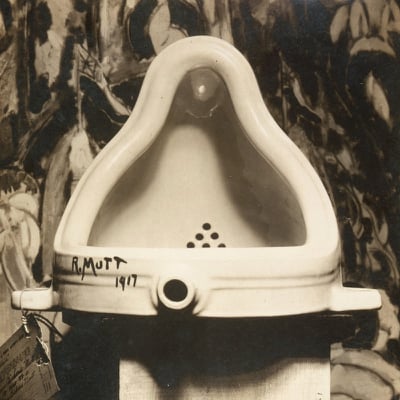
Artwork by Marcel Duchamp
What is Found Object?
A found object is a term used to describe a man-made or natural object, or a fragment of one, that an artist discovers or purchases and keeps for inspiration or as a work of art. The artist may also modify the object or incorporate it into a collage or assemblage, transforming it into a new piece of art.
Mark Manders
Man-size Calculation Casting Shadow, 2017
36.8 x 48.3 cm


