Offset Lithograph - Edition of 120 on Consort Royal - 300gm paper; Signed with studio stamp and edition number on the reverse.
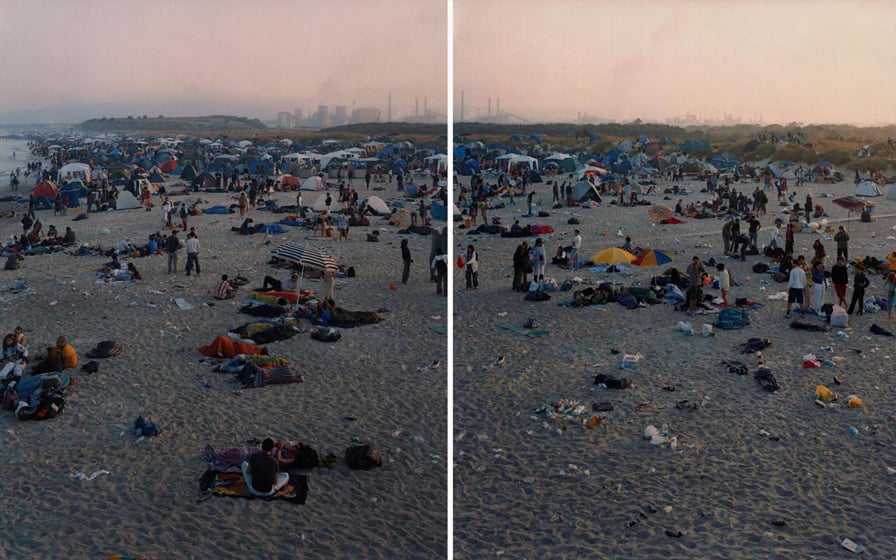
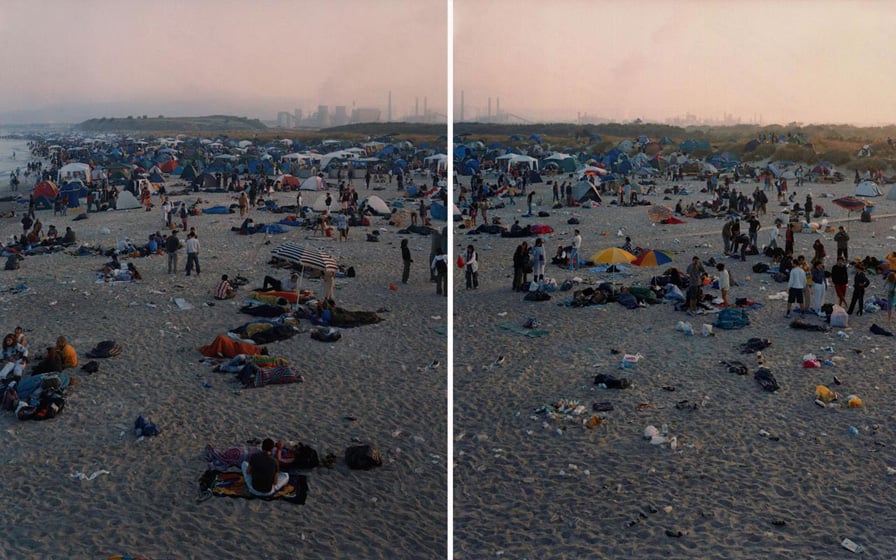
Rosignano Dawn (Diptych) by Massimo Vitali is an offset lithograph from 2002, capturing a vast beach scene at dawn, filled with scattered groups of people and tents. This diptych portrays a moment of calm yet palpable human presence, as individuals are seen relaxing, conversing, or resting amid a landscape littered with signs of temporary habitation. The soft morning light bathes the beach in a warm, subdued glow, creating a contrast between the human activities and the vast, almost indifferent landscape. Vitali’s work often examines social gatherings in public spaces, here drawing attention to both the communal aspect and the traces left behind in natural environments, inviting reflection on human impact and collective behaviors.
Massimo Vitali (Italy, 1944) is a contemporary photographer renowned for his large-scale, vibrant beach and public space scenes. His works capture human interaction and collective behavior with a documentary aesthetic, exploring themes of leisure, isolation, and societal norms. Vitali’s compositions are celebrated for their detail and sociological insight.
Offset PrintOffset lithography is a printing technique where the inked image is first transferred (offset) from a plate to a rubber blanket and then to the printing surface. This method combines the lithographic process, which relies on the repulsion of water and oil, to keep non-printing areas ink-free by attracting a water-based film. Offset lithography was originally developed to reduce costs in reproducing artwork and is widely used for high-volume printing due to its efficiency and ability to produce sharp, consistent images.
Offset Lithograph - Edition of 120 on Consort Royal - 300gm paper; Signed with studio stamp and edition number on the reverse.
Rosignano Dawn (Diptych) by Massimo Vitali is an offset lithograph from 2002, capturing a vast beach scene at dawn, filled with scattered groups of people and tents. This diptych portrays a moment of calm yet palpable human presence, as individuals are seen relaxing, conversing, or resting amid a landscape littered with signs of temporary habitation. The soft morning light bathes the beach in a warm, subdued glow, creating a contrast between the human activities and the vast, almost indifferent landscape. Vitali’s work often examines social gatherings in public spaces, here drawing attention to both the communal aspect and the traces left behind in natural environments, inviting reflection on human impact and collective behaviors.
Massimo Vitali (Italy, 1944) is a contemporary photographer renowned for his large-scale, vibrant beach and public space scenes. His works capture human interaction and collective behavior with a documentary aesthetic, exploring themes of leisure, isolation, and societal norms. Vitali’s compositions are celebrated for their detail and sociological insight.
Photography is like a river with a thousand streams that never converge.
- Massimo Vitali
Massimo Vitali (b. 1944, Italy) is an Italian photographer known for his large-scale color photography that captures the complexities of contemporary social spaces. His work primarily focuses on public spaces like beaches, pools, and nightclubs, where he explores the interactions and behaviors of crowds from a distanced, often elevated perspective. Vitali's photographs are characterized by their meticulous detail and vibrant color palette, offering a cinematic view of leisure, consumerism, and the collective experience. His approach blurs the line between documentation and art, providing a critical yet engaging observation of modern life. Vitali's work has been exhibited internationally and is held in major collections such as the Guggenheim Museum in New York and the Centre Pompidou in Paris, making him a significant figure in contemporary photography. (Artist website)
Contemporary art refers to avant-garde or innovative art created in the recent past or present day. The exact starting point of contemporary art varies depending on the institution, often tied to the founding year of museums or galleries that showcase the style. Contemporary art is characterized by its focus on current ideas, diverse media, and the exploration of new concepts and techniques.