
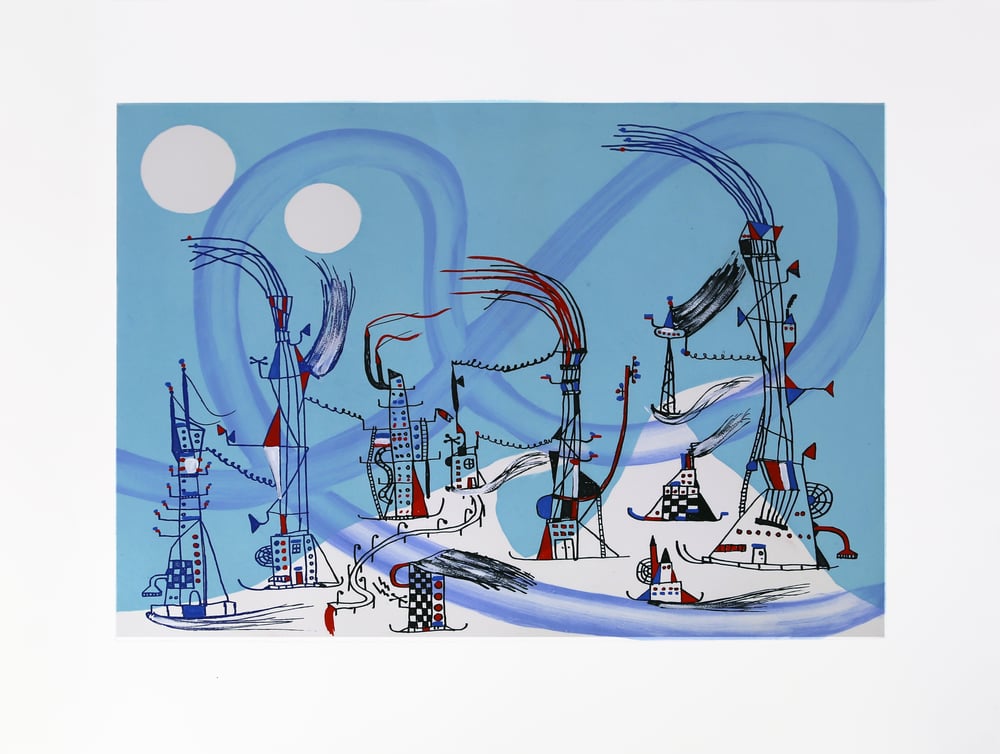
Etching, aquatint and monotype
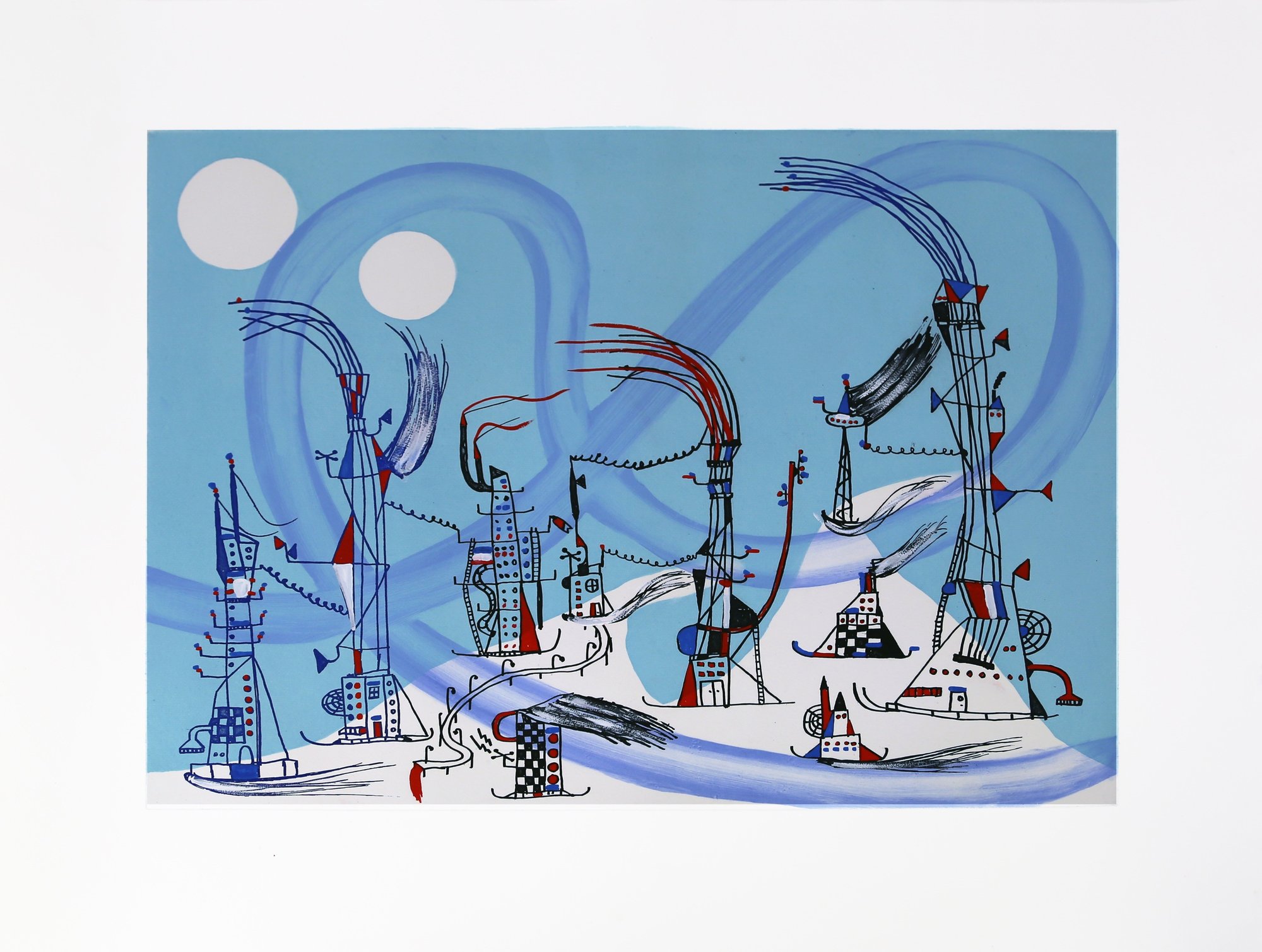
A Super Cell Arctic Vortex Ripped... by Nathan Carter, created in 2014, is a lively mixed-media print combining etching, aquatint, and monotype techniques. Set against a bright blue background with swirling lines and geometric shapes, the composition portrays an imaginative landscape of industrial towers and structures that seem animated by swirling arctic winds. The bold colors—black, red, and white—contrast sharply with the blue background, adding dynamism to the piece. The whimsical structures, with wires and pipes extending in various directions, evoke a sense of movement and energy, suggesting a surreal cityscape caught in a powerful atmospheric event. Carter’s playful style invites viewers to immerse themselves in this fantastical, wind-swept scene.
Artwork Copyright © Nathan CarterNathan Carter (USA, 1970) is a contemporary artist celebrated for his vibrant sculptures, installations, and drawings that blend storytelling with abstract forms. Drawing inspiration from cartography, celestial navigation, and subcultures, his work often features dynamic compositions and bold colors. Carter's art has been exhibited internationally, including at the Nasher Sculpture Center in Dallas.
Artwork Copyright © Nathan CarterA super cell arctic vortex ripped........, 2014
Form
Medium
Size
- Inches
- Centimeters
Edition
Price
- USD
- EUR
- GBP
- CHF
- Authenticity Guaranteed
- Insured Shipping
- Online Since 2005
●Inventory 7766
●Signed
●Comes with gallery invoice and certificate
●Any questions?
Etching, aquatint and monotype
A Super Cell Arctic Vortex Ripped... by Nathan Carter, created in 2014, is a lively mixed-media print combining etching, aquatint, and monotype techniques. Set against a bright blue background with swirling lines and geometric shapes, the composition portrays an imaginative landscape of industrial towers and structures that seem animated by swirling arctic winds. The bold colors—black, red, and white—contrast sharply with the blue background, adding dynamism to the piece. The whimsical structures, with wires and pipes extending in various directions, evoke a sense of movement and energy, suggesting a surreal cityscape caught in a powerful atmospheric event. Carter’s playful style invites viewers to immerse themselves in this fantastical, wind-swept scene.
Artwork Copyright © Nathan CarterNathan Carter (USA, 1970) is a contemporary artist celebrated for his vibrant sculptures, installations, and drawings that blend storytelling with abstract forms. Drawing inspiration from cartography, celestial navigation, and subcultures, his work often features dynamic compositions and bold colors. Carter's art has been exhibited internationally, including at the Nasher Sculpture Center in Dallas.
Artwork Copyright © Nathan Carter- Recently Added
- Price (Low-High)
- Price (High-Low)
- Year (Low-High)
- Year (High-Low)
Nathan Carter
A super cell arctic vortex ripped........, 2014
Limited Edition Print
Mixed Media
EUR 1,400
Related Artists
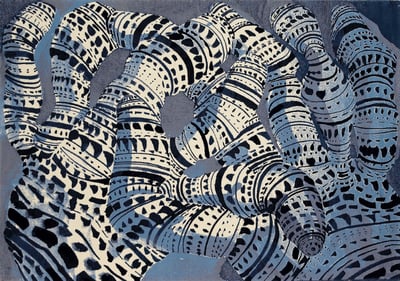
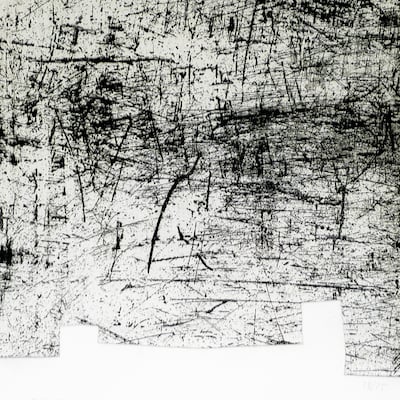
Artwork by Eduardo Chillida
What is abstract art?
Abstract art uses form, shape, line, and color to create a visual experience without attempting to represent external reality. The composition exists independently of the world's visual references, focusing on expressing ideas and emotions through non-representational means.
Nathan Carter
A super cell arctic vortex ripped........, 2014
67 x 78.5 cm


