
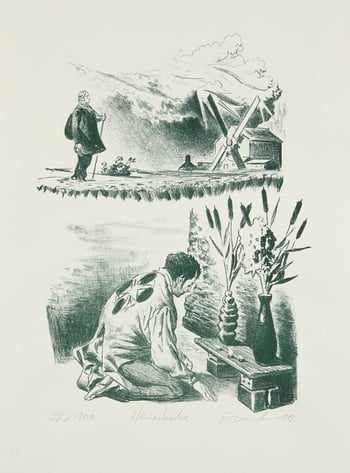
Lithograph in green, on handmade paper, with full margins, from the deluxe art edition - book not included
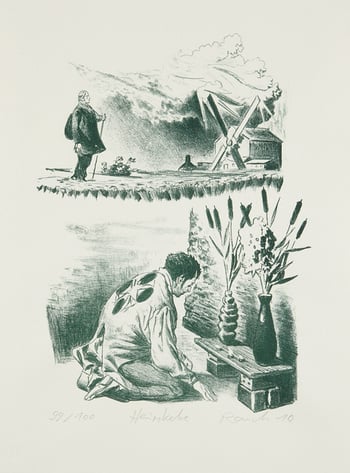
Heimkehr by Neo Rauch is a lithograph executed in green tones on handmade paper, part of a limited edition of 100 prints. The artwork juxtaposes two distinct scenes that reflect introspective themes. In the upper portion, a lone figure walks across a landscape featuring a traditional windmill, evoking a sense of nostalgia or contemplation. Below, another individual, kneeling and absorbed in a meditative activity beside a table adorned with vases and plants, suggests a ritualistic or reflective moment. Rauch’s meticulous use of green monochrome amplifies the artwork's serene, dreamlike quality, inviting viewers to explore the contrast between solitude and introspection within domestic and rural spaces.
Artwork Copyright © Neo RauchNeo Rauch (Germany, 1960) is a contemporary painter known for his surreal, dreamlike compositions that blend elements of Socialist Realism and Surrealism. His works often feature enigmatic narratives set in industrial landscapes, reflecting his East German heritage. Rauch is a leading figure in the New Leipzig School and has exhibited internationally.
Artwork Copyright © Neo RauchHeimkehr, 2010
Form
Medium
Size
- Inches
- Centimeters
Edition
Price
Available works →
- Authenticity Guaranteed
- Insured Shipping
- Online Since 2005
●
●Inventory 3888
●Signed
●Comes with gallery invoice and certificate
●Sell Us a Similar Artwork. Learn more.
Lithograph in green, on handmade paper, with full margins, from the deluxe art edition - book not included
Heimkehr by Neo Rauch is a lithograph executed in green tones on handmade paper, part of a limited edition of 100 prints. The artwork juxtaposes two distinct scenes that reflect introspective themes. In the upper portion, a lone figure walks across a landscape featuring a traditional windmill, evoking a sense of nostalgia or contemplation. Below, another individual, kneeling and absorbed in a meditative activity beside a table adorned with vases and plants, suggests a ritualistic or reflective moment. Rauch’s meticulous use of green monochrome amplifies the artwork's serene, dreamlike quality, inviting viewers to explore the contrast between solitude and introspection within domestic and rural spaces.
Artwork Copyright © Neo RauchNeo Rauch (Germany, 1960) is a contemporary painter known for his surreal, dreamlike compositions that blend elements of Socialist Realism and Surrealism. His works often feature enigmatic narratives set in industrial landscapes, reflecting his East German heritage. Rauch is a leading figure in the New Leipzig School and has exhibited internationally.
Artwork Copyright © Neo Rauch- Recently Added
- Price (Low-High)
- Price (High-Low)
- Year (Low-High)
- Year (High-Low)
Neo Rauch
Heimkehr, 2010
Limited Edition Print
Lithograph
Currently Not Available
Related Artists
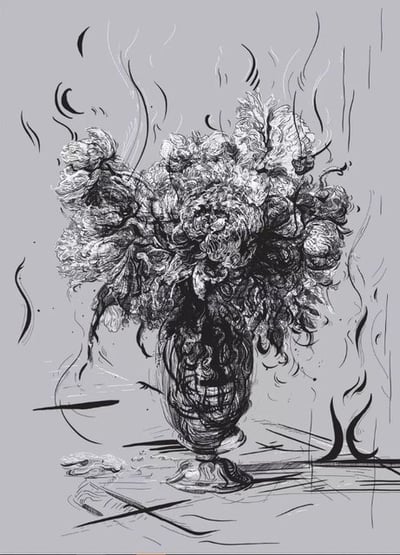

Artwork by Miles Aldridge
What is contemporary art?
Contemporary art refers to avant-garde or innovative art created in the recent past or present day. The exact starting point of contemporary art varies depending on the institution, often tied to the founding year of museums or galleries that showcase the style. Contemporary art is characterized by its focus on current ideas, diverse media, and the exploration of new concepts and techniques.

Neo Rauch
Heimkehr, 2010
43.2 x 33 cm


