
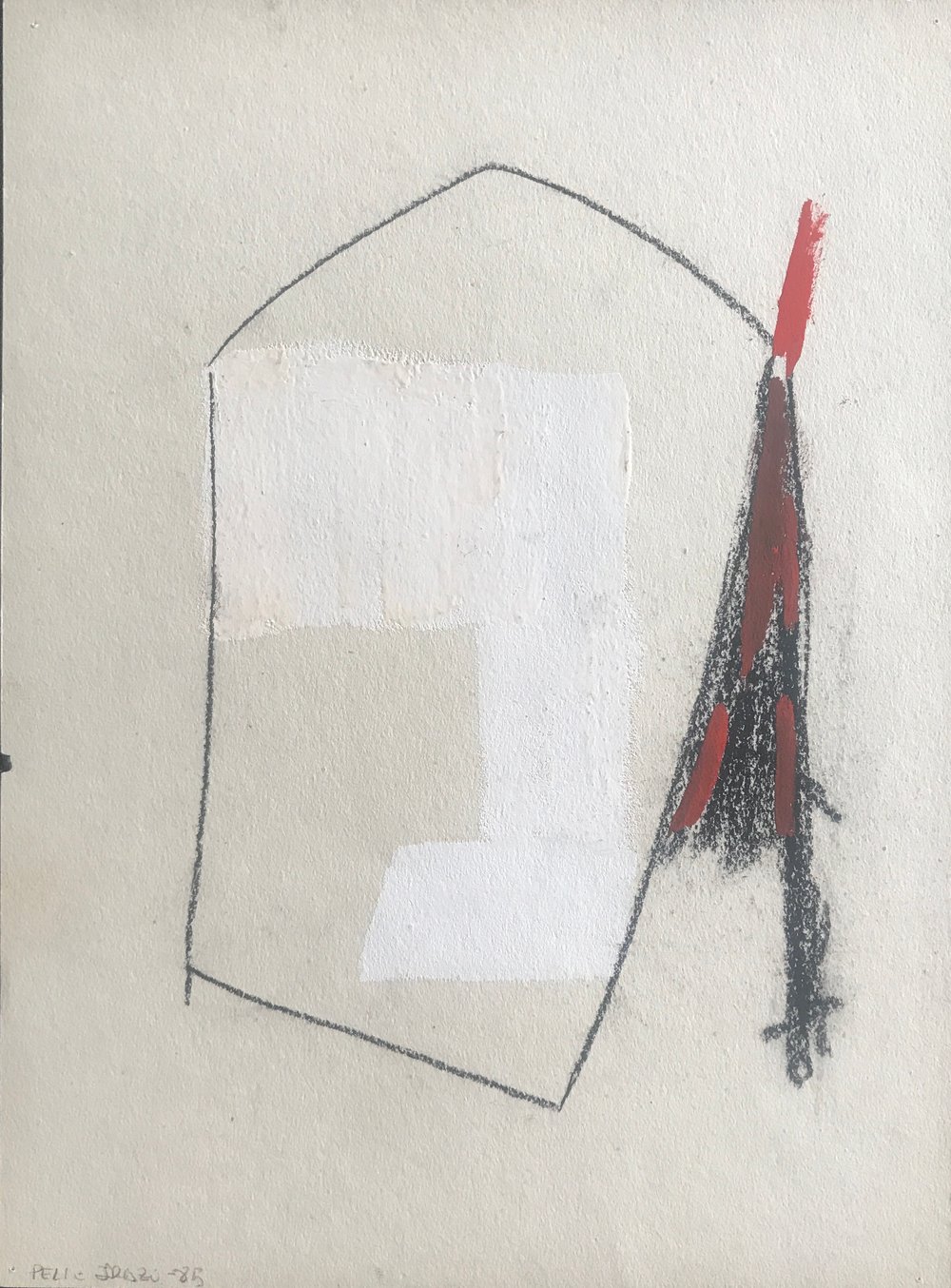
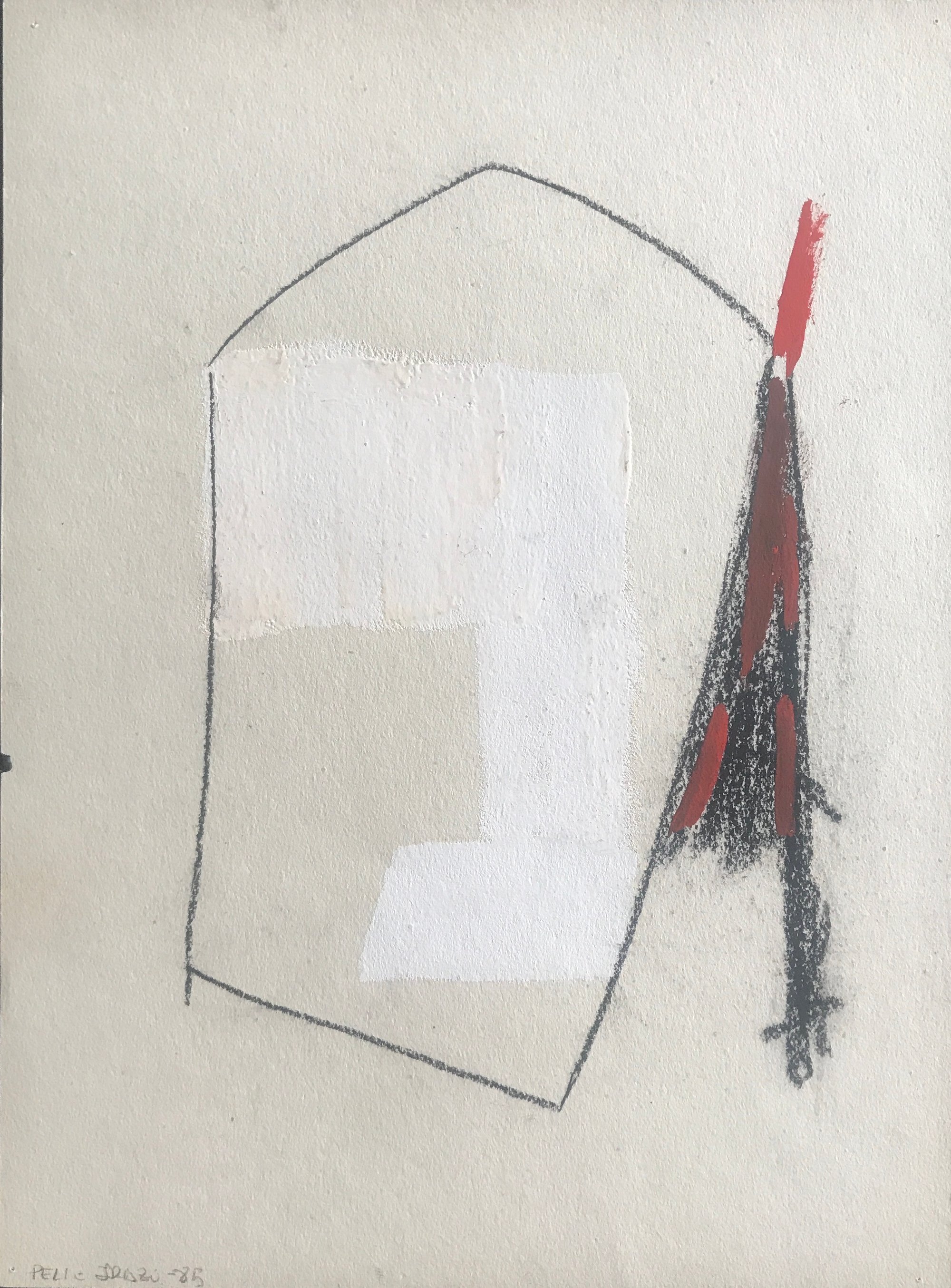
// Untitled #2 by Pello Irazu is a mixed media painting from 1985 that reflects the artist’s minimalistic approach to form and composition. The artwork features a lightly outlined geometric shape, resembling a simplified house or structure, rendered in delicate, neutral tones with areas of white and light beige. A contrasting stroke of red and black appears on the right, breaking the uniformity and adding a sense of tension to the composition. This juxtaposition of soft and bold elements creates a contemplative space, inviting viewers to reflect on balance and disruption within form. Irazu's work exemplifies a quiet yet powerful exploration of spatial relationships and abstraction.
Artwork Copyright © Pello IrazuPello Irazu (Spain, 1963) is a renowned Basque artist recognized for his innovative sculptures, installations, and drawings. Since the 1980s, he has been pivotal in revitalizing Basque and Spanish sculpture. Irazu’s work examines the interplay of objects, space, and perception, often incorporating photography and painting to transcend traditional artistic boundaries.
Artwork Copyright © Pello IrazuUntitled #2, 1985
Form
Medium
Size
- Inches
- Centimeters
Edition
Price
- USD
- EUR
- GBP
- CHF
- Authenticity Guaranteed
- Insured Shipping
- Online Since 2005
●Inventory 9476
●Hand Signed
●Comes with gallery invoice and certificate
●Sell Us a Similar Artwork. Learn more.
// Untitled #2 by Pello Irazu is a mixed media painting from 1985 that reflects the artist’s minimalistic approach to form and composition. The artwork features a lightly outlined geometric shape, resembling a simplified house or structure, rendered in delicate, neutral tones with areas of white and light beige. A contrasting stroke of red and black appears on the right, breaking the uniformity and adding a sense of tension to the composition. This juxtaposition of soft and bold elements creates a contemplative space, inviting viewers to reflect on balance and disruption within form. Irazu's work exemplifies a quiet yet powerful exploration of spatial relationships and abstraction.
Artwork Copyright © Pello IrazuPello Irazu (Spain, 1963) is a renowned Basque artist recognized for his innovative sculptures, installations, and drawings. Since the 1980s, he has been pivotal in revitalizing Basque and Spanish sculpture. Irazu’s work examines the interplay of objects, space, and perception, often incorporating photography and painting to transcend traditional artistic boundaries.
Artwork Copyright © Pello Irazu- Recently Added
- Price (Low-High)
- Price (High-Low)
- Year (Low-High)
- Year (High-Low)

Pello Irazu
Untitled #4, 1985
Painting
Mixed Media
EUR 2,250
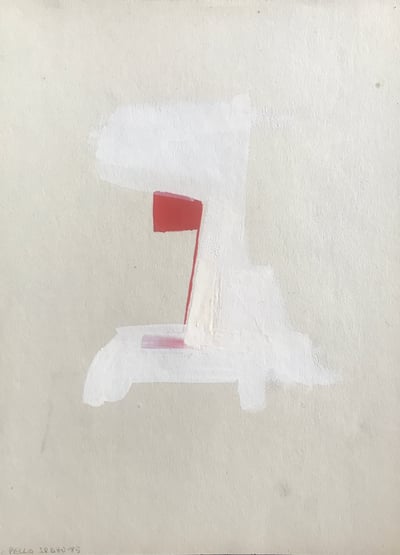
Pello Irazu
Untitled #3, 1985
Painting
Mixed Media
EUR 2,250

Pello Irazu
Untitled #2, 1985
Painting
Mixed Media
EUR 2,250

Pello Irazu
Untitled #1, 1985
Painting
Mixed Media
EUR 2,250
Related Artists


Artwork by Victor Pasmore for sale on composition
What is constructivism?
Constructivism is an architectural and artistic philosophy of Russian origin that emerged as a rejection of the idea of autonomous art. The movement advocated for art to serve practical social purposes. Since its inception in 1919, Constructivism has evolved and significantly impacted 20th-century art movements, influencing major trends such as De Stijl and Bauhaus.
Pello Irazu
Untitled #2, 1985
22 x 16 cm


