
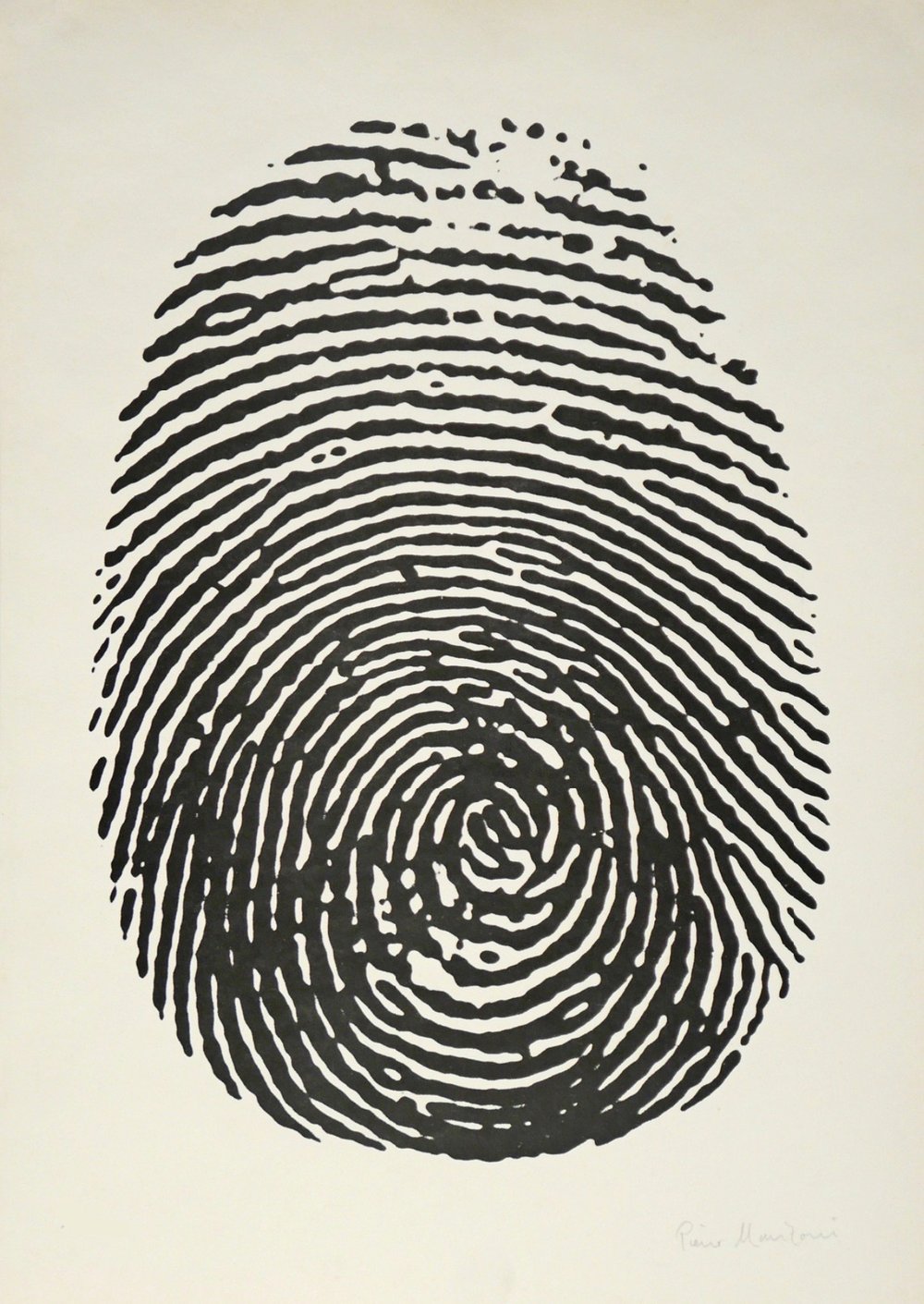
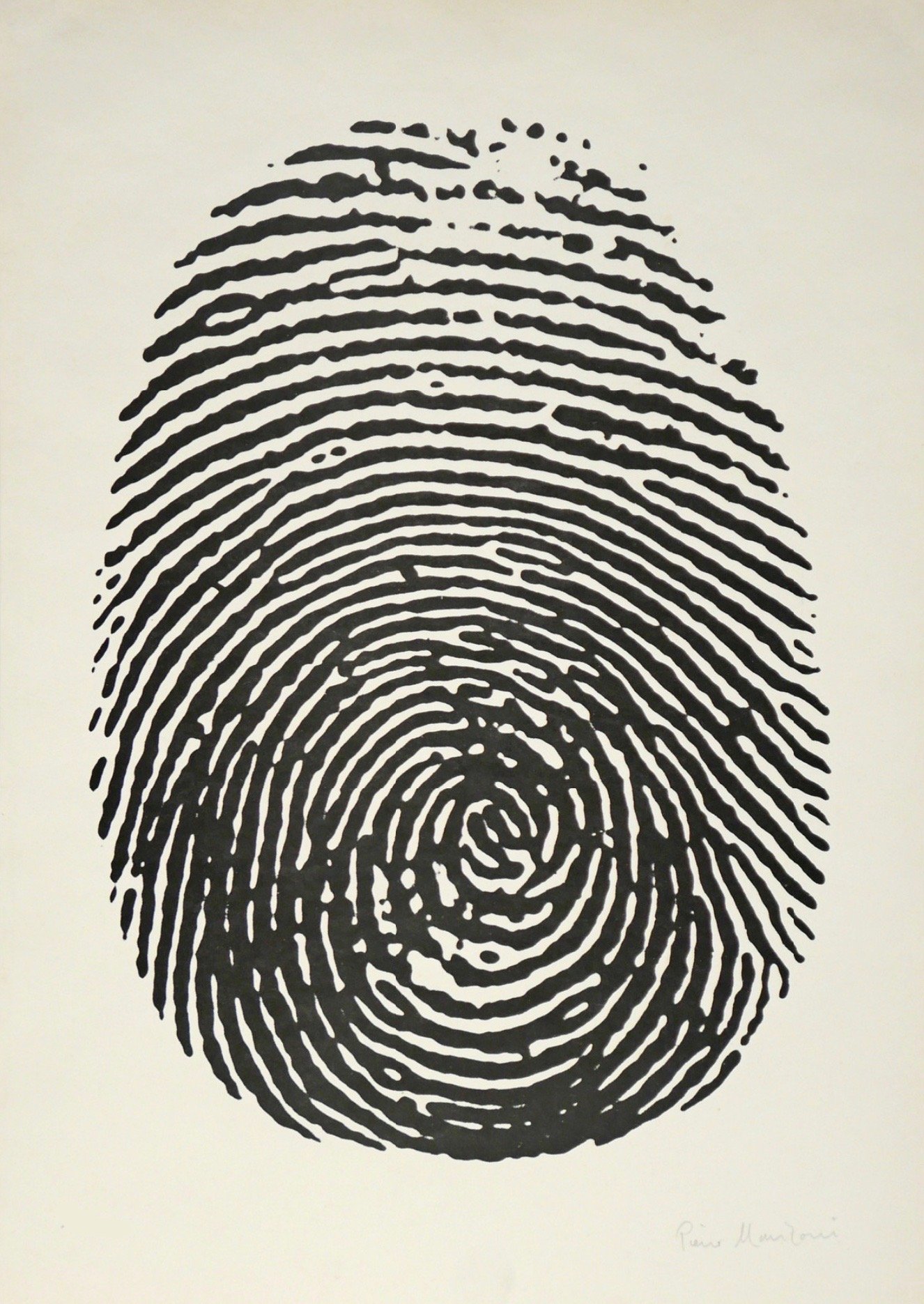
// Impronta del pollice sinistro (Left Thumbprint) by Piero Manzoni is a limited edition lithograph from 1960 that emphasizes individuality and identity through the unique imprint of a thumb. This piece, showcasing a highly magnified fingerprint, distills personal identity into an iconic, abstract form. By focusing on the biometrics of the human body, Manzoni elevates the ordinary into the realm of art, inviting reflection on themes of existence, self, and human uniqueness. The lithograph’s simple black-and-white contrast accentuates the intricate details of the fingerprint, making each line a testament to individuality. With an edition size of only 60, this work is a powerful example of Manzoni's conceptual exploration of identity.
Artwork Copyright © Piero ManzoniPiero Manzoni (Italy, 1933–1963) was an avant-garde artist renowned for his provocative conceptual works that challenged traditional art forms. His most infamous piece, 'Artist's Shit' (1961), consisted of 90 sealed cans purportedly containing his own excrement, questioning the value and commercialization of art. Manzoni's innovative approach significantly influenced the development of conceptual art.
Artwork Copyright © Piero ManzoniImpronta del pollice sinistro, 1960
Form
Medium
Size
- Inches
- Centimeters
Edition
Price
Available works →
- Authenticity Guaranteed
- Insured Shipping
- Online Since 2005
●
●Inventory 6903
●Signed
●Comes with gallery invoice and certificate
●Sell Us a Similar Artwork. Learn more.
// Impronta del pollice sinistro (Left Thumbprint) by Piero Manzoni is a limited edition lithograph from 1960 that emphasizes individuality and identity through the unique imprint of a thumb. This piece, showcasing a highly magnified fingerprint, distills personal identity into an iconic, abstract form. By focusing on the biometrics of the human body, Manzoni elevates the ordinary into the realm of art, inviting reflection on themes of existence, self, and human uniqueness. The lithograph’s simple black-and-white contrast accentuates the intricate details of the fingerprint, making each line a testament to individuality. With an edition size of only 60, this work is a powerful example of Manzoni's conceptual exploration of identity.
Artwork Copyright © Piero ManzoniPiero Manzoni (Italy, 1933–1963) was an avant-garde artist renowned for his provocative conceptual works that challenged traditional art forms. His most infamous piece, 'Artist's Shit' (1961), consisted of 90 sealed cans purportedly containing his own excrement, questioning the value and commercialization of art. Manzoni's innovative approach significantly influenced the development of conceptual art.
Artwork Copyright © Piero Manzoni- Recently Added
- Price (Low-High)
- Price (High-Low)
- Year (Low-High)
- Year (High-Low)

Piero Manzoni
Impronta del pollice sinistro, 1960
Limited Edition Print
Lithograph
Currently Not Available
Related Artists

Artwork © Javacheff Christo; Jeanne-Claude; W.Volz
What is Emphemeral Art?
Ephemeral art is a type of art that occurs only once and typically lasts for a very short period. It cannot be displayed as a traditional work of art in a gallery or museum. Examples of ephemeral art include performances, happenings, sound sculptures, flyers, and mass-produced items. This art form emphasizes the transient nature of the experience, existing only in the moment and often leaving no lasting physical trace.

Piero Manzoni
Impronta del pollice sinistro, 1960
49.7 x 35 cm


